

The relentless pursuit of impossibly thin smartphones has created an unspoken compromise, forcing consumers to choose between a device that feels great in the hand and one that captures life’s moments with stunning clarity. This fundamental conflict between a sleek, lightweight form and a powerful, feature-rich camera system defines the modern engineering challenge for mobile technology. As manufacturers push the boundaries of industrial design, the laws of physics remain a stubborn obstacle, dictating that great photography requires space for large sensors and complex lenses.
Setting the Stage: The Quest for the Perfect Smartphone
This core conflict has given rise to distinct philosophies in the market. Key industry players are now placing their bets on which side of the divide consumers will land. Honor, for instance, is positioning its new Magic 8 Pro Air as a masterful solution that achieves a superior balance between portability and photographic prowess. Launched alongside its premium sibling, the Magic 8 RSR Porsche Design Edition, the Magic 8 Pro Air aims to deliver a flagship camera experience without the usual bulk. In contrast, brands like Samsung and Apple are often rumored to be developing devices that prioritize form above all else. Speculative models like a future Galaxy S25 Edge or an iPhone Air serve as theoretical examples of this approach, representing ultra-slim devices that would almost certainly entail significant camera compromises to achieve their minimalist profiles. This analysis uses the upcoming Honor Magic 8 Pro Air as a central case study to explore how modern manufacturers are attempting to solve this persistent trade-off. By examining its specific hardware and design choices against those of its hypothetical, ultra-slim competitors, it becomes possible to understand the intricate decisions involved in creating a top-tier smartphone. The goal is to illuminate how companies are working to offer consumers high-end capabilities in a more compact and ergonomic package, ultimately questioning whether a perfect balance is truly attainable.
A Head to Head Look at Design and Photography
Camera Hardware: Sensors, Lenses, and Light
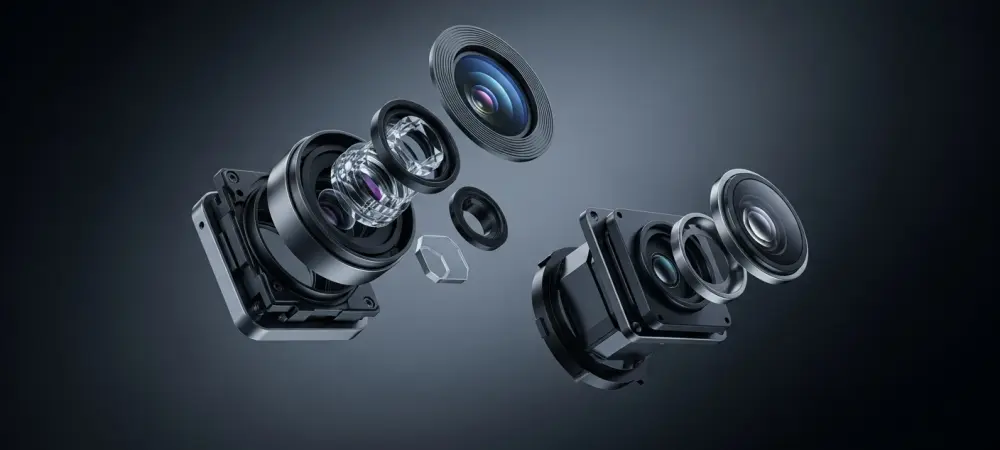
At the heart of the Honor Magic 8 Pro Air’s appeal is a camera system that refuses to concede ground on key specifications. It features a large 1/1.3-inch, 50MP main sensor paired with a bright f/1.6 aperture, a combination engineered for excellent light-gathering capabilities and detailed images. More impressively, it is complemented by what Honor claims is the industry’s thinnest 3.2x periscope telephoto camera. This module uses a substantial 1/2-inch, 64MP sensor and an f/2.6 aperture, enabling high-quality optical zoom without the massive camera bump that typically accompanies such hardware.
In stark contrast, ultra-slim competitors like a theoretical Galaxy S25 Edge or iPhone Air would likely be forced to make difficult choices. To achieve a minimal thickness, engineers would almost certainly have to abandon periscope zoom technology altogether, as it requires physical depth for its folded optics. Furthermore, they would likely opt for smaller main camera sensors and less complex lens arrays. These compromises would directly impact performance, leading to weaker low-light capabilities and a reliance on digital zoom, which significantly degrades image quality compared to the optical zoom found in the Magic 8 Pro Air.
Form Factor and Ergonomics: The Physical Trade Off
Honor’s design philosophy for the Magic 8 Pro Air is one of calculated moderation. The device is marketed as a slim, compact, and lightweight flagship, but it consciously avoids the race to be the absolute thinnest phone available. This approach allows it to sidestep the “significantly bigger compromises” often made by its rivals. By prioritizing a balanced and comfortable feel in the hand, Honor aims to deliver a device that is a pleasure to use daily, rather than one that sacrifices usability for a single design metric.
Conversely, the primary objective for ultra-slim competitors is to achieve the thinnest possible profile. While aesthetically appealing, this can introduce a cascade of trade-offs that affect the overall user experience. A razor-thin chassis leaves less room for a large-capacity battery, potentially leading to shorter battery life. It can also impact structural rigidity, making the device feel more fragile. Most importantly, the minimal internal space directly constrains the size and complexity of the camera modules, creating the central conflict this analysis explores.
Innovative Solutions: Bridging the Technology Gap
To achieve its balanced vision, Honor has integrated specific technologies into the Magic 8 Pro Air designed to mitigate traditional trade-offs. The development of the industry’s thinnest periscope telephoto lens is a prime example of a hardware-based solution, allowing powerful optical zoom to exist in a slimmer chassis than previously possible. Alongside this, the company introduced an “AI zoom flash,” a combined software and hardware feature engineered to improve portrait photography across all focal lengths by providing a powerful and intelligent light source.
To substantiate its claims, Honor has been proactive in demonstrating the device’s capabilities. The company has released official photo samples and provided hands-on units to reviewers well ahead of its January 19 launch in the Chinese market. This market evidence, particularly the samples highlighting its strong performance in portrait mode, serves to validate its engineering choices. It is a clear attempt to prove that its balanced approach delivers tangible, high-quality results that justify its slight deviation from the ultra-slim trend.
The Inevitable Compromises: What Gets Sacrificed
The primary limitation for any device prioritizing extreme thinness is the unyielding physics of optics. Large sensors capture more light, and complex periscope lenses bend that light over a distance to achieve true optical zoom; both require physical depth. Chasing an ultra-slim profile therefore often means sacrificing these very features. The result is a device that may look stunning but offers limited optical zoom, struggles in low-light conditions, and may also compromise on battery life due to space constraints.
On the other end of the spectrum, phones that prioritize camera power above all else present their own set of challenges. These devices often end up being significantly thicker and heavier, with prominent camera bumps that can make them wobble on a flat surface and create issues with case compatibility. While they may deliver outstanding photographic results, their unwieldy ergonomics can detract from the everyday experience of using the phone. The Honor Magic 8 Pro Air positions itself as a deliberate and calculated compromise between these two extremes. It is not the absolute thinnest phone on the market, nor does it have the largest camera housing. Its main challenge is one of perception: convincing consumers that a slight increase in thickness is a worthwhile trade for a vastly superior and more versatile camera system, one that includes a powerful telephoto lens frequently absent in similarly sleek flagships.
The Verdict: Choosing Between Portability and Photographic Prowess
This analysis reveals a clear divergence in smartphone design philosophy. The Honor Magic 8 Pro Air provides a robust and versatile camera suite, including a large 50MP main sensor and a 64MP periscope telephoto lens, all within a design that remains slim and manageable. In contrast, speculative ultra-slim models from competitors like Apple or Samsung would, by necessity, likely sacrifice advanced camera hardware such as periscope zooms and large sensors to achieve their primary goal of extreme thinness.
Ultimately, the right choice depends entirely on a user’s priorities. For the balance-seeker who refuses to compromise on photographic quality, the Honor Magic 8 Pro Air presents an ideal solution. It is built for the user who wants a powerful, versatile camera with strong zoom capabilities in a device that is still comfortable to carry and use every day. This phone proves that it is possible to have a premium camera without carrying a bulky device.
For the design purist, however, the calculus is different. A user who prioritizes aesthetics, minimalism, and the absolute thinnest profile above all else should consider waiting for potential devices like the iPhone Air or Galaxy S25 Edge. This choice comes with the explicit understanding that camera performance, especially in zoom and low-light situations, will almost certainly be compromised in the service of its ultra-slim form.