

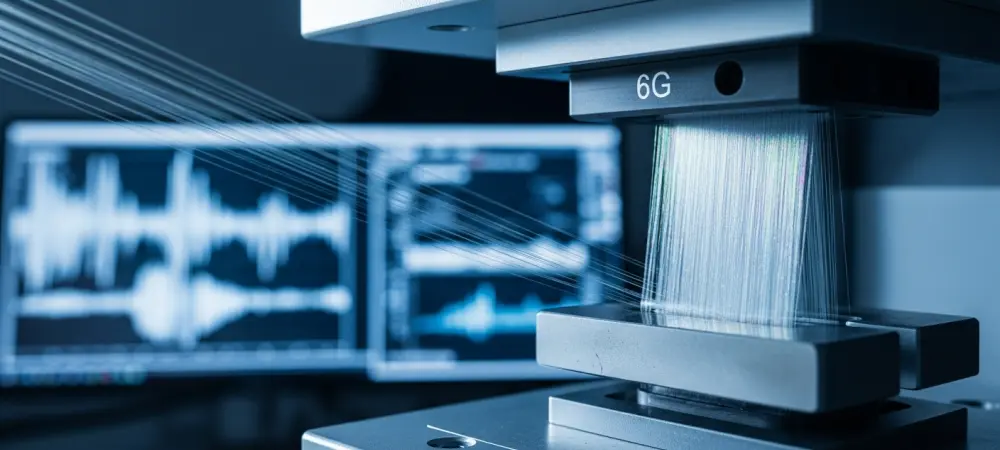
The transition toward 6G wireless communication represents a shift so profound that the foundational hardware used for global data transmission must be completely re-imagined to survive. As the world pushes toward terabit-per-second speeds, the existing network backbones are struggling to keep up with the demands of terahertz frequencies. These frequencies offer immense bandwidth but are difficult to manage because they require extremely high signal integrity and very low latency. Engineers have found that traditional materials like glass and plastic are reaching their physical limits in the face of these next-generation requirements. Developing a medium that can handle such high-speed data while remaining flexible enough for dense urban installation has become the primary challenge for researchers. This search for the perfect conduit has led scientists to explore biological materials that were once considered strictly for the textile industry, hoping to find a sustainable and more efficient alternative. This paradigm shift emphasizes the need for high-performance materials that are both resilient and environmentally sustainable.
Physical Constraints Of Existing Glass Infrastructure: Part 1
Glass fiber-optic cables have long served as the gold standard for long-haul telecommunications due to their ability to carry vast amounts of data with minimal signal loss. However, as the industry prepares for the 6G era, the inherent brittleness of glass has become a significant liability, particularly in the context of expanding local network density. Installing these cables in cramped urban environments requires a level of physical durability that glass simply cannot provide without heavy, expensive shielding. Furthermore, the manufacturing process for high-purity glass is energy-intensive and involves toxic chemical refining, which contradicts the growing industry demand for sustainable infrastructure solutions. While glass remains unparalleled for transoceanic distances, its lack of flexibility and high cost of installation for short-range, high-frequency applications are forcing a search for alternatives that can withstand the rigors of modern deployment. This necessitates a move toward conduits that offer structural versatility.
Frequency Limitations Of Plastic Fiber Optics: Part 2
Plastic optical fibers offered a solution to the rigidity of glass, providing a lightweight and cost-effective alternative for shorter links such as those found in home networks or automotive systems. These polymers are durable and easier to handle during installation, but they suffer from significant signal attenuation when tasked with carrying the ultra-high frequencies required for 6G. At the terahertz level, the molecular structure of standard plastics tends to absorb or scatter the signal, leading to a loss of data integrity that makes them unsuitable for the backbone of future wireless systems. This performance gap creates a technical bottleneck where neither the high-fidelity rigidity of glass nor the low-fidelity flexibility of plastic can meet the dual requirements of the next decade. Consequently, researchers have turned their attention toward more advanced materials that bridge the gap between mechanical resilience and electromagnetic performance for the current era. The discovery of high-performance biological substitutes has since offered a potential exit from this material gridlock.
Biological Advantages Of Natural Silk Fibers: Part 1
Silk has emerged as a surprisingly effective candidate for high-speed data transmission due to its unique combination of biological complexity and mechanical strength. Naturally harvested from silkworms, these fibers possess a highly organized internal geometry that is naturally optimized for guiding specific wavelengths of light. This natural waveguide property is a result of millions of years of evolution, creating a material that is not only transparent to certain electromagnetic frequencies but also incredibly tough. Silk fibers boast a tensile strength that rivals some steel alloys, yet they remain extraordinarily flexible, allowing them to be bent or coiled into tight spaces without any risk of structural failure or loss of function. This dual-purpose nature makes silk uniquely suited for the dense cabling needs of future smart cities, where data must flow seamlessly through a variety of environmental obstacles while maintaining a high degree of signal precision. Its biological origin also ensures that the material is entirely renewable.
Overcoming The Limitations Of Raw Sericin: Part 2
Despite these advantages, the adoption of silk in telecommunications was previously limited by the complex chemistry involved in its natural state. Raw silk contains a protein known as sericin, which acts as a sticky coating that binds individual fibers together, but this substance interferes with the optical properties needed for high-frequency transmission. In the past, removing sericin required aggressive chemical baths and massive quantities of water, a process that was both environmentally damaging and prohibitively expensive for industrial scaling. These processing hurdles meant that silk remained confined to the textile market, as the technical community lacked a clean and efficient way to transform raw biological threads into high-performance optical conduits. Without a way to strip the sericin and reshape the silk without damaging its internal crystalline structure, the material could not be seriously considered for the rigorous demands of global infrastructure. Recent advancements have finally provided the thermal tools necessary to bypass these chemical barriers.
Engineering Silk Via Thermal Heat Pressing: Part 1
A significant breakthrough occurred when a collaborative research effort involving experts from the United Kingdom and the United States developed a new method for processing silk. This technique, known as heat pressing, utilizes precise temperatures of 420 degrees Fahrenheit combined with specific pressures to mold silk fibers into stable, high-performance shapes. By bypassing the traditional chemical-intensive washing cycles, this process allows for the creation of silk waveguides that retain their natural integrity while becoming more durable than those treated with older methods. This innovation marks a turning point in material science, as it demonstrates that biological materials can be engineered for industrial use through physical rather than chemical manipulation. The resulting silk conduits are sustainable and biodegradable and can be mass-produced at a scale that could finally challenge the dominance of glass and plastic in the telecommunications sector. This method provides a blueprint for the future of sustainable, high-tech manufacturing.
Future Implementations For 6G Network Scalability: Part 2
Researchers identified that the next phase of deployment required the standardization of these thermal molding processes to ensure uniformity across global manufacturing facilities. By establishing clear protocols for heat pressing, the industry paved the way for integrating bio-optical fibers into existing smart city architectures and autonomous vehicle sensors. Engineers recommended that upcoming network upgrades prioritize these sustainable conduits to mitigate the environmental impact of traditional fiber production. The successful transition to silk-based systems demonstrated that high-frequency data transmission could be achieved without the brittle constraints of glass or the high signal loss of plastic. This shift encouraged further investment in bio-synthetic materials that could eventually support the terabit-per-second requirements of the 2030s. Ultimately, the adoption of these natural solutions provided a resilient framework for future-proofing communication networks against the ever-increasing demands of global connectivity.