
Sify Technologies Unveils Major Data Center Campus in Chennai

Article Highlights
Off On

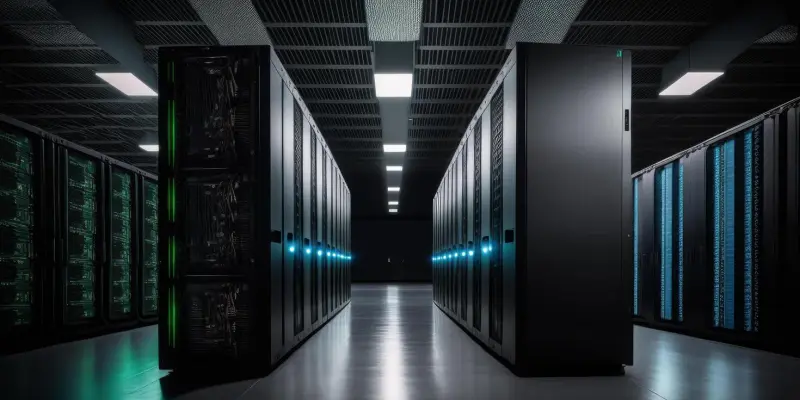
Sify Technologies initiated a groundbreaking project with the first phase of a data center campus at Sipcot IT Park, Siruseri, strategically located south of Chennai, Tamil Nadu. When the full campus is complete, it will boast a capacity exceeding 130MW. Initially, ‘Tower B’ offers a significant 43MW capacity, starting operations with 26MW, designed to support high rack density applications up to 130kW. This development includes an open cable landing station, catering to comprehensive digital needs. The data center campus received a substantial investment of Rs 1,882 crore, equivalent to $221 million, for the first tower, with the total project surpassing Rs 10,000 crore, approximately $1.1 billion. This investment underscores Sify’s commitment to solidify its role in India’s growing digital infrastructure needs, with a strong emphasis on renewable energy solutions, aiming for 60 percent reliance initially and eventually transitioning to total reliance on renewables through strategic power purchase agreements.

Driving Innovation in Data Infrastructure

With established operations extending across twelve data centers throughout India, Sify Technologies maintains its leadership in providing robust infrastructure and networking services. By forming alliances with international tech companies, Sify aims to boost cross-border delivery of digital services. Under the guidance of its new CEO, Sharad Agarwal, the company has made significant strides in advancing its data center capabilities. Recently, Sify began offering support to the Supreme Court in New Delhi, showcasing its strategic role and proficiency in handling vast governmental data needs. As the company moves forward, the Sipcot IT Park campus emerges as a critical hub within its network, ensuring smooth digital operations and enabling various businesses to expand effectively. Sify’s initiative complements India’s digital transformation aspirations by providing sustainable and strong solutions to both national and international challenges. The further development of its data center campus in Chennai underscores Sify’s dedication to eco-friendly energy solutions and global technological partnerships.

Explore more

How Will Robotics Reshape the Future of European Industry?

Across the sprawling industrial corridors of Germany and the high-tech logistics hubs of the Netherlands, a silent transformation is unfolding as machines begin to think rather than just move. This shift marks a departure from the traditional mechanical automation of the past, signaling the arrival of an era where digital intelligence is the primary driver of production. European manufacturing is

Can AI Data Centers Benefit Small Island Nations?

The rhythmic hum of high-performance servers and the steady vibration of massive industrial cooling systems are beginning to replace the tranquil sounds of surf and wind in some of the most remote corners of the globe. For years, the digital economy was sold to the public as an ethereal “cloud” that floated somewhere out of sight, yet for a small

How Is Data Analytics Transforming Audit Quality?

The quiet hum of a server room has effectively replaced the frantic flipping of paper ledgers as auditors now harness computational power to scrutinize every single byte of financial data within seconds. While the tech world remains fixated on the flashy promises of Generative AI, a quieter revolution in data analytics is fundamentally rewriting the rules of financial oversight. Gone

Can Curve Optimizer Fix Your Ryzen Thermal Throttling?

The pursuit of peak hardware performance often feels like a constant battle against the laws of thermodynamics, where every megahertz gained requires a delicate balance of electricity and heat dissipation. While PC enthusiasts traditionally focused on maximizing power delivery to achieve higher speeds, the landscape in 2026 has shifted dramatically toward a model where thermal management is the primary constraint

Is Intent-Based Networking the New 6G Security Threat?

The seamless automation that defines the modern 6G landscape relies on a silent intelligence capable of translating human goals into billions of lines of machine code without manual intervention. This transition to AI-native connectivity promises a world where networks manage themselves, but this hands-off approach introduces a subtle, high-stakes vulnerability. While previous generations like 5G focused heavily on securing the