
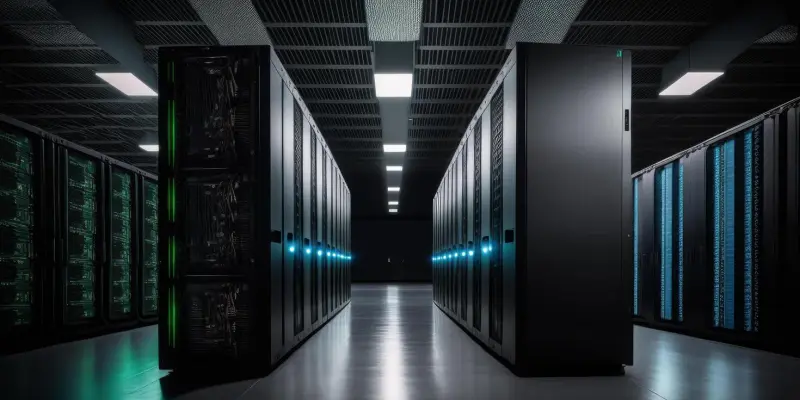
Sify Technologies Unveils Major Data Center Campus in Chennai

Article Highlights
Off On

Sify Technologies initiated a groundbreaking project with the first phase of a data center campus at Sipcot IT Park, Siruseri, strategically located south of Chennai, Tamil Nadu. When the full campus is complete, it will boast a capacity exceeding 130MW. Initially, ‘Tower B’ offers a significant 43MW capacity, starting operations with 26MW, designed to support high rack density applications up to 130kW. This development includes an open cable landing station, catering to comprehensive digital needs. The data center campus received a substantial investment of Rs 1,882 crore, equivalent to $221 million, for the first tower, with the total project surpassing Rs 10,000 crore, approximately $1.1 billion. This investment underscores Sify’s commitment to solidify its role in India’s growing digital infrastructure needs, with a strong emphasis on renewable energy solutions, aiming for 60 percent reliance initially and eventually transitioning to total reliance on renewables through strategic power purchase agreements.

Driving Innovation in Data Infrastructure

With established operations extending across twelve data centers throughout India, Sify Technologies maintains its leadership in providing robust infrastructure and networking services. By forming alliances with international tech companies, Sify aims to boost cross-border delivery of digital services. Under the guidance of its new CEO, Sharad Agarwal, the company has made significant strides in advancing its data center capabilities. Recently, Sify began offering support to the Supreme Court in New Delhi, showcasing its strategic role and proficiency in handling vast governmental data needs. As the company moves forward, the Sipcot IT Park campus emerges as a critical hub within its network, ensuring smooth digital operations and enabling various businesses to expand effectively. Sify’s initiative complements India’s digital transformation aspirations by providing sustainable and strong solutions to both national and international challenges. The further development of its data center campus in Chennai underscores Sify’s dedication to eco-friendly energy solutions and global technological partnerships.

Explore more

AI and Generative AI Transform Global Corporate Banking

The high-stakes world of global corporate finance has finally severed its ties to the sluggish, paper-heavy traditions of the past, replacing the clatter of manual data entry with the silent, lightning-fast processing of neural networks. While the industry once viewed artificial intelligence as a speculative luxury confined to the periphery of experimental “innovation labs,” it has now matured into the

Is Auditability the New Standard for Agentic AI in Finance?

The days when a financial analyst could be mesmerized by a chatbot simply generating a coherent market summary have vanished, replaced by a rigorous demand for structural transparency. As financial institutions pivot from experimental generative models to autonomous agents capable of managing liquidity and executing trades, the “wow factor” has been eclipsed by the cold reality of production-grade requirements. In

How to Bridge the Execution Gap in Customer Experience

The modern enterprise often functions like a sophisticated supercomputer that possesses every piece of relevant information about a customer yet remains fundamentally incapable of addressing a simple inquiry without requiring the individual to repeat their identity multiple times across different departments. This jarring reality highlights a systemic failure known as the execution gap—a void where multi-million dollar investments in marketing

Trend Analysis: AI Driven DevSecOps Orchestration

The velocity of software production has reached a point where human intervention is no longer the primary driver of development, but rather the most significant bottleneck in the security lifecycle. As generative tools produce massive volumes of functional code in seconds, the traditional manual review process has effectively crumbled under the weight of machine-generated output. This shift has created a

Navigating Kubernetes Complexity With FinOps and DevOps Culture

The rapid transition from static virtual machine environments to the fluid, containerized architecture of Kubernetes has effectively rewritten the rules of modern infrastructure management. While this shift has empowered engineering teams to deploy at an unprecedented velocity, it has simultaneously introduced a layer of financial complexity that traditional billing models are ill-equipped to handle. As organizations navigate the current landscape,