

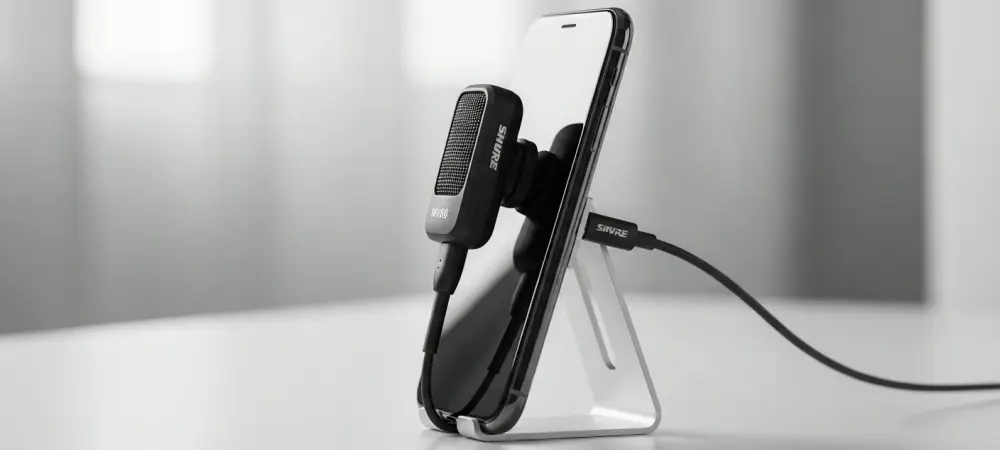
The proliferation of high-resolution smartphone cameras has empowered a generation of content creators, yet pristine video is often undermined by the subpar audio captured by built-in microphones. This glaring disparity between visual and auditory quality has long been a challenge for mobile journalists, vloggers, and artists seeking a professional finish without the burden of cumbersome equipment. At CES 2026, Shure addressed this critical gap with the unveiling of the MV88 USB-C, a compact digital stereo microphone engineered to elevate mobile audio recording to a new standard of excellence. As a modern successor to a beloved classic model, this device is designed specifically for the dynamic needs of today’s on-the-go creators. It promises to deliver studio-quality sound directly to a smartphone, eliminating the complex setups that once gated professional audio capture. By integrating high-fidelity components into a portable, user-friendly form factor, the MV88 USB-C is positioned not just as an accessory, but as an essential tool for anyone serious about producing high-impact content from anywhere.
Seamless Integration for the Modern Creator
The most significant evolution of the MV88 is its native USB-C connector, a deliberate design choice that directly addresses the modern mobile workflow. This feature enables a seamless, adapter-free connection to the latest generation of iOS and Android devices, streamlining the user experience and removing a common point of failure for creators in the field. The microphone operates on a plug-and-play basis, drawing power directly from the host device, which completely eliminates the need for internal batteries. This bus-powered design not only contributes to its remarkably lightweight and compact form factor but also ensures it is always ready for spontaneous recording opportunities. For journalists capturing breaking news or vloggers documenting their travels, the ability to simply connect the microphone and start recording without worrying about battery life or pairing procedures is a transformative advantage. This emphasis on convenience and reliability makes the MV88 USB-C a powerful ally for creators who require both high performance and maximum portability.
Beyond its physical design, the true power of the Shure MV88 USB-C is unlocked through its deep integration with a comprehensive software ecosystem. The microphone is designed to work in concert with the Shure MOTIV Video and Audio mobile apps, as well as the MOTIV Mix desktop application, transforming a simple hardware peripheral into a sophisticated mobile recording studio. This software suite provides users with granular control over their sound, offering a host of advanced audio customization tools typically reserved for professional digital audio workstations. Creators can access a five-band equalizer to shape the tonal balance of their recordings, a limiter to prevent clipping and distortion, a compressor to even out dynamics, and a high-pass filter to remove unwanted low-frequency rumble. This synergy between hardware and software empowers users to tailor their audio capture to specific environments and creative intentions, ensuring a polished, professional result directly from their mobile device without the need for extensive post-production work.
Intelligent Audio Processing and Versatility
To further simplify the recording process for creators in dynamic and unpredictable settings, the Shure MV88 USB-C incorporates a suite of intelligent, real-time audio processing features. A standout function is the auto-level mode, which acts as a virtual audio engineer by automatically adjusting the microphone’s gain to compensate for fluctuations in volume. This is invaluable for interviews where a subject may speak softly at one moment and loudly the next, ensuring the final audio remains consistent and clear without manual intervention. Additionally, the microphone is equipped with an integrated denoiser that actively works to reduce distracting ambient sounds, such as the hum of an air conditioner or distant traffic noise. These intelligent features are not merely conveniences; they are powerful tools that allow creators to focus more on their subject and storytelling and less on the technical minutiae of audio engineering. By handling these critical adjustments in real time, the MV88 USB-C helps produce cleaner, more professional audio straight out of the camera.
The microphone’s adaptability to a vast range of recording scenarios is a testament to its versatile design, which is centered around four selectable polar patterns. Users can choose a stereo pattern with an adjustable width, ranging from a narrow 60 degrees to an expansive 135 degrees, perfect for capturing immersive soundscapes or ambient environments. For more focused applications like vlogging or voiceovers, the mono cardioid pattern effectively isolates the sound source directly in front of the microphone while rejecting off-axis noise. The mono bi-directional pattern is ideal for two-person interviews, capturing clear audio from both the front and rear of the microphone simultaneously. Finally, for audio professionals who demand maximum control in post-production, the raw mid-side option captures the audio data in a format that allows for stereo width manipulation after recording. This array of options ensures that whether a creator is recording a podcast, a musical performance, or a news report, the MV88 USB-C can be configured to deliver the optimal audio capture for the situation.
A Conclusive Look at the Offering
The introduction of the Shure MV88 USB-C at CES 2026 marked a significant step forward in democratizing professional-grade audio for the mobile content creation landscape. By meticulously blending high-fidelity capture with a user-centric design, the device effectively removed many of the technical barriers that previously separated amateur and professional productions. It was not merely an update; it was a re-imagining of what a mobile microphone could be—an intelligent tool that worked seamlessly within a creator’s existing ecosystem. The final offering, priced at $159 and bundled with essential accessories like a foam windscreen and a protective case, represented a complete and accessible solution right out of the box. Ultimately, the MV88 USB-C’s legacy was defined by its ability to empower journalists, filmmakers, and vloggers to match their audio quality to their visual ambitions, ensuring their stories were heard with the clarity and impact they deserved, all from the device in their pocket.