

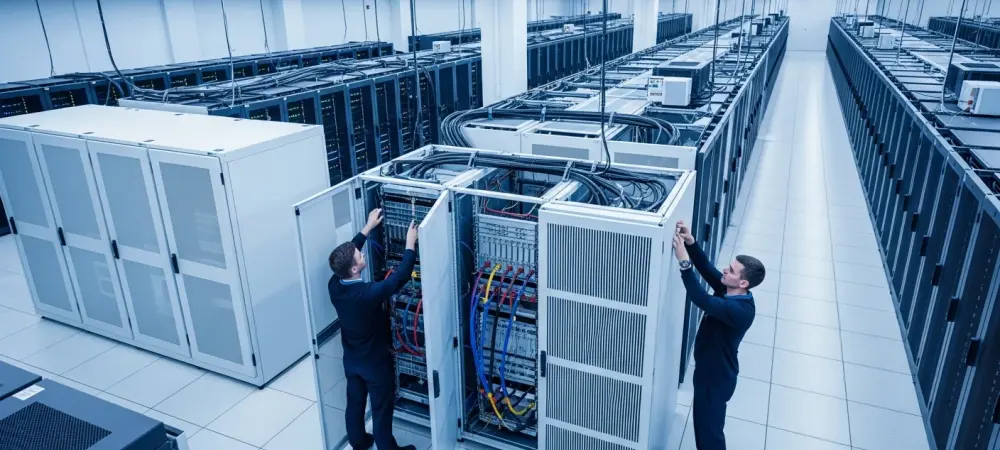
The global landscape of digital infrastructure is currently grappling with a monumental shift as generative models and high-density computing clusters rapidly outpace the thermal and electrical capacities of facilities designed and built just a few years ago. This evolution has forced a critical evaluation of existing assets, pushing operators to decide whether to adapt their current inventory or start from scratch. As artificial intelligence continues to permeate every sector of the global economy, the demand for specialized hardware has created a significant gap between what legacy data centers can provide and what modern processors require.
This article explores the strategic decision-making process involved in choosing between retrofitting legacy data centers and investing in greenfield rebuilds. By examining the technical limitations of older facilities alongside the advantages of purpose-built environments, the following sections provide a roadmap for navigating this complex transition. Readers can expect to learn about the critical infrastructure gaps, the viability of liquid cooling upgrades, and the financial implications of each approach in a market where speed to delivery is often the most valuable currency.
Key Questions: Evaluating the AI Infrastructure Dilemma
Why Is Traditional Data Center Infrastructure Failing to Support Modern AI?
Traditional data centers were primarily engineered to support standard cloud computing, web hosting, and database management, which rely on predictable, lower-density power profiles. These facilities typically utilize air-cooling methods that circulate chilled air through raised floors to maintain hardware temperatures. While this was sufficient for the past decade, the arrival of massive GPU clusters has rendered these systems largely obsolete for high-performance tasks. AI workloads consume energy at a rate that legacy electrical systems were never intended to handle, leading to significant power shortages at the rack level.
Beyond power alone, the thermal density produced by modern AI chips creates heat signatures that air-cooling cannot effectively dissipate. When servers are packed with high-wattage processors, the resulting hotspots can lead to equipment failure or severe performance throttling. Furthermore, the physical layout of older facilities often lacks the floor load capacity to support the weight of liquid-cooled racks and the massive cabling required for ultra-low latency networking. Without a fundamental change in how these spaces are configured, they risk becoming “stranded assets” that are unable to host the most profitable modern workloads.
How Can Existing Facilities Be Retrofitted to Accommodate High-Density Workloads?
Retrofitting offers a pragmatic solution for operators who need to deploy AI capabilities quickly without waiting the typical three to five years required for new construction. The most impactful modification involves the transition from traditional air cooling to liquid-based systems, such as direct-to-chip cooling or immersion tanks. By piping coolant directly to the heat-generating components, a facility can drastically increase its rack density without requiring a massive expansion of the physical building footprint. This allows for a more efficient use of space and significantly reduces the energy overhead associated with massive fan arrays.
In addition to thermal upgrades, retrofitting requires a sophisticated overhaul of the power distribution architecture. Many operators are now implementing “smart” power management systems that identify and recapture stranded capacity—power that is allocated to certain areas but remains unused. By optimizing the electrical chain and upgrading internal networking to support high-speed fabrics like 800G Ethernet, legacy sites can bridge the performance gap. While these upgrades require substantial capital investment, they are often more sustainable than new builds because they leverage existing shells and grid connections that are already permitted and operational.
When Is a Complete Greenfield Rebuild the More Sustainable Choice?
A complete greenfield rebuild becomes the necessary path when the structural or electrical limitations of a legacy site present a “dead end” for future growth. If the local utility grid is fully tapped out and cannot provide additional megawatts, or if the ceiling heights and floor load ratings cannot accommodate the specialized requirements of AI clusters, the cost of retrofitting may eventually exceed the value of the improvements. In these scenarios, building from the ground up allows for the integration of high-voltage power delivery and advanced liquid cooling systems into the core design of the facility from the first day of planning.
Furthermore, new builds allow for the implementation of radical sustainability measures that are difficult to integrate into older structures. This includes the use of carbon-neutral construction materials, on-site renewable energy generation, and advanced heat-recovery systems that can pipe excess thermal energy to local municipalities or industrial processes. While the lead times are longer, a purpose-built facility provides a level of long-term optimization and scalability that a retrofit simply cannot match. For organizations focused on large-scale model training that requires thousands of interconnected processors, the architectural freedom of a new build is often the only way to achieve the necessary performance metrics.
How Do Performance Requirements Differ Between Training and Inference Workloads?
The decision to retrofit or rebuild is often dictated by the specific type of AI work being performed, specifically the distinction between training and inference. Training a large language model is an incredibly resource-intensive process that requires massive amounts of power and continuous, high-speed data exchange between chips. These workloads are best suited for purpose-built environments or heavily retrofitted facilities that can handle extreme power densities. Because training processes can run for weeks or months at a time, the infrastructure must be resilient enough to maintain peak performance without interruption.
In contrast, inference—the process of using a pre-trained model to answer queries or generate content—is generally less demanding on a per-rack basis. Inference workloads can often be distributed across a wider variety of facilities, making them ideal candidates for standard data centers that have undergone moderate cooling and power upgrades. By strategically placing inference nodes in retrofitted legacy sites near urban centers, companies can reduce latency for end-users while reserving their most advanced, purpose-built facilities for the heavy lifting of model development. This tiered approach allows for a more flexible and cost-effective deployment of AI resources across a global portfolio.
Summary: Balancing Speed and Optimization
The transition toward AI-ready infrastructure required a nuanced understanding of both current limitations and future demands. It was established that while legacy facilities faced significant challenges regarding power density and thermal management, they remained viable through strategic retrofitting. Technologies such as liquid cooling and optimized power distribution proved to be essential tools for extending the life of existing assets. Conversely, the analysis showed that greenfield rebuilds offered the highest level of optimization and sustainability, despite the longer timelines and higher initial costs. The choice between these two paths ultimately depended on the specific workload requirements and the structural integrity of the existing site. Inference tasks were well-suited for retrofitted spaces, whereas large-scale training demanded the specialized environment of a new build. By conducting a thorough gap analysis, operators were able to determine which assets could be salvaged and where new investment was mandatory. This hybrid approach allowed the industry to scale rapidly while maintaining a focus on energy efficiency and operational resilience.
Final Thoughts: Navigating the Future of AI Infrastructure
The decision-making process for data center modernization matured into a sophisticated discipline that balanced immediate market needs with long-term technological trends. Operators recognized that flexibility was the most valuable asset in an era where hardware cycles moved faster than construction permits. The industry moved away from a one-size-fits-all mentality, instead embracing a diverse ecosystem where old and new facilities played complementary roles. Success was found by those who viewed their infrastructure not as a static resource, but as a dynamic platform capable of evolving alongside the software it supported. As the demand for computing power grew, the focus shifted toward modular designs that allowed for easier upgrades in the future. Stakeholders began to prioritize site locations with robust grid access and favorable climates for cooling, regardless of whether they were starting a new project or updating an old one. This strategic shift ensured that the backbone of the digital economy remained strong enough to support the next generation of artificial intelligence. Ultimately, the most successful organizations were those that remained agile, making data-driven decisions that prioritized performance, cost, and environmental responsibility in equal measure.