

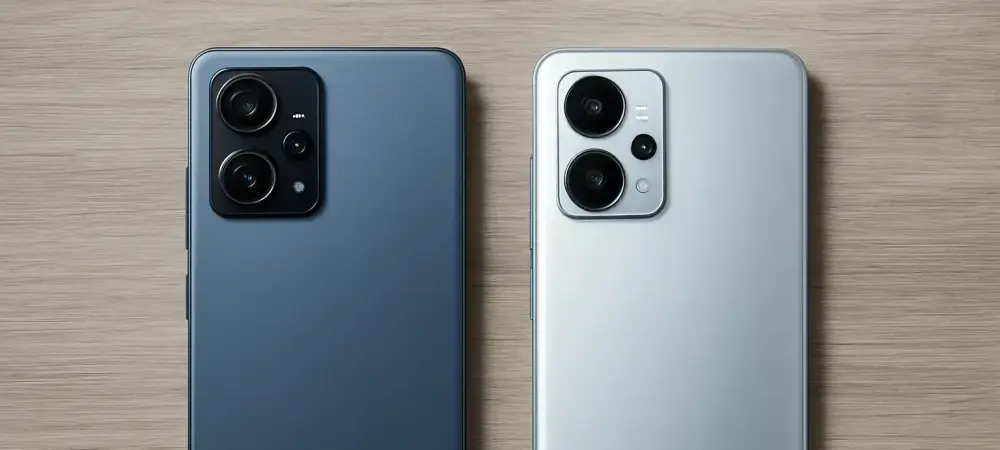
The line separating mid-range accessibility from flagship performance has never been blurrier, a reality Xiaomi expertly exploits with its latest dual smartphone release. The arrival of the Redmi Note 15 Pro and its 5G counterpart presents a compelling challenge for consumers, forcing a decision that goes far beyond simple connectivity. This roundup synthesizes the initial analysis of these two devices, aiming to clarify the subtle but significant trade-offs that define them. By examining expert takes on performance, display technology, battery endurance, and overall value, a clearer picture emerges of who each phone is truly built for.
The New Mid-Range Crossroads Unpacking Xiaomi’s Latest Smartphone Duel
Xiaomi’s strategic decision to launch two distinct Pro models reflects a mature understanding of the mid-range market. Rather than offering a single, compromised device, the company provides a choice between a 4G model optimized for immediate value and a 5G variant designed with an eye toward the future. This approach acknowledges that not all users prioritize the same features, creating a more nuanced upgrade path within the popular Redmi Note series. This duel isn’t just about features; it’s about a brand’s confidence in its ability to cater to separate, well-defined consumer segments.
The core dilemma for prospective buyers is more complex than ever before. In previous generations, a 5G model often meant sacrificing other specifications to keep the price down. However, the Note 15 Pro 5G complicates this by offering tangible upgrades in screen technology, charging speed, and durability, making it more than just a connectivity enhancement. This positions the standard 4G Pro as a powerhouse for those who value battery size and a lower entry price above all else, forcing a thoughtful evaluation of personal priorities.
This analysis will navigate the key differences between the two contenders. A detailed breakdown will explore how subtle variations in their processors, displays, battery systems, and camera hardware translate into distinct user experiences. From the gamer seeking maximum responsiveness to the pragmatist demanding long-term durability, every aspect will be weighed to help you make a truly informed decision before the January 5 pre-order date.
A Tale of Two Processors and a Dozen Small Victories
The Endurance Equation How Battery and Charging Define the User Experience
At the heart of the user experience is endurance, and here, the two models present a fascinating comparison. The standard Pro’s massive 6,500 mAh battery sets a high bar for longevity. In contrast, the 5G model’s slightly larger 6,580 mAh silicon-carbon cell is not just about a minor capacity bump; this advanced battery technology is often associated with better density and longevity under stress, a key factor for power users. The practical difference may seem small on paper, but for those pushing their device to the limit, the 5G’s cell could offer more consistent performance over time. Where the 5G model establishes a clear, practical advantage is in its reverse wired charging capabilities. While both phones can act as a power bank for other gadgets, the 5G’s 22.5W output is significantly faster than the standard Pro’s 18W. This isn’t just a number; it’s the difference between a slow trickle charge and a genuinely useful top-up for accessories like earbuds or a secondary phone in an emergency. This feature elevates the 5G variant from a simple smartphone to a more versatile hub for a user’s personal tech ecosystem.
Despite these differences, the debate over value remains. Both models are capped at a respectable 45W for wired charging, meaning they refuel their own batteries at the same speed. This shared limitation forces a critical question: is the 5G model’s superior battery technology and faster reverse charging worth the price premium? For many, the standard Pro’s already enormous battery and capable 18W reverse charging will be more than sufficient, making the extra cost for the 5G’s enhancements a luxury rather than a necessity.
A Display of Dominance Where Screen Technology Creates a Clear Divide
The most immediate and noticeable difference between the two devices is their displays. The Note 15 Pro 5G pulls ahead with a larger 6.83-inch, 1.5K resolution panel, offering a demonstrably sharper and more immersive canvas for content consumption. Compared to the standard Pro’s perfectly adequate 6.77-inch FHD+ screen, the 5G’s display provides a level of crispness and detail that becomes apparent when viewing high-resolution photos, watching movies, or simply reading fine text.
For mobile gamers and users who demand absolute fluidity, the difference in touch sampling rates is a game-changer. The 5G model’s 480Hz rate registers touch inputs twice as frequently as the standard Pro’s 240Hz. This translates into a tangible reduction in latency, giving players a competitive edge where split-second reactions matter. Even during everyday navigation, this heightened responsiveness contributes to a feeling of immediacy and smoothness that makes the entire operating system feel faster and more connected to the user’s input.
The ultimate question is whether these superior specifications translate into a genuinely better experience for the average user. While enthusiasts and gamers will immediately appreciate the 1.5K resolution and 480Hz touch response, many users may not perceive a dramatic difference during casual use like social media scrolling or web browsing. Consequently, the 5G’s display dominance must be weighed against individual use cases; it is a significant upgrade, but one whose value is directly proportional to the demands placed upon it.
The Performance and Imaging Paradox A Closer Look Under the Hood and Behind the Lens
Beneath the surface, the choice of chipsets presents a subtle but important distinction. The Note 15 Pro 5G is powered by the MediaTek Dimensity 7400-Ultra, while the standard Pro uses the Helio G200-Ultra. Both are described as having “minor CPU and NPU enhancements,” suggesting that raw processing power for everyday tasks will be largely comparable. However, the real-world impact often lies in the efficiency of the NPU (Neural Processing Unit), which handles AI-driven tasks like photo processing and system optimization, potentially giving the 5G model a slight edge in smart features and power management.
Intriguingly, the camera specifications challenge the common “more is better” assumption. The standard 4G Pro features a 32MP front-facing camera, while the 5G model is equipped with a 20MP sensor. This decision suggests that Xiaomi is prioritizing sensor quality, pixel size, and software processing on the 5G model over raw megapixel count. A lower megapixel sensor can sometimes produce superior low-light selfies and more natural-looking images if paired with better hardware and algorithms, creating a fascinating paradox for consumers focused on imaging.
This theme of software and processing making the difference continues with the main camera. Both phones share the same impressive 200MP primary sensor, yet the final image quality will likely differ. Each phone’s unique Image Signal Processor (ISP), which is part of its chipset, and tailored HyperOS 2.0 AI software will process the raw data from that sensor differently. The Dimensity-powered 5G model may excel in AI-enhanced scene recognition or noise reduction, whereas the Helio-powered 4G version could have a different color science, making a side-by-side photo comparison essential for shutterbugs.
Built for the Elements Priced for the People Decoding Durability and Value
Durability emerges as a significant differentiator, with the gap between the two models being anything but trivial. The standard Note 15 Pro’s IP65 rating ensures it can withstand jets of water, making it safe from rain and accidental splashes. However, the 5G model elevates this protection dramatically with IP68 and IP69K certifications. This means it can be fully submerged in water (IP68) and even resist high-pressure, high-temperature water jets (IP69K), offering a level of ruggedness rarely seen outside of specialized, durable phones.
This enhanced resilience forces a direct cost-benefit analysis. The €50 price increase for the 5G model is not just for faster connectivity; it buys a superior display, more versatile charging, and flagship-level durability. For users who work in demanding environments, live an active lifestyle, or are simply prone to accidents, this premium can be viewed as an investment in the device’s longevity. It transforms the purchase from a simple spec comparison into a practical assessment of risk and long-term value.
Ultimately, these distinct feature sets and price points will carve out separate niches for each phone in the competitive global market. The standard Redmi Note 15 Pro is positioned to be a volume seller, appealing to budget-conscious consumers who want a large battery and a great screen without frills. Meanwhile, the Note 15 Pro 5G targets a more discerning buyer, one willing to pay a little extra for a more refined, future-proof, and resilient device that blurs the line between mid-range and premium categories.
Crafting Your Decision Which Redmi Note 15 Pro Is Right for You
The choice between these two devices crystallizes when aligned with specific user profiles. The standard Redmi Note 15 Pro is the pragmatic choice for users whose priorities are maximum battery life and an affordable price tag. It is ideally suited for individuals who primarily use their phone for communication, social media, and casual content streaming, and who do not require the absolute highest screen fidelity or the promise of 5G speeds. This model delivers the core essentials of a modern powerhouse without the premium for next-generation features. In contrast, the Redmi Note 15 Pro 5G is tailored for the tech enthusiast, the mobile gamer, and the long-term investor. Its superior 1.5K display and ultra-responsive 480Hz touch sampling rate provide a clear advantage in gaming and media consumption. Furthermore, its robust IP68/IP69K durability ratings and faster reverse charging appeal to users who demand more from their device and are willing to pay for future-proofing and resilience. If your smartphone is your primary entertainment and productivity hub, the 5G model’s upgrades are compelling.
Before making a final decision ahead of the January 5 pre-order, it is wise to ask a few key questions. Do you live in an area with reliable 5G coverage? Is mobile gaming a top priority? How important is device durability against water and dust in your daily life? Finally, does your budget comfortably accommodate the €50 premium for the 5G model’s collection of upgrades? Answering these honestly will point directly to the right phone for your needs.
The Final Verdict More Than Just a Megapixel and a G
The exhaustive analysis of these two smartphones revealed that the decision was a nuanced one, revolving around the core tension between immediate value and long-term investment. It became clear that the €50 price difference represented far more than just the addition of a 5G modem; it was a gateway to a more premium experience encompassing display quality, charging versatility, and physical resilience. This choice was not about which phone was objectively “better,” but which one better aligned with a user’s specific priorities and expectations for the next few years.
The launch showcased how Xiaomi successfully pushed the boundaries of what consumers should expect from a mid-range device, particularly in battery life and durability. Both the 6,500 mAh battery in the standard model and the IP69K rating on the 5G version were features that challenged conventions and set new benchmarks for the category. These enhancements demonstrated a commitment to practical, tangible improvements that directly impact the daily user experience.
In the end, this dual-release strategy was seen as a potential blueprint for the industry’s future. It acknowledged a fractured market where a one-size-fits-all approach was no longer sufficient. By offering two well-defined options under the same “Pro” moniker, Xiaomi catered to both the value-driven consumer and the forward-thinking enthusiast, a move that proved to be both intelligent and reflective of the evolving demands of the global smartphone audience.