

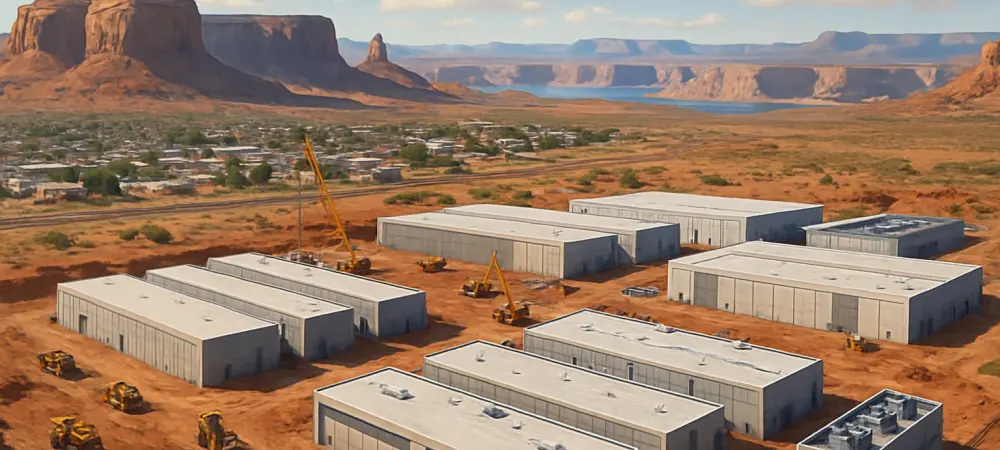
I’m thrilled to sit down with Dominic Jainy, a seasoned IT professional whose expertise in artificial intelligence, machine learning, and blockchain offers a unique lens on the intersection of technology and urban development. With a passion for applying cutting-edge solutions across industries, Dominic has been closely following the proposed 500-acre data center project in Page, Arizona, by Huntley LLC. Today, we’ll dive into the complexities of bringing a massive 1GW campus to a remote area, exploring the economic potential, community pushback, infrastructure challenges, and innovative energy solutions tied to this $10 billion investment, all while addressing the delicate balance between progress and preservation in a small city founded in 1957.
How do you see the development of a massive 1GW data center in a remote location like Page, Arizona, playing out, particularly in terms of key challenges and the steps needed for infrastructure adaptation?
Developing a project of this scale in a remote area like Page is no small feat, and the challenges are multifaceted. First, you’ve got the sheer logistics of connectivity—data centers need robust fiber optic networks, and laying that in a place 275 miles from major hubs like Phoenix or Las Vegas means significant upfront costs and engineering hurdles. I recall a similar project in rural Nevada a few years back where the lack of existing infrastructure delayed the timeline by nearly 18 months due to permitting and terrain issues; Page could face similar delays given its rugged landscape near Horseshoe Bend. Then there’s the power demand—a 1GW campus is a beast, and while the nearby Glen Canyon Dam offers 1.32GW capacity, integrating that supply or building an on-site energy project requires meticulous planning, from grid upgrades to backup systems. Water for cooling is another sticking point in a desert region, often requiring innovative recycling systems or negotiations for access, which can stir local tension. Step by step, you’d start with a detailed feasibility study—which is already planned—followed by environmental impact assessments, then infrastructure builds like roads and power lines, all while engaging stakeholders to ensure the community isn’t blindsided. Balancing this with local concerns means transparent communication; otherwise, opposition, like the petition with over 1,475 signatures, can derail even the best-laid plans.
What kind of transformative impact could a $10 billion investment have on a small city like Page, and how might it reshape the local economy or job market based on past examples you’ve seen?
A $10 billion investment in a city like Page, founded in 1957 with a modest population, is like dropping a meteor into a quiet pond—the ripples are immense. Economically, it could be a game-changer, bringing in thousands of jobs, both during construction and long-term for operations, from technicians to security staff. I remember a data center project in a small Midwest town a decade ago where the local unemployment rate dropped by nearly 5% within two years due to direct and indirect job creation—think not just the campus itself, but also new businesses like cafes and housing to support the influx of workers. In Page, this could mean millions in tax revenue for schools and public services, potentially revitalizing a community tied historically to the Glen Canyon Dam construction. But it’s not all rosy; I’ve seen firsthand how such rapid growth can strain local resources, driving up housing costs and leaving some residents feeling pushed out. The key is ensuring that a chunk of that $7 million land sale and subsequent investments directly benefit locals through training programs or infrastructure upgrades, creating a sense of shared prosperity rather than displacement.
Given the strong local opposition, with over 1,475 signatures on a petition against the project near Horseshoe Bend, what do you think are the driving concerns, and how might developers address them?
The opposition in Page, evidenced by over 1,475 signatures on that Change.org petition, likely stems from a deep connection to the land and its cultural and environmental significance. Horseshoe Bend isn’t just a scenic spot; it’s a symbol of the region’s natural beauty, drawing tourists and holding spiritual value for many, including local Indigenous communities. I’ve seen similar pushback in projects near sacred or iconic sites where fears of pollution, noise, or visual blight from a sprawling 500-acre campus can feel like an assault on identity—imagine waking up to the hum of servers instead of the quiet of the desert. Environmental concerns are also huge; data centers guzzle water and energy, and in a dry area like this, the strain on resources could be palpable. Developers need to prioritize listening—holding town halls, not just PR stunts, to hear specific fears. From there, they can implement visible mitigations, like green design with solar panels, water recycling systems, or even buffer zones to preserve views. In a past project I advised on, we partnered with locals to co-design landscaping that hid facilities while funding a community park—it didn’t eliminate opposition, but it turned skeptics into cautious allies. Transparency about impacts and benefits is non-negotiable here.
With the Glen Canyon Dam nearby providing 1.32GW of capacity, how feasible is it for a data center to leverage such a power source, and what logistical or innovative approaches might be involved?
Tapping into the Glen Canyon Dam’s 1.32GW capacity for a 1GW data center campus is a tantalizing idea, but it’s not as simple as plugging in a cord. Logistically, you’d start by assessing grid access—data centers need stable, uninterruptible power, so connecting to the dam would involve building or upgrading transmission lines to handle high-voltage delivery over potentially rough terrain, which could cost millions. Next, you’d negotiate power purchase agreements, ensuring priority access without disrupting local needs, since Page’s history is tied to that dam since its 1964 launch. Innovatively, Huntley LLC’s mention of an on-site energy project could mean pairing dam power with renewables like solar farms on the 500 acres, creating a hybrid model I’ve seen work in California to offset peak loads. Challenges include regulatory hurdles—federal oversight of the dam means layers of approvals—and potential community backlash if locals feel their energy is being “stolen.” I once worked on a project near a hydroelectric source where we had to install real-time usage dashboards for public transparency; it eased tensions by showing we weren’t hogging resources. It’s a tightrope, but with careful planning, this could be a model for sustainable tech infrastructure.
Can you shed light on how protective clauses, like the one allowing Page to repurchase land at $14,000 per acre if conditions aren’t met, function in large land deals, and what specific triggers or examples might illustrate this?
Protective clauses like the one in Page’s agreement, allowing the city to repurchase the 500 acres at the original $14,000 per acre if conditions aren’t met, are a safety net for municipalities in high-stakes deals. Essentially, they’re contractual stipulations that give the seller—in this case, the city—leverage to undo the sale if the buyer doesn’t deliver on promises, like specific development timelines or economic benefits. Common triggers might include failure to secure permits within a set period, not breaking ground on the data center within, say, two years, or missing job creation targets tied to that $10 billion investment. I’ve seen this play out in a deal in the South where a city sold land for a manufacturing plant, but when the company missed its construction deadline by 18 months due to funding issues, the city invoked the clause, bought back the land, and resold it to another developer. It’s a powerful tool, but enforcing it can get messy—legal battles over “conditions” can drag on, and in Page, with opposition already brewing, it might fuel further distrust if not handled transparently. For this to work, both sides need crystal-clear terms from day one, ideally with community input on what “success” looks like. It’s not just a legal safeguard; it’s a trust mechanism.
What’s your forecast for the future of large-scale data center projects in rural areas like Page, considering both technological trends and community dynamics?
I see the trend of data centers popping up in rural areas like Page continuing to grow, driven by the insatiable demand for cloud computing and AI processing, which need vast spaces and cheap land—Page’s $14,000 per acre is a steal compared to urban rates. Technologically, we’re moving toward more sustainable designs, with innovations in cooling and energy efficiency that could lessen environmental footprints, making these projects more palatable to skeptics. However, community dynamics will remain the wildcard; opposition like the 1,475-signature petition in Page signals a broader push for local control over development, and I expect more cities to demand clauses like the land repurchase option or direct community benefits baked into deals. My forecast is a tug-of-war—tech companies will keep eyeing rural spots for cost and scale, but success will hinge on genuine partnerships with locals, not just top-down decisions. If done right, as I’ve seen in a few progressive projects, these campuses can become economic engines without erasing a town’s soul; if mishandled, they’ll spark resentment that could stall the industry’s rural expansion for years.