

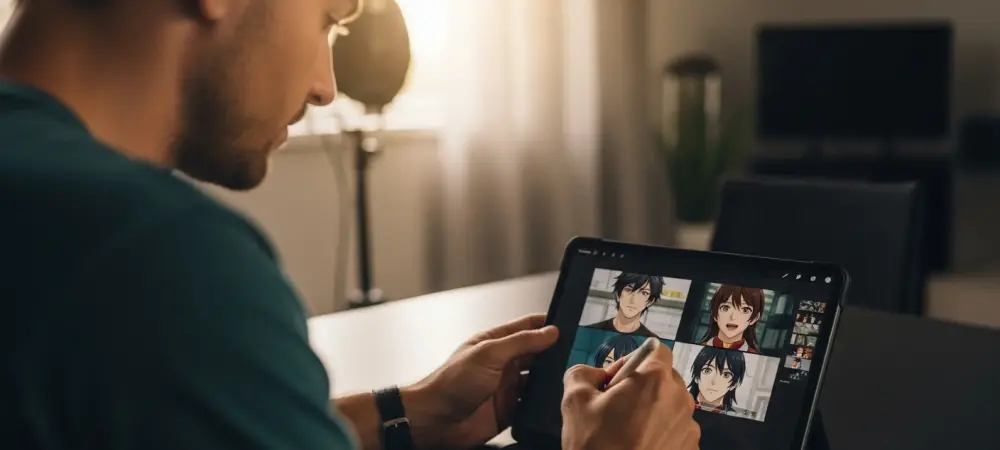
Today we’re speaking with Dominic Jainy, an IT professional whose work at the intersection of artificial intelligence and machine learning offers a unique perspective on the next wave of digital media. As generative video rapidly moves from a novelty to a practical tool, we’re exploring a critical evolution: the shift from silent, disconnected clips to fully integrated audio-visual experiences. We’ll delve into the technical hurdles and creative possibilities of models that generate sound and picture simultaneously, how abstract artistic direction is translated into code, and the strategic focus on creating polished, production-ready content that could reshape workflows for creators everywhere.
The article highlights Seedance 1.5 Pro’s “native audio-visual” approach. Could you walk us through the technical challenges of generating audio and video simultaneously and share an example of how this improves lip-sync or sound effect timing compared to traditional post-production methods?
Certainly. The core challenge lies in breaking away from the sequential, layered thinking of traditional production. For decades, we’ve captured visuals first and then spent countless hours in post-production adding dialogue, foley, and music. AI initially mirrored this, generating a silent video and leaving the audio to other tools or human editors. The native approach, however, treats the audiovisual experience as a single, unified entity from the very start. The model must learn the intricate relationships between a specific mouth shape and the phoneme it produces, or how the visual of a footstep on gravel must coincide perfectly with a crunching sound. It’s an immense computational challenge because these connections are simultaneous, not sequential. For example, in a character-driven scene, a traditional AI might generate a character speaking, but the lip movements would be a generic approximation. You’d then have to dub the audio, and it would likely feel slightly off, like a poorly translated film. With a native model, the prompt to generate “a character whispering a secret” produces the hushed tone, the subtle mouth movements, and the specific timing of the breath all at once. The result feels organic and emotionally resonant in a way that layered, post-produced AI content simply can’t achieve yet.
You mention that creators can specify “emotional direction” and “cinematic camera control.” How does the model interpret such abstract prompts? Can you describe the step-by-step process a user would follow to create a tracking shot with a specific emotional tone and what metrics measure its success?
This is where we see the model moving beyond simple image generation into true storytelling. It interprets these abstract prompts by drawing on a vast library of existing cinematic language. The AI has been trained on countless films, where shots are implicitly tagged with emotional and technical data. So, when a user prompts, “A slow, tense tracking shot following a character down a dark hallway,” the model deconstructs it. “Tracking shot” triggers a specific algorithm for smooth, parallel camera movement. “Tense” and “dark” are the crucial emotional modifiers. They influence the pacing to be deliberate, perhaps introduce a subtle, almost imperceptible handheld-style jitter to create unease, and simultaneously generate low, ambient sounds that we associate with suspense. The success isn’t measured by a simple numerical score but by a qualitative alignment with the patterns it learned. The output is successful if it evokes the same feeling a human director would aim for with those same instructions, making the creator feel more like a director and less like an operator.
Maintaining character consistency is a major challenge in AI video, and the article notes Seedance 1.5 Pro shows progress here. What specific advancements enable this, and could you share an anecdote where this consistency was crucial for creating a short narrative film or brand storytelling video?
The key advancement is in the model’s ability to maintain a ‘memory’ of the subject across a sequence of frames or even different shots. Early models were essentially creating a new person in every other frame, causing a flickering, unstable effect. Newer architectures can lock onto key facial features, clothing details, and physical proportions and preserve them. This is absolutely critical for any form of narrative. Imagine a brand creating a short video about its founder’s journey. The story might cut from a shot of her working late at a desk to a shot of her presenting to investors. If her appearance—her hairstyle, her blouse, her facial structure—changes between those two shots, the audience’s immersion is shattered. The narrative becomes unbelievable. With the consistency shown in models like Seedance 1.5 Pro, that founder remains visually coherent throughout the story. This continuity builds trust and allows the emotional arc of the narrative to land, turning a series of disconnected clips into a powerful piece of brand storytelling.
Seedance 1.5 Pro prioritizes “quality per second” over raw length. What was the strategic thinking behind this focus on polish and coherence? Can you elaborate on how this choice shapes the model’s development roadmap and what it means for your target user, the professional creator?
The strategy is a clear pivot from treating AI video as a novelty to positioning it as a professional tool. Many first-generation models focused on generating longer videos to impress users, but the output was often unstable and unusable in a real-world workflow. The “quality per second” approach recognizes that a professional creator doesn’t need a rambling, five-minute AI clip; they need a perfect, five-second shot that is visually coherent, perfectly synchronized, and cinematically intentional. This focus shapes the development roadmap by prioritizing features like advanced camera controls, nuanced emotional interpretation, and flawless audio-visual sync over simply extending the runtime. For the professional user—a marketer, a filmmaker, a social media manager—this is a game-changer. It means the AI-generated asset is closer to being ‘production-ready.’ They can generate a high-impact shot and drop it directly into their timeline, dramatically accelerating their workflow and reducing the costs and complexity associated with traditional production.
What is your forecast for native audio-visual AI over the next few years?
I believe the native audio-visual approach will rapidly become the industry standard, making the idea of generating silent video seem archaic. We’re on a trajectory where these models will not only get better at synchronizing audio and video but will also develop a deeper, more contextual understanding of how sound design drives narrative. I foresee the emergence of specialized models fine-tuned for specific genres—one that excels at the fast-paced, sound-rich environment of action sequences, and another that understands the subtle, atmospheric audio of a documentary. Ultimately, this integration will continue to blur the lines between generation, production, and post-production, empowering individual creators and small teams to produce content with a level of polish and immersion that, until now, was only achievable with a full studio and a significant budget. The future of AI media isn’t just visual; it’s a complete sensory experience, generated from a single creative thought.