

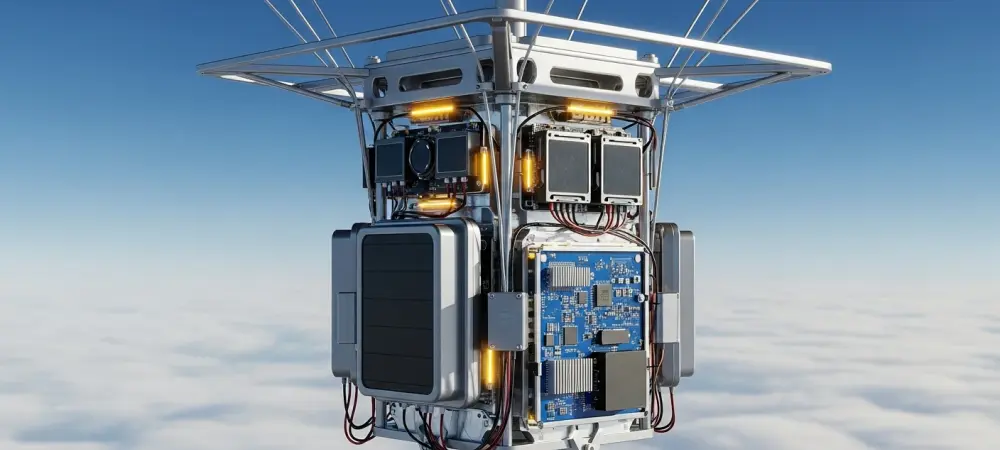
A massive silver oblong craft silently hovered sixty-five thousand feet above the Earth for nearly two weeks, proving that the stratosphere is finally ready to host a global digital revolution. This successful endurance mission by Sceye signifies a monumental shift in how infrastructure provides service to “dead zones,” effectively transforming the near-vacuum of space into a functional layer for 5G.
Terrestrial towers often fail due to physical barriers, while orbital satellites remain thousands of miles away, introducing noticeable latency. Sceye’s platforms provide a bridge that offers the coverage of a satellite with the speed and accessibility of a local tower. This capability addresses the missing link in modern telecommunications, ensuring that no geographic region remains out of reach.
The Evolution of High-Altitude Platform Systems
The digital divide persists as a significant infrastructure challenge, leaving remote regions disconnected from the modern economy. High-Altitude Platform Systems, commonly known as HAPS, occupy the sweet spot of the aerospace hierarchy, floating safely above commercial air traffic but remaining far closer than orbital crafts.
By harnessing the natural buoyancy of helium, these crafts provide a sustainable and low-latency alternative to traditional methods. Unlike satellite launches that require massive fuel consumption, these platforms offer a reusable and environmentally friendly way to deliver high-speed data. This middle-ground technology allows for a more agile response to connectivity needs compared to laying thousands of miles of fiber-optic cable.
Breaking Down the New Mexico Endurance Trials
The recent flight over the rugged landscapes of New Mexico served as a grueling assessment of how advanced materials survive the volatile stratospheric environment. Maintaining a stable position for twelve days allowed engineers to gather critical telemetry on power management through solar arrays and overall system health.
Survival at this altitude requires a skin capable of withstanding intense UV radiation and extreme temperature swings. The success of this trial provided the necessary validation for moving from experimental prototypes toward a permanent fleet of 5G-emitting towers in the sky. This data remains essential for ensuring that future deployments can withstand months of continuous operation.
Redefining Connectivity through Stratospheric Innovation
Industry analysts view balloon-based HAPS as a more stable solution than fixed-wing solar drones, which must maintain constant forward momentum to stay aloft. Sceye’s design prioritizes payload capacity, enabling the craft to carry sophisticated communication hardware alongside high-resolution environmental sensors.
This dual-purpose approach ensured that while the platform provided high-speed internet, it also tracked methane emissions and climate data with precision. Such versatility made the system an invaluable asset for both telecommunications providers and environmental researchers. By combining these functions, the platform maximizes the economic and social utility of every flight.
Preparing for the Next Phase of Commercial Deployment
As operations moved toward practical commercial applications, the focus shifted to integrating these platforms into existing telecommunications grids. The roadmap included establishing regional hubs and refining direct-to-device 5G transmission technology to ensure seamless user experiences in remote areas.
Aviation authorities cooperated to ensure airspace safety while engineers perfected the transition from test flights to a persistent network. This progress established a clear path for global connectivity solutions that finally reached the most isolated communities. These steps allowed for a future where a stratospheric signal became as reliable as a standard urban connection.