

The transition from a high-growth startup to an established enterprise-level organization often reveals significant cracks in the digital foundations that once seemed perfectly adequate for daily operations. Many businesses initially rely on native or out-of-the-box connectors for Microsoft Dynamics 365 Business Central because they provide an attractive combination of low setup costs and immediate simplicity during the early stages of market entry. However, as the volume of transactions increases and the complexity of operational workflows intensifies, these basic bridges frequently transform into operational liabilities that hinder rather than facilitate progress. The fundamental challenge lies in the shifting landscape of modern commerce, where the requirements for multi-warehouse synchronization and real-time inventory visibility quickly outpace the capabilities of standard, one-size-fits-all integration tools. For a company to achieve sustainable scaling, it must move beyond these rudimentary links and embrace a sophisticated architecture that maintains the ERP as the definitive single source of truth while ensuring the customer experience remains fluid across all digital touchpoints.
The Operational Limits of Native Connectors
Native connectors, such as the standard Shopify or BigCommerce links provided within the Microsoft ecosystem, serve a necessary purpose by offering a standardized bridge for product catalogs and order intake. These tools are often sufficient for straightforward retail scenarios where the primary goal is to move a limited number of SKUs to a single storefront without complex pricing rules or logistical hurdles. Because they require minimal custom development, they allow smaller teams to launch their online presence quickly, focusing their resources on marketing rather than technical infrastructure. However, these connectors were designed with simplicity in mind, not the high-performance scalability required by a maturing mid-market entity. As the business grows, the lack of flexibility in these pre-built tools creates a ceiling that prevents the organization from adopting more sophisticated selling strategies, such as complex multi-tier distribution or advanced promotional modeling.
When a business matures, it inevitably encounters technical walls where native connectors fail to support the nuances of enterprise-level commerce. These limitations are most pronounced in B2B environments where negotiated contract pricing and customer-specific discounts are the norm rather than the exception. A standard connector often lacks the logic to pull complex pricing hierarchies directly from Business Central, forcing staff to manually replicate these structures on the web platform or risk displaying incorrect prices to valued partners. Furthermore, managing inventory across multiple geographic locations or disparate third-party logistics providers becomes a significant hurdle. Native tools often struggle to reconcile stock levels across various bins and zones in real time, leading to discrepancies that require manual intervention. This reliance on workarounds negates the efficiency gains promised by automation and places a heavy burden on administrative teams to maintain data integrity across the stack.
Signs It Is Time to Upgrade Your Integration
Businesses frequently ignore the subtle symptoms of an outdated integration until those issues manifest as public-facing failures that damage the brand’s reputation. One of the most prominent indicators of an inadequate system is synchronization latency, a condition where inventory updates and order data flow between the ERP and the storefront in scheduled batches rather than instantaneous bursts. In the fast-paced environment of 2026, an hourly or even a fifteen-minute delay is often too slow to prevent the overselling of high-demand items. When a customer completes a purchase only to receive a backorder notification hours later because the system failed to account for a simultaneous sale on another channel, the resulting erosion of trust is immediate. This lack of real-time visibility prevents the organization from providing accurate available-to-promise dates, which is a critical component of maintaining a competitive advantage in both B2C and B2B markets.
Beyond external customer satisfaction, the emergence of internal operational bottlenecks serves as a clear warning that the current integration architecture has reached its breaking point. If customer service and warehouse teams find themselves spending a growing percentage of their day manually correcting synchronization errors or “swivel-chairing” between multiple software dashboards to verify order details, the system is no longer providing value. A truly scalable integration should act as a silent facilitator, reducing the need for human touchpoints in the data entry process. When employees are forced to become the “human middleware” that bridges the gap between disparate systems, the risk of data entry errors increases exponentially. This fragmentation of visibility across various sales channels leads to a chaotic environment where no one is certain which system holds the most accurate information, ultimately stalling growth and complicating financial reporting processes at the end of the month.
The Advantages of API-Driven Middleware
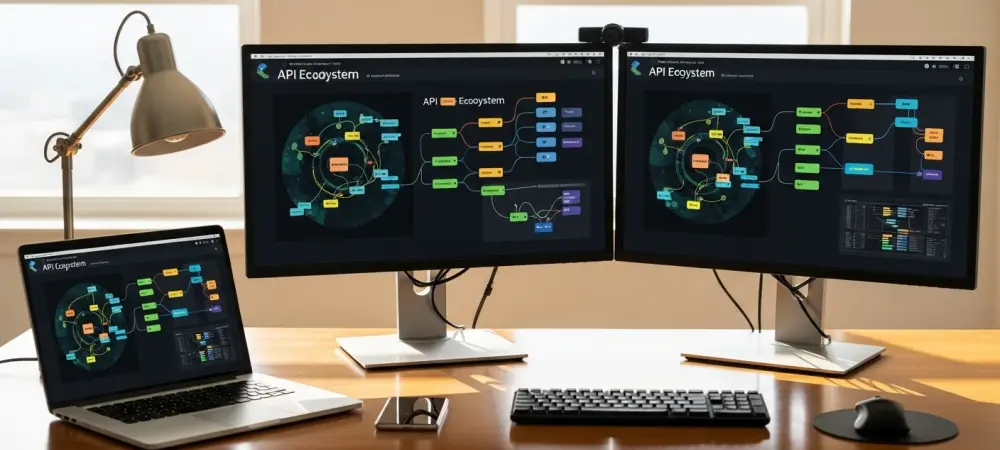
The modern standard for scalable eCommerce involves a strategic shift toward API-driven middleware, which functions as a sophisticated translator and orchestrator between the storefront and the central ERP system. By positioning this dedicated layer between Business Central and the digital commerce platform, an organization effectively decouples its core business logic from its front-end presentation. This architectural isolation ensures that a major update to the storefront or a change in the ERP’s internal configuration does not result in a catastrophic break of the entire connection. Middleware platforms provide a centralized environment where business rules—such as tax calculations, shipping logic, or currency conversions—are managed independently. This prevents the scattering of logic across multiple platforms, making it significantly easier for IT teams to maintain, audit, and optimize the integration as the business requirements evolve over time.
From a technical perspective, the most significant advantage of middleware is its transition to an event-driven architecture that responds to data changes the moment they occur. Unlike the rigid, scheduled batches of native connectors, an event-driven system triggers an update across the entire network as soon as a transaction is posted or an inventory level changes in the warehouse. This ensures that the storefront, mobile apps, and marketplace listings are always perfectly aligned with the real-time status of the ERP. Furthermore, advanced middleware offers robust error-handling capabilities that are often missing from basic tools. Features like automated retries, detailed transaction logging, and proactive alerting allow technical teams to resolve minor glitches before they impact the bottom line. This level of resilience ensures that the data pipeline remains open even during peak traffic periods, providing a stable foundation for revenue generation without the constant fear of system downtime.
Automating Critical Data Flows for Growth
To achieve true scalability, businesses must prioritize the full automation of product and catalog data flows, ensuring that Business Central remains the uncontested master repository for all information. A robust integration platform should facilitate the seamless transmission of not just basic pricing and stock levels, but also complex metadata, including high-resolution imagery, technical specifications, and localized descriptions for international markets. By automating these flows, organizations eliminate the need for duplicate data entry, which is a primary source of inconsistency across various sales channels. When the online catalog is a perfect, real-time reflection of the ERP’s internal records, the marketing and sales teams can launch new products with confidence, knowing that every detail—from shipping dimensions to category hierarchies—is accurate. This level of synchronization is essential for maintaining a professional image and ensuring that customers have the information they need to make informed purchasing decisions.
Beyond basic product information, a sophisticated integration must be intelligent enough to handle the complex, customer-centric data flows that define modern B2B commerce. This involves recognizing individual customer identities the moment they log into the storefront and dynamically applying their specific credit limits, payment terms, and negotiated contract pricing. Instead of forcing a B2B buyer to navigate a generic retail experience, the automated system presents a personalized portal that mirrors their unique relationship with the company. Furthermore, the automation must extend through the entire order-to-fulfillment loop, closing the communication gap by automatically pushing tracking numbers, shipment confirmations, and partial fulfillment updates back to the customer. This transparency reduces the burden on customer service representatives, who no longer need to manually answer inquiries regarding order status, allowing them to focus on high-value activities that drive long-term loyalty and business expansion.
Choosing the Right Path Forward
When evaluating the strategic path toward a more scalable infrastructure, organizations typically weigh the pros and cons of direct connectors, specialized middleware platforms, and fully custom-coded development. While direct connectors remain an attractive option for very small operations with limited SKU counts, they offer almost no room for the flexibility required by mid-market players. At the other end of the spectrum, custom-coded solutions provide total control but often lead to significant technical debt and high long-term maintenance costs that can drain an IT budget. Most successful organizations in the current market have found that purpose-built middleware platforms offer the optimal balance of time-to-value and future-proof flexibility. These solutions are designed to handle multi-storefront, multi-channel, and B2B requirements right out of the box, allowing businesses to adapt to shifting market conditions and new technology trends without the need for extensive, risky, and expensive bespoke programming efforts.
The transition to a more powerful integration system was most successfully achieved when businesses followed a structured, phased roadmap rather than attempting a high-risk “big bang” implementation. By initially focusing on the most critical pain points—such as stabilizing order intake and ensuring real-time inventory accuracy—organizations stabilized their core operations and realized an immediate return on investment. Once the foundation was secure, subsequent phases introduced advanced features like customer-specific pricing and multi-channel expansion into global marketplaces or specialized B2B portals. This iterative approach allowed teams to learn and adjust their strategies based on real-world data while minimizing the risk of operational disruption. Ultimately, the decision to move beyond native connectors transformed the digital storefront from a simple sales portal into a high-performance engine capable of supporting sustainable growth. This strategic shift ensured that the technology stack remained an enabler of progress rather than a bottleneck to future innovation.