
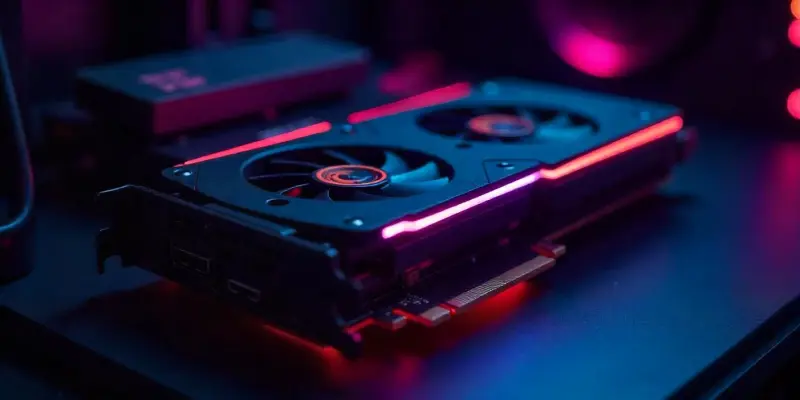
Sandisk Unveils World’s Fastest PCIe Gen 5 SSD with RGB Option

Article Highlights
Off On

In a significant leap forward for computing technology, SanDisk has launched the new WD_Black SN8100 NVMe SSD, delivering unparalleled speeds and performance benchmarks. It stands proud as the fastest PCIe Gen 5 SSD available, boasting impressive sequential read speeds of up to 14,900MBps. In the highly competitive sector of high-speed storage solutions, the SN8100 slightly outpaces the popular Samsung 9100 Pro, which was previously known for its 14,800MBps read speeds. This advancement solidifies SanDisk’s position at the forefront of the storage market. The new SSD does not disappoint when it comes to writing capabilities either, with stellar sequential write speeds reaching 11,000MBps. Additionally, the device achieves an astounding 2.3 million IOPs random write speeds for its 2TB and 4TB models. This performance ensures that users benefit from speedy data processing and storage efficiency, greatly enhancing overall system performance.

Compatibility and Target Market

The WD_Black SN8100 showcases adaptability through its seamless compatibility with Intel Core Ultra 200S processors. Historically, these processors faced latency with high-speed SSDs, raising concerns about similar issues with the SN8100. Upcoming performance tests aim to clarify these concerns, guiding consumers in making sound decisions. SanDisk targets high-performance PCs, gamers, and AI applications with this release, particularly attracting gamers with an optional heatsink featuring customizable RGB lighting—enhancing both aesthetics and functionality. Storage options include 1TB, 2TB, and 4TB models, with a future 8TB model expected, albeit at a premium given the 4TB model’s $569.99 price. This SSD innovation by SanDisk expands consumer choices and significantly advances storage technology to address diversifying demands. With its potential to avoid compatibility issues, the SN8100 may become a cornerstone in gaming and high-performance computing for years, establishing new benchmarks in speed and user experience.

Explore more

AI Redefines Software Engineering as Manual Coding Fades

The rhythmic clacking of mechanical keyboards, once the heartbeat of Silicon Valley innovation, is rapidly being replaced by the silent, instantaneous pulse of automated script generation. For decades, the ability to hand-write complex logic in languages like Python, Java, or C++ served as the ultimate gatekeeper to a world of prestige and high compensation. Today, that gate is being dismantled

Is Writing Code Becoming Obsolete in the Age of AI?

The 3,000-Developer Question: What Happens When the Keyboard Goes Quiet? The rhythmic tapping of mechanical keyboards that once echoed through every software engineering hub has gradually faded into a thoughtful silence as the industry pivots toward autonomous systems. This transformation was the focal point of a recent gathering of over 3,000 developers who sought to define their roles in a

Skills-Based Hiring Ends the Self-Inflicted Talent Crisis

The persistent disconnect between a company’s inability to fill open roles and the record-breaking volume of incoming applications suggests that modern recruitment has become its own worst enemy. While 65% of HR leaders believe the hiring power dynamic has finally shifted back in their favor, a staggering 62% simultaneously claim they are trapped in a persistent talent crisis. This paradox

AI and Gen Z Are Redefining the Entry-Level Job Market

The silent hum of a server rack now performs the tasks once reserved for the bright-eyed college graduate clutching a fresh diploma and a stack of business cards. This mechanical evolution represents a fundamental dismantling of the traditional corporate hierarchy, where the entry-level role served as a primary training ground for future leaders. As of 2026, the concept of “paying

How Can Recruiters Shift From Attraction to Seduction?

The traditional recruitment funnel has transformed into a complex psychological maze where simply posting a vacancy no longer guarantees a single qualified applicant. Talent acquisition teams now face a reality where the once-reliable job boards remain silent, reflecting a fundamental shift in how professionals view career mobility. This quietude signifies the end of a passive era, as the modern talent