

Samsung has made waves with its latest announcements, introducing a mix of mid-range smartphones and revolutionary foldable devices set to make a significant impact this year. The brand’s forward-thinking approach and commitment to diverse product offerings continue to solidify its leadership in the tech sector. These new releases showcase Samsung’s blend of innovative technologies, with a focus on enhancing user experience across various market segments.
Expanding Mid-Range Offerings
One of the key introductions is the Samsung Galaxy M56. This device is powered by the Exynos 1480 chipset and is equipped with 8GB of RAM, positioning it as a strong contender in the mid-range market. The Galaxy M56 combines notable performance and affordability, aiming to provide users with a powerful experience without the premium price tag typically associated with high-end models.This initiative is part of Samsung’s strategy to make advanced technology accessible to a broader audience.
The Galaxy A26 also joins the mid-range lineup, featuring OLED display driver chips from DB Global Chip. This inclusion marks a significant upgrade for budget models, offering enhanced power efficiency and reliability—features usually reserved for higher-end smartphones.The use of OLED technology in a budget device underscores Samsung’s commitment to delivering quality and performance across its entire range, making sophisticated display technology more attainable for all consumers.
Rugged Devices for Enterprise
Samsung is reinforcing its position in the rugged device market with the upcoming Galaxy XCover 7 Pro and Galaxy Tab Active 5 Pro. Designed for durability and enterprise use, these devices cater to environments requiring robust, reliable performance.The Galaxy XCover 7 Pro is expected to feature a Snapdragon 7s Gen 3 processor and run on Android 15, tailored to meet the demanding needs of professional users. Available in various model numbers, the XCover 7 Pro offers flexibility for different market requirements, emphasizing customization and versatility.The Galaxy Tab Active 5 Pro complements the rugged smartphone offering with similar engineering aimed at field professionals. This rugged tablet parallels the XCover 7 Pro in terms of processing power and memory, ensuring it is a powerful tool for enterprise applications.Both devices are anticipated to launch by May, following the appearance of their support pages on Samsung’s global websites. These additions highlight Samsung’s comprehensive strategy to address diverse market needs, from consumer electronics to specialized enterprise solutions, further solidifying its market presence.
Delays in Flagship Release
While Samsung pushes forward in many areas, the release of the Galaxy S25 Edge has faced a delay. Originally scheduled for an April 15 release, this flagship model will now debut in May or June.This postponement hints at potential recalibrations or logistical considerations within Samsung, emphasizing the intricate planning required for launching high-profile devices. Despite the setback, excitement remains high, especially after a brief listing by a Vietnamese retailer revealed key details about the handset before quickly retracting the webpage.The Galaxy S25 Edge is poised to feature significant upgrades, including a 12GB RAM and 256GB storage variant, with a possible higher-end 512GB storage option. Its design is anticipated to include thin bezels, an Infinity-O display, and a dual-camera setup on the backside, reflecting a design language akin to the Galaxy Z Fold 6.The delay underscores Samsung’s commitment to ensuring that its flagship offerings meet the highest standards of quality and innovation before reaching consumers.
Pushing Foldable Boundaries
Samsung continues to lead in foldable technology with innovations that push the envelope, reflected in a newly registered patent showcasing a potential quad-fold device.This cutting-edge design features a unique triple hinge system and four interconnected display panels, indicating Samsung’s pursuit of greater versatility and a larger continuous display in foldable devices. Such advancements point to a future where foldable technology offers seamless multi-panel experiences, enhancing productivity and entertainment possibilities.
The patent outlines additional features like a USB Type-C port and a triple camera setup, catering to the evolving needs of tech enthusiasts and professionals alike.Samsung’s exploration into quad-fold technology exemplifies its forward-thinking approach, aiming to set new benchmarks in the foldable segment and maintain its leadership position. These innovations are expected to pave the way for more versatile and user-friendly foldable devices, continually reshaping the landscape of mobile technology.
Upcoming Foldable Devices
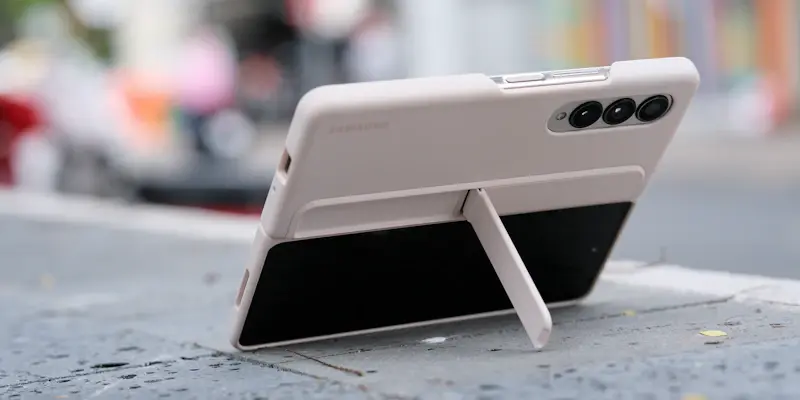
Anticipation builds around the Galaxy Z Flip 7 and Z Fold 7, with third-party accessory leaks shedding light on their designs. The Galaxy Z Flip 7 is expected to feature a larger cover screen, enhancing usability and visual appeal.Such improvements indicate Samsung’s focus on refining user experience, making foldable devices more practical for daily use.
The Z Fold 7, on the other hand, promises incremental yet impactful enhancements, potentially including a wider and taller cover screen. This development aligns with previous dimension rumors, suggesting a screen size increase to 6.5 inches externally and 8.2 inches internally.These devices are slated for release in July, confirming Samsung’s ongoing dedication to advancing foldable technology. The continuous improvement of these models showcases Samsung’s commitment to innovation, ensuring that each new iteration offers superior functionality and design.
Strategic and Market Implications
Samsung’s recent announcements underscore a strategic blend of innovation and market responsiveness. By extending advanced features to mid-range smartphones, Samsung is broadening its appeal and making high-performance technology accessible to a wider audience.This approach not only diversifies their product offerings but also reinforces their commitment to delivering value across different price segments.
The company’s focus on rugged devices highlights its recognition of the enterprise market’s unique needs. By providing robust smartphones and tablets designed for challenging environments, Samsung is catering to a niche but crucial segment, ensuring it meets the demands of various industries. Meanwhile, the postponed release of the Galaxy S25 Edge signifies the meticulous planning involved in launching flagship devices, reflecting the thorough considerations required to maintain the brand’s reputation for excellence.
Leading the Foldable Segment
Samsung has made headlines with its latest announcements, unveiling a combination of mid-range smartphones and groundbreaking foldable devices that are expected to make a major impact this year. The company’s visionary approach and dedication to offering a wide variety of products keep reinforcing its stronghold in the tech industry. These new offerings highlight Samsung’s unique blend of cutting-edge technology, focusing on improving the user experience across different market segments.The new mid-range smartphones boast impressive features that rival higher-end models, making advanced technology accessible to a broader audience. Meanwhile, the foldable devices showcase Samsung’s innovative spirit, presenting a new way to interact with smartphones.These devices promise to enhance multitasking, offering larger screens while maintaining portability. Samsung’s commitment to pushing boundaries and embracing new technologies makes it a leader in setting trends and driving the industry’s evolution.
With these releases, Samsung continues to cater to a diverse consumer base, delivering quality, performance, and groundbreaking design that set new standards in the industry.