

Understanding the Landscape of Premium Tablet Accessories
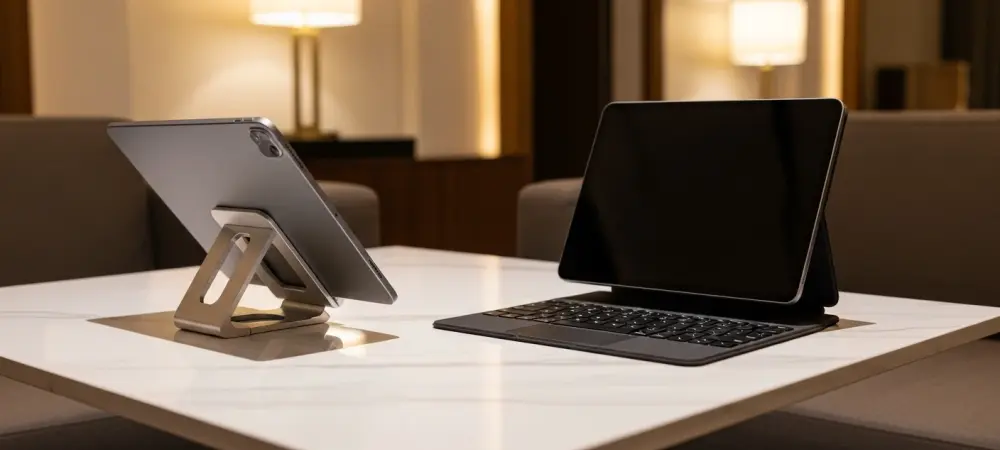
The lines separating ultra-premium tablets from professional laptops have blurred so significantly that peripherals now dictate the overall efficiency of the entire mobile workflow. As users demand more power, Samsung and Apple have responded with high-end accessories designed to replace the traditional computer. The Samsung Pro Keyboard, tailored for the Galaxy Tab S11 Ultra, enters a market long dominated by the Apple Magic Keyboard for the 13-inch iPad Pro. These devices represent the pinnacle of mobile productivity, aiming to transform slate-style tablets into workstations through advanced hardware integration. By bridging the gap between touch-first interfaces and physical input, these keyboards play a vital role in the competition between Samsung’s DeX ecosystem and Apple’s iPadOS. They are no longer mere add-ons but essential components for anyone seeking a true “laptop replacement” experience in a portable form factor.
Direct Comparison of Hardware and Functionality
Build Quality, Materials, and Physical Design
Samsung has shifted toward a robust aluminum body for its flagship keyboard, a notable departure from the softer materials used in previous folio designs. This construction rivals Apple’s iconic cantilevered aesthetic, which utilizes a blend of polyurethane and aluminum to suspend the tablet. While Apple’s design remains a benchmark for industrial elegance, Samsung’s 81-key layout and 636-gram footprint emphasize structural rigidity and a traditional laptop feel.
The physical specifications reveal a focus on different priorities. Samsung’s heavier frame indicates a focus on stationary stability, whereas Apple prioritizes a balance between weight and portability. Both setups remain substantial, but the tactile feedback of Apple’s scissor-switch mechanism still provides a distinct typing experience compared to the slightly deeper travel found on the Samsung Pro Keyboard.
Productivity Features and Software Integration
Both manufacturers eliminate the frustrations of Bluetooth by utilizing physical connectors like Pogo pins and the Smart Connector. This ensures a lag-free connection and eliminates the need for separate charging. However, their functional philosophies diverge. Samsung incorporates a dedicated DeX key and an AI-specific hardware button, catering to users who leverage desktop-style multitasking and modern generative tools.
Apple instead focuses on its precision multi-touch trackpad and haptic feedback. While Samsung’s trackpad is 14.6% larger than its predecessor, providing more room for navigation, the software optimization of iPadOS still sets the standard for gesture-based control. Samsung’s hardware keys offer faster access to system-level features, but Apple’s trackpad remains the more fluid tool for navigating a mobile interface.
Economic Value and Market Positioning
Price positioning has become a major point of contention within the tech community. The Samsung Pro Keyboard carries a steep $399 MSRP, which actually surpasses the $349 price tag of the 13-inch Magic Keyboard. When combined with a $1,199 Galaxy Tab S11 Ultra, the total investment hits approximately $1,600. This puts the Android setup in direct financial competition with high-end professional laptops.
This premium pricing invites scrutiny regarding the total ecosystem cost. Buyers must decide if the heavy-duty aluminum build and specialized DeX integration provide more value than the slightly more affordable Apple peripheral. While Samsung uses more expensive materials, the higher cost for the keyboard alone has shifted the value proposition, making the iPad Pro setup look relatively more accessible for the first time.
Critical Limitations and Practical Challenges
Despite the high entry cost, the Samsung Pro Keyboard lacks essential features like key backlighting, a standard inclusion on the Magic Keyboard that most users expect at this price point. This omission is puzzling for a $399 professional tool meant for diverse environments. Furthermore, the Samsung model provides no rear protection for the tablet, leaving the glass back exposed when the device is in use or stored.
The sheer weight of 636 grams also makes the Samsung setup less mobile than many competitors, including the lighter Slim alternatives. Managing the bulk of the aluminum hinge mechanism raises questions about long-term durability and ergonomic comfort during extended travel. These hurdles suggest that even the most premium hardware can face challenges when trying to bridge the gap between mobile flexibility and desktop performance.
Final Verdict: Choosing the Right Productivity Setup
The comparative analysis showed that choosing between these peripherals depended largely on the specific software workflow and environmental needs of the user. While the Samsung Pro Keyboard offered a superior physical build and specialized DeX controls, its lack of backlighting proved to be a significant drawback. Conversely, the Apple Magic Keyboard remained the more balanced choice for most consumers due to its established ergonomics and backlit keys.
Ultimately, the decision leaned toward whether a user valued a larger trackpad and aluminum durability over the polished software synergy found in the Apple ecosystem. The high cost of the Samsung model introduced a new level of price sensitivity to the tablet market. Future iterations will likely need to address these functional gaps to justify such a premium investment for professional users.