

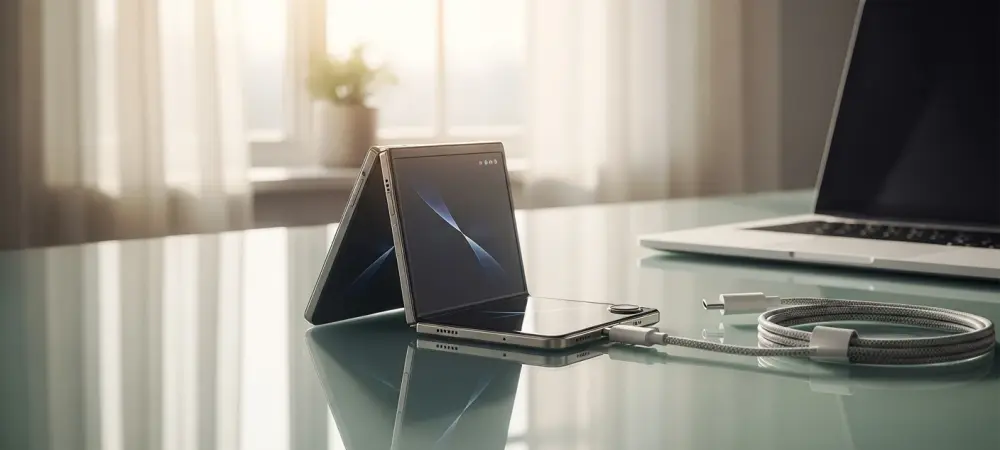
The persistent demand for long-lasting performance in the foldable market has often clashed with the physical limitations of dual-screen designs that prioritize thin profiles over power. Samsung has historically maintained a cautious stance regarding battery cell size, rarely deviating from the 4,400 mAh mark that defined its flagship series for several generations. This conservative approach is ending as the manufacturer prepares to introduce hardware that addresses the endurance concerns of professional power users.
The objective of this analysis is to explore the specific technical shifts occurring within the upcoming foldable lineup. Readers can expect an exploration of the rumored hardware specifications for the Galaxy Z Fold 8 and the introduction of a more budget-friendly alternative. These developments indicate a broader strategic move toward modernization in a highly competitive sector.
Key Questions: The Future of Foldable Power
What Specific Improvements Can Users Expect for the Galaxy Z Fold 8 Battery?
For years, the flagship foldable series has hit a ceiling that left enthusiasts wanting more, especially when compared to high-capacity competitors. The upcoming Galaxy Z Fold 8 aims to break this pattern by reportedly housing a 5,000 mAh total capacity, which is distributed across two internal cells. This transition represents a nearly 13 percent increase over the previous generation and suggests that internal engineering has finally optimized space for larger hardware.
This change is not merely about numbers; it is a response to the increasing power demands of larger, brighter displays and advanced multitasking software. While earlier models prioritized a thinner profile, the new design reflects a realization that meaningful longevity is a primary driver for consumer satisfaction. By increasing the rated capacity, the device can better handle the rigors of high-refresh-rate screens and 5G connectivity.
How Does the Galaxy Wide Fold Factor Into Samsung’s Strategy?
Beyond the main flagship, a new participant known as the Galaxy Wide Fold is expected to offer a different value proposition for those seeking large screens. This model will likely feature a 4,900 mAh battery, positioning it as a high-capacity alternative that does not sacrifice endurance despite a more accessible price point. This diversification suggests a strategic move to dominate different price tiers while maintaining a consistent focus on battery life. By introducing a mid-range foldable with a substantial battery, the company can appeal to a broader audience that might have been deterred by high costs. It bridges the gap between the compact Flip series and the ultra-premium Fold series. This approach ensures that the benefits of folding technology are available to a wider demographic without the typical trade-off in battery performance.
Will Charging Speeds Finally See a Modern Upgrade?
Despite the boost in capacity, raw size is only half the battle, as slow refueling speeds have often been a sticking point for Galaxy users. Rumors suggest the Galaxy Z Fold 8 will finally adopt 45W wired charging, aligning it with the capabilities seen in other top-tier mobile devices. This improvement would significantly reduce the time spent tethered to a wall, making the larger battery far more practical for daily use.
It is worth noting that while the Fold series advances, the Galaxy Z Flip 8 appears set to remain static in terms of its power configuration. This discrepancy highlights a focus on the larger form factor as the primary vehicle for high-performance hardware innovations. Such a shift toward faster charging and larger cells represents a necessary step in keeping pace with the global market.
Summary: Recapping the Shift in Hardware Priority
The move toward a 5,000 mAh capacity signals a departure from years of stagnation, effectively closing the gap with global rivals who already pushed the boundaries of foldable hardware. These updates, combined with the potential for faster charging, suggest a more mature approach to device longevity. The introduction of the Wide Fold further expands the ecosystem, ensuring that high-capacity batteries are no longer exclusive to the most expensive flagships.
Refining the power delivery system allows these devices to function more effectively as primary productivity tools rather than secondary gadgets. The upcoming launch will confirm whether these hardware enhancements are accompanied by software optimizations to further extend daily use. Ultimately, the focus has shifted toward balancing cutting-edge form factors with the reliable utility expected of modern smartphones.
Conclusion: Final Thoughts
The shift in strategy demonstrated that user feedback regarding endurance was a major factor in the design process for this generation. As the foldable market matured, prioritizing robust power delivery became as essential as the folding screen technology itself. This evolution invited a closer look at how hardware density will continue to redefine mobile productivity in the coming years.
Future considerations should focus on how these capacity increases will affect the overall weight and ergonomics of the devices. If the manufacturer successfully integrated larger batteries without compromising the foldable experience, it likely set a new standard for the industry. Users should evaluate how these longevity improvements align with their own multitasking needs as the technology becomes more accessible.