

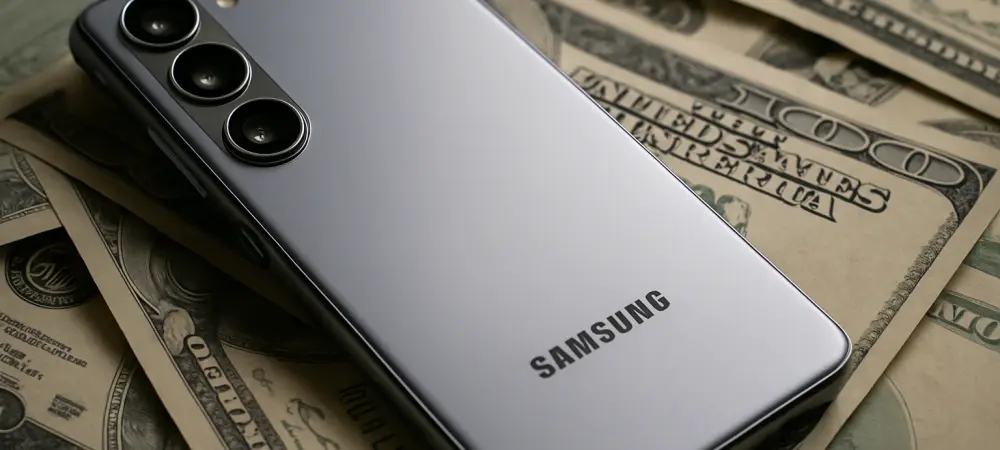
Consumers planning their next major smartphone upgrade should prepare for a notable shift in the premium market, as a growing consensus among industry analysts indicates a substantial price increase for Samsung’s 2026 flagship series. This article examines the converging industry reports and economic factors that point to a significant price increase for the Samsung Galaxy S26 series. The central challenge addressed is how Samsung’s Mobile Experience (MX) division is navigating escalating manufacturing and operational costs, making a price hike a near-inevitability to maintain profitability.
Forecasting a Price Surge for Samsung’s 2026 Flagship
The expected price adjustment is not an arbitrary decision but a direct response to a complex web of financial pressures impacting Samsung. The company’s Mobile Experience (MX) division is reportedly finding it increasingly difficult to absorb the rising costs associated with producing its top-tier devices. Consequently, passing these costs on to the consumer appears to be the most viable path to safeguarding the division’s profitability and ensuring its long-term financial stability.
This forecast is rooted in an environment of escalating expenses across the board. From the raw materials and sophisticated components required for assembly to the significant investments in marketing and labor needed to stay competitive, every aspect of bringing a flagship phone to market has become more expensive. These mounting costs create a scenario where maintaining current price points for the Galaxy S26 would severely compress profit margins, a risk Samsung seems unwilling to take.
The Economic Pressures Fueling the Price Increase
The analysis is set against the backdrop of a volatile global supply chain and an intensely competitive smartphone market. Persistent disruptions have created widespread shortages and driven up the prices of essential electronic components, placing a direct financial strain on manufacturers like Samsung. Simultaneously, the premium smartphone segment has become a fierce battleground, demanding massive investments in research, development, and marketing to capture consumer attention and loyalty.
This research is important as it provides consumers and industry analysts with a forward-looking perspective on flagship device affordability and highlights the broader economic trends impacting the entire tech sector. Understanding these dynamics offers a crucial window into the future of consumer electronics, where the balance between innovation and accessibility is constantly being renegotiated. The S26’s potential price sets a benchmark for what consumers might expect from other major brands facing similar economic headwinds.
Research Methodology, Findings, and Implications
Methodology
The conclusions presented here are drawn from a comprehensive synthesis of multiple, consensus-based industry reports, supply chain analyses, and insider leaks. Rather than relying on a single source, this methodology emphasizes the convergence of information from several independent entities, creating a more reliable and robust forecast. This approach allows for a holistic view of Samsung’s strategic position.
This analysis specifically focuses on insider information concerning Samsung’s component acquisition costs, its internal operational budget allocations, and the company’s strategic financial planning for its upcoming flagship lineup. By cross-referencing data points related to production expenses and marketing spend, a clear picture emerges of the financial calculus driving the anticipated pricing strategy for the Galaxy S26 series.
Findings
The primary driver of the prospective price hike is the rising cost of essential hardware. The smartphone industry is currently grappling with a persistent shortage of key memory components, particularly DRAM, which has led to a significant increase in their market price. This surge in component costs represents the most substantial and unavoidable expense increase that Samsung’s MX division must contend with for its 2026 lineup.
Compounding this issue are escalating operational expenses. Samsung is allocating a progressively larger budget toward marketing and labor to compete effectively in the crowded premium market. This dual pressure from both production inputs and operational overhead makes it financially challenging to maintain the pricing structure of previous generations. The anticipated price increase is, therefore, a strategic decision by Samsung to protect its profit margins in the face of these unavoidable cost pressures. To quantify this change, the price of the 2025 Galaxy S25 series will serve as the established benchmark to measure the scale of the S26’s price increase.
Implications
For consumers, this development signals a new, higher price ceiling for premium smartphones, a trend that could significantly impact purchasing decisions and upgrade cycles. A more expensive Galaxy S26 may lead some users to delay their upgrades, seek out more affordable alternatives, or place greater emphasis on long-term financing and trade-in offers.
For Samsung, it is a strategic move that balances the risk of alienating price-sensitive customers against the necessity of maintaining the financial health of its mobile division. The company is betting that the technological advancements and brand loyalty associated with its flagship line will be sufficient to convince a core segment of its user base to accept the higher cost. The success of this strategy will be a critical test of the Galaxy brand’s market power. For the broader market, this could set a new pricing precedent, encouraging other manufacturers to follow suit. Such a shift would further segment the premium smartphone category, creating a wider gap between standard flagships and ultra-premium models and potentially altering the competitive landscape for years to come.
Reflection and Future Directions
Reflection
A key challenge in this analysis is the predictive nature of the topic, which relies on industry reports and insider information rather than official company announcements. This limitation was addressed by focusing on the consensus across multiple independent sources to build a reliable forecast. By identifying a consistent narrative across the supply chain and financial analyses, the projection gains a degree of credibility that a single report could not provide.
The research could have been expanded by including a comparative analysis of how competitors, such as Apple, are managing similar cost pressures. A direct comparison would offer greater context, revealing whether Samsung’s strategy is unique or part of a broader industry-wide adjustment to the new economic reality. Such an analysis would provide a more complete picture of the premium smartphone market’s evolution.
Future Directions
Future research should diligently monitor official announcements from Samsung and its key component suppliers to validate these predictions as the 2026 launch approaches. Confirmation of component pricing agreements or statements from company executives will be crucial in either substantiating or refuting the current forecast.
Furthermore, key questions remain regarding the exact price points for each model in the lineup (S26, S26+, and S26 Ultra). It is also unclear whether Samsung will introduce enhanced trade-in programs or more aggressive financing options to mitigate the impact of the price hike on consumers. Investigating these potential mitigation strategies will be an important next step in understanding the full market impact.
Conclusion: A Necessary Strategy in a High-Cost Era
The expected price hike for the Samsung Galaxy S26 is not an isolated decision but a calculated response to a perfect storm of rising component costs, increased operational spending, and the strategic imperative to preserve profit margins. This move underscores a broader industry shift toward a new and more expensive era for flagship technology. The 2026 launch is thus positioned as a critical test of consumer loyalty and market tolerance for ever-increasing premium device prices, setting a potential new standard for the entire smartphone industry.