

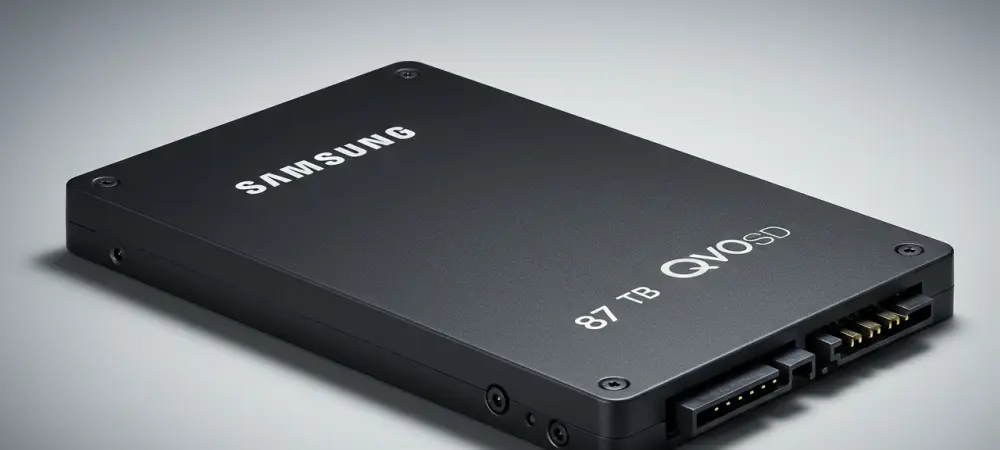
The stakes in the technology world are higher than ever, with data storage demands surging in an era defined by digital complexity. The Samsung 4TB SSD 9100 Pro emerges as a formidable player, promising not only to meet these demands but to redefine them. A critical look at this SSD unveils how it aligns with the rapid evolution in storage solutions, delivering cutting-edge technology to cater to professionals and businesses alike. The Samsung SSD stands as a testament to how far we have come in storage solutions, setting fresh benchmarks.
Unraveling the Samsung 4TB SSD 9100 Pro
At the heart of the Samsung 4TB SSD 9100 Pro lies a commitment to excellence, driven by core principles of superior technology and performance. It integrates advanced NAND technology with robust engineering, ensuring optimal performance and reliability. The SSD’s embedded components together form a cohesive unit that provides a stable and efficient storage solution. Within the broader data storage landscape, the 9100 Pro holds significant weight, offering unparalleled advantages for data-intensive applications. Functioning at the intersection of necessity and innovation, this SSD introduces an array of features that are of utmost importance in today’s fast-paced technological environment. Its relevance extends beyond the circle of immediate users, presenting itself as a key player in shaping future storage solutions.
Exceptional Features Elevate the Samsung SSD
Cutting-Edge PCIe 5.0 Technology
The leap from PCIe 4.0 to PCIe 5.0 technology brought about a revolution in data transfer speeds, and the Samsung 4TB SSD 9100 Pro is primed to exploit this advancement. PCIe 5.0 introduces unprecedented bandwidth capabilities, which significantly boost the SSD’s performance metrics. This leap allows for nearly double the data throughput compared to its predecessor, a critical factor for those requiring swift access to vast datasets. As the technology fuels the SSD’s robustness, PCIe 5.0 emerges as an indispensable feature, empowering users with faster access times and reduced latency. The high-speed capabilities translate into enhanced performance for diverse applications, from high-end gaming to professional media production.
Robust Capacity and Enduring Reliability
A critical document or project often relies on vast storage, and the Samsung SSD’s 4TB capacity offers an expansive solution for such needs. Its high capacity is pivotal for professionals working with large files, such as video editors or engineers, who require dependable storage solutions. The SSD’s architecture ensures seamless handling of sizable data without compromising on speed or efficiency. Furthermore, with improved endurance, the 9100 Pro guarantees sustained performance over prolonged usage periods. The drive minimizes the risk of errors and failures, providing peace of mind for users who cannot afford data loss or instability.
Embracing the Wave of SSD Advancements
Recent strides in SSD technology underscore a trend toward higher efficiency and enhanced storage capabilities. Innovations such as 3D NAND and improved controllers are driving SSD evolution, enabling unprecedented efficiency and capacity in compact forms. Alongside these advancements, consumer preferences are rapidly shifting, demanding more sustainable and eco-friendly technological solutions. In this dynamic environment, the emphasis is on delivering robust performance while adapting to the demands for greener technology. The Samsung 9100 Pro exemplifies a blend of these developments, pushing toward a future where performance does not come at the expense of sustainability.
Practical Applications of the Samsung SSD
The Samsung 4TB SSD 9100 Pro finds numerous applications across various industries, serving as a cornerstone for high-performance setups. In sectors such as media production and scientific research, the SSD supports complex operations that require immense data processing capabilities. It facilitates quick data retrieval, enhancing productivity and efficiency across tasks that demand substantial computational resources. Unique implementations of the SSD can also be observed in fields like artificial intelligence (AI) and machine learning (ML), where the need for rapid data access and processing is paramount. Here, the 9100 Pro provides the speed and reliability needed to develop agile and sophisticated models.
Overcoming Challenges in SSD Technology
Despite the remarkable advancements, SSD technology faces challenges that require strategic resolution. Issues such as production costs, limited lifespans compared to traditional hard drives, and energy consumption remain areas of concern. Efforts to address these challenges are vital to boost broader adoption, ensuring that SSDs remain accessible to a wider audience.
Regulatory considerations and market dynamics further compound the complexity, necessitating ongoing adaptation and innovation. Overcoming these obstacles is essential for the continued viability of SSD technology, making breakthroughs all the more significant.
Charting the Future of Samsung’s SSD
The trajectory of the Samsung 4TB SSD 9100 Pro promises continued innovation, with future models likely incorporating even more sophisticated technologies. Developments in quantum storage and advancements in AI-driven data management are poised to transform how SSDs function, driving more intelligent and responsive storage systems. Such technologies will redefine industry standards, paving the way for smarter, faster, and more efficient data storage solutions. The long-term impact on industries is expected to be profound, making the Samsung SSD a pivotal player in this ongoing evolution.
Drawing Conclusions on Samsung’s SSD
In retrospect, the Samsung 4TB SSD 9100 Pro establishes itself as a leader in the competitive SSD market through its unrivaled performance and cutting-edge features. It demonstrates a keen understanding of modern storage needs, surpassing expectations and setting a new benchmark for competitors. Looking toward the horizon, its continued development promises to contribute significantly to the future of digital storage solutions, catalyzing advancements across various sectors. The Samsung SSD’s influence, both past and present, marks it as an enduring icon in the ever-evolving world of technology.