

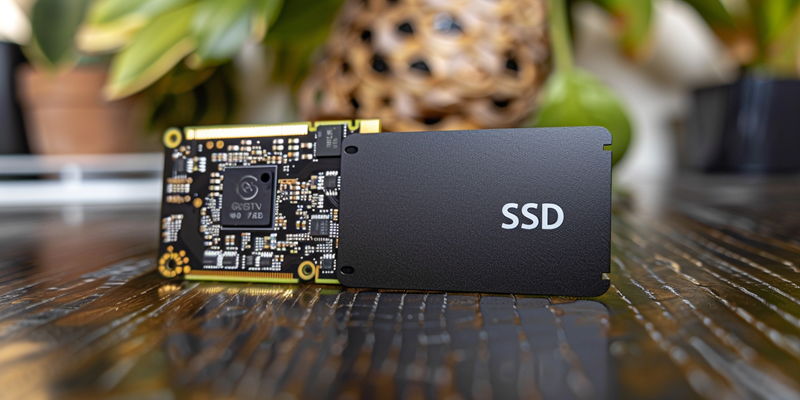
In a market that demands ever-increasing data processing speeds, Sabrent has set a new precedent with their Rocket 5 Gen5 SSD lineup. These high-performance drives are making headlines with their remarkable speeds, achieving up to 14 GB/s in read and an astonishing 12 GB/s in write capabilities. This represents a significant benchmark in the Gen5 SSD market, propelling storage solutions into a new realm of efficiency and speed.
The incorporation of Phison’s PS5026-E26 MaxIoT controller and Micron’s B58R 3D TLC NAND within the Rocket 5 drives is a strategic choice. Sabrent’s commitment to quality and performance is evident. Consumers who demand the best will find the Rocket 5’s capabilities incomparable in this rapidly evolving tech environment. Random read and write IOPS of 1.55M and 1.8M respectively, further emphasize the SSDs’ prowess and suitability for high-end users whose tasks hinge on fast data access and transfer.
Technological Evolution and Market Positioning
As the technology landscape is constantly advancing, Sabrent’s new SSDs are a statement of how far the industry has come and where it is headed. They are positioned towards power users, including gamers, professionals engaged in data-intensive work like video editing or 3D rendering, and enterprises seeking robust and swift storage solutions. While the pricing of $189 for 1 TB, $339 for 2 TB, and $729 for 4 TB models might be on the higher side of the spectrum, it reflects the premium nature of the innovation that users pay for.
Sabrent’s approach in leveraging cutting-edge technology to enhance user experience is evident in their adoption of the latest in SSD performance. These costs, while potentially prohibitive for the average consumer, are a testament to the company’s dedication to serving those at the forefront of performance demands. It is these users who will benefit the most from the Rocket 5 Gen5 SSDs, as the drives provide an edge in environments where speed translates directly to productivity and success.
Impact on the Storage Solutions Industry
The release of Sabrent’s Rocket 5 Gen5 SSDs marks a significant milestone in storage technology advancements. These solid-state drives are more than just upgrades for consumers; they represent a leap in innovation that paves the way for future developments. As Sabrent unveils these cutting-edge SSDs, their move propels the competition to accelerate their own tech enhancements, which is a win for users seeking faster and more reliable storage solutions.
These strides in the storage sector have broader implications across the tech industry, especially as computing increasingly revolves around massive data handling and rapid processing. The Rocket 5 Gen5 series demonstrates the market’s evolution towards superior performance, meeting the needs of intensive tasks like high-resolution content creation, advanced gaming, and data-driven applications in multiple fields. Sabrent’s new SSDs stand at the forefront, serving the industry’s growing demand for top-tier storage performance.