

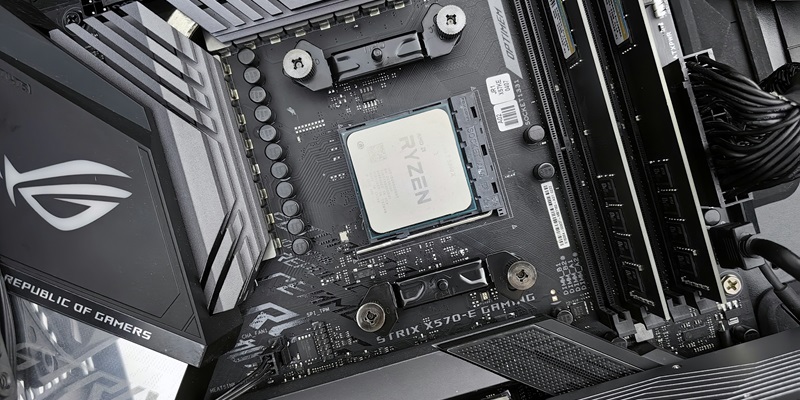
The growing competition between operating systems to maximize the performance of high-end processors is evident in recent benchmarks. The AMD Ryzen 7 9700X has put itself at the forefront of this discussion, particularly in how it performs under different operating systems. This article will delve into how the Ryzen 7 9700X performs on Nobara Linux 40 versus Windows 11 24H2, providing a detailed comparison of gaming and application speeds, efficiency, and overall user experience.
Nobara Linux 40 vs Windows 11 24H2 – An Overview
Initial Performance Metrics
The Ryzen 7 9700X, when tested on both Nobara Linux 40 and Windows 11 24H2, demonstrates a noticeable difference in performance. In gaming scenarios, Nobara Linux 40 consistently outperforms its Windows counterpart with an average performance increase ranging from 5% to 10%. Popular gaming titles tested include The Witcher 3, Doom Eternal, and Cyberpunk 2077, where frame rates were a clear indicator of Linux’s prowess. The only game where the difference was marginal was World of Warcraft, with just a 2% improvement on Nobara.
One of the notable aspects of these tests is how stable and consistent the performance gains are across different types of games. Unlike sporadic spikes that are often observed with certain hardware and software combinations, the Ryzen 7 9700X on Nobara Linux 40 maintains a steady lead in performance metrics. This suggests that the Linux kernel, alongside optimizations done specifically for gaming distributions like Nobara, is capable of unleashing the full potential of AMD processors. The frame rate improvements in high-demand games translate into smoother gameplay and reduced latency, making Nobara Linux an appealing choice for serious gamers and performance enthusiasts.
Application Speed Comparison
Apart from gaming, real-world applications also showed varied results. 7-Zip, a widely-used file compression utility, ran notably faster on Nobara Linux 40. Synthetic benchmarks like Geekbench showcased performance trends similar to the gaming tests, indicating more efficient processing on Linux. However, it’s worth noting that Windows 11 demonstrated a rare advantage in the Handbrake benchmark, a popular video transcoding tool, outpacing its Linux rival. This anomaly suggests that while overall performance trends favor Linux, application-specific optimizations can still tilt the balance for Windows.
These findings highlight an important aspect for users who rely heavily on specific applications. While Linux might offer a broader range of performance gains across general applications and games, Windows can still outperform in specialized tasks where the software is highly optimized for the Windows environment. For professionals who use resource-intensive tools like video editors or CAD software, the slight advantage in performance for these applications on Windows 11 can be a deciding factor. However, for general usage involving a mix of gaming, productivity, and multitasking, the advantage leans in favor of Nobara Linux 40 with the Ryzen 7 9700X.
Detailed Benchmark Analysis
Phoronix Benchmark Findings
Phoronix.com, a respected source for Linux-based performance metrics, conducted extensive testing that further supports the observation of Linux’s superior performance. Their benchmarks on both Ryzen 7 9700X and Ryzen 5 9600X under Ubuntu, another Linux distribution, showed significant speed winners across applications. The Ryzen 7 9700X on Ubuntu was found to be 1.15 times faster than its previous generation, the Ryzen 7 7700X, while the Ryzen 5 9600X displayed a 1.25 times improvement over its predecessor. Such results solidify the notion that Linux can effectively harness the power of AMD’s new processors.
The comprehensive tests conducted by Phoronix emphasize not only raw performance but also how improvements in the Linux kernel and system optimizations contribute to these gains. Each iteration of AMD’s Ryzen processors introduces enhancements that, when coupled with the efficiency of Linux, create a potent combination for users seeking top-tier performance. The comparative benchmarking across generations provides clear evidence that Linux distributions like Ubuntu and Nobara are continually adapting and optimizing to leverage the full capabilities of new hardware, making them a compelling choice for maximizing processing power.
Efficiency and Power Utilization
Another crucial aspect highlighted by Phoronix’s benchmarks is the efficiency in power utilization showcased by Ryzen processors on Linux. The performance gains achieved were not only about raw speed but also about improved energy efficiency. The conservative power usage makes Linux an attractive option for users mindful of energy consumption. This attribute can be especially important for gaming setups and productivity environments where prolonged CPU usage is common.
Energy efficiency is a significant concern for many users, particularly those running setups with multiple high-performance components. The Ryzen 7 9700X under Nobara Linux 40 manages to deliver superior performance while maintaining lower energy consumption compared to its performance on Windows 11. This advantage is not only eco-friendly but also cost-effective in the long run, as reduced power consumption translates to lower electricity bills. For enterprises and data centers that deploy numerous systems, these efficiency gains can lead to substantial cost savings and a smaller carbon footprint, adding another feather in the cap for Linux-based systems.
Future Prospects and Optimizations
Expectations from Windows 11 24
While Nobara Linux 40 currently holds an edge, it is important to consider that Windows 11 24H2 is still in its preview phase. The final release could bring notable optimizations and updates aimed at bridging the performance gap. Microsoft has continually worked on enhancing gaming performance on Windows, and the eventual stable release of 24H2 is expected to improve metric readings and overall user experience.
The anticipation for future updates from Microsoft is rooted in their historical commitment to evolving the Windows platform. The upcoming 24H2 release is highly anticipated not just for its potential to close the performance gap but also for the array of new features and optimizations it promises. From updates in DirectX to improvements in memory management and CPU scheduling, these advancements could make Windows 11 a more formidable competitor to Linux distributions. Therefore, users invested in the Windows ecosystem can look forward to future releases that might offer significant performance enhancements, aligning Windows 11 more closely with Linux in terms of operating efficiency and raw power.
Software and Compatibility
Another key consideration for users is software compatibility. Despite the performance advantages observed on Nobara Linux 40, the majority of commercial gaming and productivity software continues to be optimized primarily for Windows environments. This includes gaming platforms like Steam and popular productivity suites like Adobe Creative Cloud, which have inconsistent or limited support on Linux. Users must weigh these factors when deciding which operating system to use.
Software compatibility remains a critical factor in the decision-making process for many users. While Nobara Linux 40 offers impressive performance gains, the reality is that certain applications and games are either absent from the Linux ecosystem or lag behind in terms of updates and support. For gamers and professionals tied to specific software packages tailored for Windows, this lack of compatibility can be a deal-breaker. Despite these limitations, the open-source community continually strives to close this gap through projects like Wine and Proton, which aim to improve compatibility. Nevertheless, until broader support is achieved, users will need to balance their desire for performance with their need for compatible software.
Conclusion
The fierce competition between operating systems for maximizing the performance of high-end processors is becoming increasingly evident through recent benchmarks. Standing out in this race is the AMD Ryzen 7 9700X, which has become a key player, especially when considering how it performs across different operating systems. This article will explore the performance of the Ryzen 7 9700X on Nobara Linux 40 in comparison to Windows 11 24H2. Detailed analysis will be provided about gaming and application speeds, efficiency, and the overall user experience on both platforms.
A major point of interest is how each OS optimizes the hardware to deliver peak performance. In advanced gaming and heavy-duty applications, these distinctions can significantly affect user satisfaction. Nobara Linux 40 is designed to maximize efficiency and speed for gaming and professional applications, aiming to provide a seamless experience. Meanwhile, Windows 11 24H2, with its broad software compatibility and user-friendly interface, offers a compelling alternative. This exploration will help users understand which operating system might be more advantageous for their specific needs and preferences.