

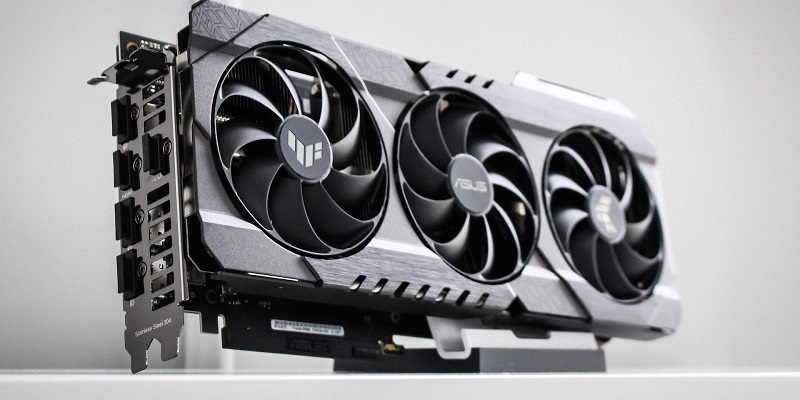
AMD is set to launch its latest mainstream graphics card, the Radeon RX 6700 XT, which is rumored to feature the mainstream Navi 22 GPU. There have been several rumors and leaks regarding the specs and performance of the card, and in this article, we will delve into all the details we currently know.
Rumors have emerged that AMD is planning to launch a new graphics card, the Radeon RX 7600 XT, featuring the mainstream Navi 33 GPU
The rumors surrounding the launch of AMD’s Radeon RX 7600 XT come from Moore’s Law is Dead who seems to have obtained a schedule for the upcoming graphics card. While the dates mentioned are exciting, we would advise taking the specs with a grain of salt, as they have not been officially confirmed by AMD.
While Moore’s Law is Dead is generally a reliable source for tech news, it is important to note that these are still just rumors. Therefore, it is best not to get too excited until we hear an official confirmation from AMD.
Expected sample dates and first reviews will go live on May 24th, just one day before launch
According to rumors, AMD is expected to send samples of the Radeon RX 7600 XT graphics card to the press by mid-May. The first reviews of the card are expected to go online on May 24th, just a day before launch.
Asking the press to publish reviews for the MSRP cards, followed by custom model reviews on launch day
Similar to the RTX 3070, AMD will be asking the press to publish reviews for the MSRP cards first, followed by custom model reviews on the launch day. This strategy will allow customers to know what they can expect from the base model before they purchase a custom model.
Expected performance with Navi 33 GPU, featuring RDNA 3 graphics architecture, is a potential 10-15% graphics performance boost over the Radeon RX 6650 XT.
The Navi 33 GPU will feature RDNA 3 graphics architecture and has the potential to deliver close to a 10-15% graphics performance boost over the Radeon RX 6650 XT. This news is exciting for gamers as it means they can expect better performance from their graphics card.
Expected power consumption and potential comparison to NVIDIA’s Ada Lovelace graphics architecture
The Radeon RX 7600 XT is expected to consume around 175W of power. While this is early silicon, it looks like the card won’t match NVIDIA’s Ada Lovelace graphics architecture, since Ada Lovelace produces significantly superior results. However, the final verdict can only be given once we have official benchmarks from both cards.
Expected VRAM and discussion around recent topics regarding whether 8 GB of VRAM is enough for most games
The card is said to feature 8GB of VRAM across a 128-bit wide bus interface, which should be the same as its predecessor. However, given the recent discussions around whether 8GB of VRAM is enough for most games, some gamers may not be very excited about this news.
Expected clock speeds for the card, as well as potential for overclocked models
The clock speed of the Radeon RX 7600 XT is said to be above 2.6 GHz, which is fantastic news for gamers. Overclocked models should also be able to reach the 3 GHz mark, which will further boost performance.
Navi 33 GPUs aimed at the budget segment, with prices ranging from $250 to $350 US
First introduced on laptops as the Radeon RX 7700 and RX 7600 series, the Navi 33 GPUs are aimed at the budget segment with prices between the $250-$350 USD range. This news is particularly exciting as it means that gamers on a budget can expect better performance without breaking the bank.
Overall, the rumored specs and performance of the Radeon RX 7600 XT are exciting for gamers, but it is essential to take all these leaks and rumors with a grain of salt. We can only confirm their truthfulness once AMD releases an official statement. However, if these rumors are true, gamers can expect a graphics card that delivers excellent value for money and great performance.