

Dominic Jainy is a distinguished IT professional whose career has been defined by a deep exploration of the intersection between artificial intelligence, machine learning, and the often-overlooked security of embedded systems. With a keen eye for how blockchain might secure future infrastructure, he has spent years analyzing the vulnerabilities of the “Internet of Things,” particularly where legacy software meets modern connectivity. In an era where vehicles are becoming smartphones on wheels, Jainy’s expertise provides a vital bridge between the convenience of digital interfaces and the harsh realities of cybersecurity. This conversation delves into a recent, fascinating case study involving a 15-year-old navigation system, illustrating how even the most mundane technical frustrations can lead to the discovery of significant security loopholes in the cars we drive every day.
The discussion centers on the architectural weaknesses of legacy automotive software, specifically focusing on a Linux-based TomTom navigation unit found in a 2014 Renault Latitude. We explore the technical “chain of flaws” that allows a simple SD card to grant root access, the risks posed by old kernels like Linux 2.6.28.10, and the broader implications for vehicle longevity and data privacy. The conversation also contrasts these physical access exploits with more modern, remote threats involving Bluetooth vulnerabilities and infotainment malware, providing a comprehensive look at why the software staying on the road often outlasts its security patches.
When a routine task like adjusting a car’s clock requires a root-level exploit because the menu option simply vanished, what does that reveal about the fragility of the relationship between hardware and software in older vehicles?
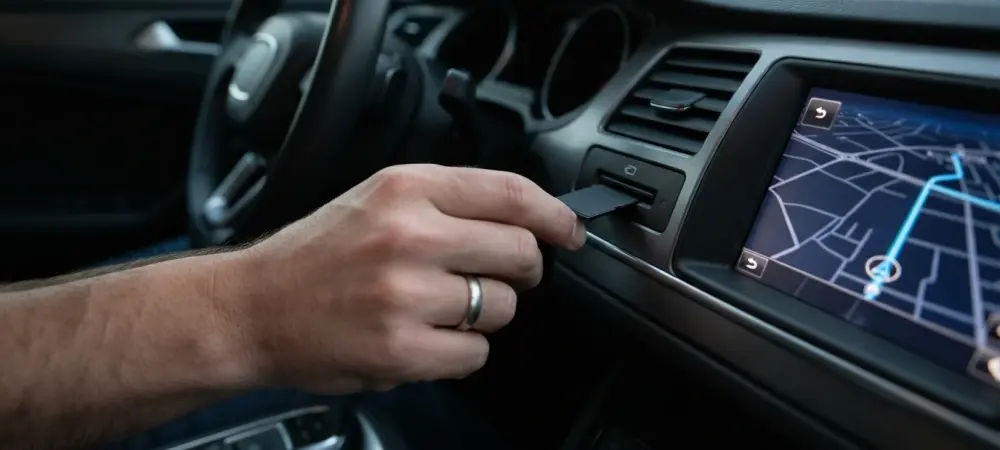
It reveals a frustrating, almost claustrophobic design where the user is locked out of their own hardware by rigid DRM and aging code. In this specific case involving the 2014 Renault Latitude, the researcher, Rasmus Moorats, found himself unable to even open the settings menu to fix a daylight saving time error in Estonia because the system demanded a genuine map SD card. This 15-year-old TomTom Carminat LIVE unit, running on a custom Linux 2.6.28.10 system, is a prime example of how software dependencies can turn a simple task into a technical nightmare. When a car is built to last 15 or 20 years but its software environment is frozen in time, the lack of flexibility creates a “ghost in the machine” where users are forced to choose between a broken interface or a risky hack. You can feel the frustration of a driver staring at a clock that is permanently one hour off, realizing that the only way to “fix” it is to treat the dashboard like a hostile server that needs to be breached.
The exploit used to gain control of this Renault system involved a sophisticated “chain of flaws.” Could you walk us through how something as simple as an SD card script ended up granting full root access?
The beauty—and the danger—of this exploit lies in how it bypassed multiple layers of protection that were actually quite robust for 2011-era software. The unit used a program called ttn that ran as root, which was tasked with parsing a file on the SD card called master.script. While the system had read-only partitions and signature checks to prevent custom firmware flashes, the ttn parser had two critical vulnerabilities: a restricted command execution bug in SHEX and a path traversal bug in the LOG command. The researcher used the LOG command to “climb” out of the intended directory using “../” notation, allowing him to write data anywhere on the system as a root user. To bridge the gap from writing a file to executing a command, he borrowed a classic kernel exploit trick by writing a pipe command into /proc/sys/kernel/core_pattern. By then intentionally crashing a secondary program like /bin/dbus-monitor using the SHEX command, he forced the kernel to execute his custom script from the SD card with full root privileges.
While this specific breach required physical access to the car, how do these types of vulnerabilities in legacy Linux gadgets contribute to the wider threat landscape we see today?
Even though a criminal would need to physically insert an SD card and trick a driver into clicking “Yes” on a prompt, the underlying design flaws are a ticking time bomb for data privacy. Many of these older units, like the one in the Renault, contain years of synced phone contacts and detailed location history that could be harvested in minutes by a malicious actor at a repair shop or a rental agency. We see this same pattern of “trusting the input” in newer systems as well, such as the PerfektBlue Bluetooth flaws which put millions of vehicles at risk of remote exploitation. Furthermore, we are seeing a rise in specialized threats like the Kairos botnet, which specifically targets old Linux devices that allow passwordless Telnet root logins. The reality is that as long as these cars remain on the road, they are a static target for attackers who have all the time in the world to find and weaponize these unpatched bugs.
Modern infotainment systems are often marketed as more secure, yet we still hear about malware and remote hacks. How do the risks in a 2014 Renault compare to the vulnerabilities found in more recent “connected” car screens?
The risks have evolved from local script execution to large-scale, remote monetization schemes, such as ad fraud and proxy botnets. In newer Android-based car screens, researchers have documented multi-stage downloaders that hijack the built-in update path to infect the device without any physical interaction from the user. While the 2014 Renault hack was about gaining local control to fix a clock, modern malware is often designed to silently join the vehicle to a botnet to generate illicit revenue. However, the stakes are rising; for instance, a flaw in a Nissan Leaf infotainment unit running Linux 3.14 showed that a weak Bluetooth component could potentially allow an attacker to control doors, mirrors, and even steering. The sensory shift from a simple navigation error to the terrifying prospect of a steering wheel moving on its own marks the transition from legacy software bugs to critical safety hazards.
Given that most car owners cannot simply “update” the operating system of a decade-old vehicle, what practical steps should they take to protect their personal data and vehicle integrity?
Owners of these older vehicles must treat their dashboard ports with the same caution they would a workplace computer. The most immediate defense is to never insert a USB drive or SD card from an untrusted source; if you need a map update, buy it only from a verified dealer or the official manufacturer website to avoid “poisoned” scripts like the one used in this research. It is also worth a trip to the dealership to specifically ask if any security service bulletins or firmware patches exist, even if the car is long out of warranty, as manufacturers occasionally release critical fixes for known exploits. Finally, when selling or disposing of an older car, users should perform a manual factory reset—or if they have the technical skill, use a tool to wipe the internal storage—to ensure that a decade’s worth of contacts and GPS coordinates don’t end up in the hands of the next owner or a data harvester.
What is your forecast for the future of automotive cybersecurity as these 15-year-old systems continue to age while new, even more complex AI-driven interfaces enter the market?
I expect we will see a widening “security gap” where the industry struggles to maintain a unified defense strategy for vehicles with vastly different technological lifespans. By the end of this decade, we will likely see a surge in “retro-fitting” security modules—hardware add-ons designed to act as firewalls for older, unpatchable head units that are still mechanically sound but digitally exposed. At the same time, as AI and machine learning become more integrated into the driving experience, the focus of hackers will shift from simple root access to “adversarial AI” attacks that attempt to trick the car’s sensors or decision-making logic. We are moving toward a world where a car is no longer just a machine you drive, but a complex node in a global network, and our ability to secure it will depend on whether we treat software support as a lifelong commitment rather than a five-year afterthought.