

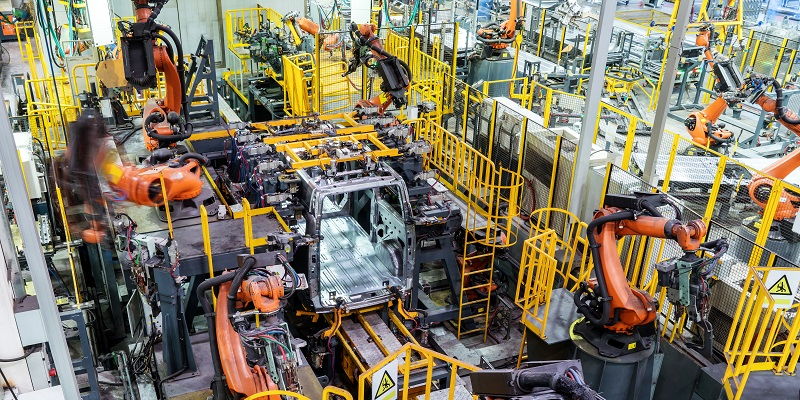
Rockwell Automation, a global leader in industrial automation and digital transformation, is poised to revolutionize the industry with its recent acquisition of Clearpath Robotics’ OTTO Motors. This strategic move will propel Rockwell to the forefront of autonomous mobile robots (AMRs) and unlock unprecedented possibilities for the Connected Enterprise framework.
Robust Material Handling Solutions
Rockwell’s acquisition of OTTO Motors’ AMR capabilities integrates seamlessly with the company’s existing strong partnerships in fixed robotic arms and solutions like Independent Cart Technology. This combination will create a comprehensive portfolio of advanced material handling solutions that set the industry standard.
Market Growth and Potential
Interact Analysis predicts a staggering 30% annual growth in the AMR market for manufacturing over the next five years, with estimates showing a market size of $6.2 billion by 2027. With this acquisition, Rockwell is poised to meet the soaring demand and position itself as a key player in the thriving AMR landscape.
Streamlined Operations and Optimization
One of the primary objectives of the Rockwell-Clearpath collaboration is to simplify and optimize the often labor-intensive task of material and product movement within manufacturing facilities. By implementing an orchestrated and safe system, the combined technology will enhance overall operational efficiency, minimizing downtime and maximizing productivity.
Integration of Data and AI-Powered Applications
Rockwell intends to harness the data generated by its existing offerings and OTTO Motors’ AMRs through artificial intelligence-powered Software as a Service information management applications. This transformative approach, exemplified by Rockwell’s Plex and Fiix businesses, will enable real-time adjustments, traceability, and predictive analytics to enhance decision-making and optimize processes.
Unified Solution for Manufacturing
Through this acquisition, Rockwell is poised to deliver an unrivaled unified solution for manufacturing. The integration of autonomous execution and optimization will result in increased efficiency, reduced errors, and streamlined operations. Manufacturers will benefit from a cohesive system that offers end-to-end traceability and scalability while adapting to specific business needs.
Amplification of Kalypso’s Production Logistics Consulting
In addition to its wide-ranging impact on the industry, the combined technology will significantly boost Kalypso’s production logistics consulting practice. The strategic collaboration will provide Kalypso with invaluable tools and capabilities to empower its clients with cutting-edge solutions for their unique needs.
Meeting Increasing Pressure and Staying Competitive
Industrial customers are confronted with mounting pressure to accomplish more with fewer resources. The advent of autonomous production logistics is fast becoming a necessity to achieve targets and maintain competitiveness in the global market. By investing in advanced AMR technology, manufacturers can enhance efficiency, flexibility, and responsiveness, enabling them to meet evolving demands.
Funding and Reporting Structure
The acquisition will be funded by a portion of the proceeds from Rockwell’s recent divestiture of its investment in PTC. This strategic financing ensures that the acquisition has a solid foundation for integration and future growth. Following the completion of the acquisition, Clearpath will report to Rockwell’s Intelligent Devices operating segment, further bolstering the company’s position in the market.
In conclusion, Rockwell Automation’s acquisition of Clearpath Robotics’ OTTO Motors represents a significant step forward in the realm of industrial automation and transformation. By combining their strengths, both companies are well-positioned to provide a comprehensive suite of advanced material handling solutions, seamlessly integrating data and AI-powered applications, simplifying operations, and empowering manufacturers to thrive in an increasingly competitive landscape. This acquisition sets the stage for a new era in the industry, where autonomous technology and digital integration will revolutionize manufacturing processes and pave the way for unparalleled efficiency and success.