

With deep expertise in artificial intelligence and machine learning, IT professional Dominic Jainy explores how these technologies are revolutionizing industries from the ground up. Today, he joins us to discuss the seismic shifts occurring within supply chain and warehouse automation. We’ll move beyond the common narrative of robots simply replacing manual labor to explore how modular design is creating unprecedented flexibility, why software is the true mastermind of the modern warehouse, and how AI is empowering machines to not just follow commands but to perceive and act. This conversation will also shed light on the evolving, and increasingly crucial, role of the human workforce in this new, automated ecosystem.
Early warehouse automation focused primarily on speed, but today’s systems emphasize flexibility. How does a modular approach, where a business can add robots or racks, allow it to adapt to sudden demand spikes without overhauling its infrastructure? Please share some specific examples or metrics.
It’s a fundamental shift in mindset from brute force to intelligent agility. In the past, automation meant a massive, fixed installation. If you experienced a sudden holiday rush or an unexpected surge in demand, you were stuck with the capacity you had, leading to bottlenecks and stress. The modern approach is about creating a living, breathing system. For instance, with a solution like the Skypod system, robots can utilize vertical space, climbing up to 14 meters to maximize storage density in the same footprint. When a demand spike hits, you don’t have to rip everything out. You can simply deploy more robots into the existing grid. This scalability is progressive; a business can grow by installing additional racks over time, increasing storage as needed. This kind of agility is what separates a supply chain that survives from one that thrives, allowing it to adapt instantly without sacrificing productivity or the safety of its workers.
A common misconception is that warehouse automation is just about the machines. How does the software component orchestrate robot fleets and optimize performance, and in what ways is it more critical than the hardware for adapting to real-time changes in demand?
That is one of the biggest misunderstandings we see. People are captivated by the physical robots, but the hardware is just the muscle; the software is the brain. Without intelligent software, a fleet of robots is just a collection of very expensive, uncoordinated machines. A powerful software platform acts as the central nervous system, orchestrating every movement. It monitors inventory in real time, optimizes task flows, and tracks every single bin and order 24/7. When an urgent order comes in or a sudden wave of returns needs to be processed, the software dynamically adjusts priorities across the entire fleet. This is where it becomes more critical than the hardware. You can have the best robots in the world, but if they can’t adapt to a sudden change, their value plummets. The software turns a static tool into a dynamic, data-driven ecosystem that learns and improves every single day.
AI is enabling systems to “perceive, decide, and act” with great precision. Could you walk us through a specific example, such as automated picking, and explain the steps AI takes to identify an object and retrieve it? How will this capability expand to optimize entire fleet traffic flows?
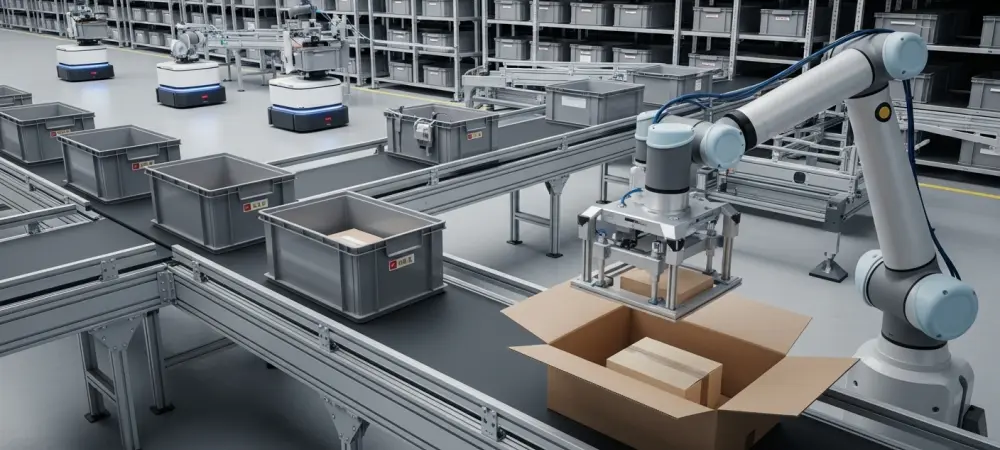
Absolutely. This “perceive, decide, and act” model is where AI truly shines. Let’s take automated picking. First, the system perceives the environment using cameras. AI-powered algorithms analyze the image feed to recognize specific objects within a bin full of items. They aren’t just matching a picture; they’re determining the object’s unique shape, orientation, and position. Next, the system decides the best way to retrieve it—calculating the optimal grip, the angle of approach, and the force needed. Finally, it acts, instructing the robotic arm to execute the pick with a high degree of accuracy. Looking forward, this same intelligence will manage the entire warehouse. By leveraging data from the entire robot fleet, AI will optimize traffic flow to avoid congestion, much like an air traffic control system, and even anticipate maintenance needs before a part fails, ensuring operations are constantly running at peak efficiency.
As robots handle more repetitive tasks, the human workforce is shifting to new roles in maintenance and system operations. What specific skills, such as interpreting data from dashboards, will be most crucial, and what steps should the industry take to prevent a shortage of qualified technicians?
This is a critical point: people will always be at the heart of the operation. The nature of the work is just evolving. As robots take over the physically demanding and repetitive tasks, we’re seeing a surge in new opportunities for skilled roles in maintenance, system operations, and engineering. The most valuable skills are no longer about physical endurance but about digital literacy, adaptability, and complex problem-solving. An operator won’t need to be a coder, but they will absolutely need to understand how to interpret data from a dashboard, identify anomalies, and make informed decisions in real time. To prevent a skills gap, the industry must proactively invest in education and training. Without a strong commitment to developing technical education programs, we risk facing a significant shortage of qualified maintenance technicians and engineers who can keep these sophisticated systems running.
What is your forecast for the supply chain industry?
I believe we are rapidly moving toward an era of true end-to-end automation, where the real breakthrough will come from seamless integration. It’s not just about automating one part of the warehouse anymore. The future is a unified ecosystem where different types of specialized robots work together seamlessly under a single, intelligent software platform. But the ultimate vision extends beyond the four walls of the warehouse. When robotics and automation become fully integrated into a company’s wider data ecosystem—connecting with manufacturing, logistics, and sales data—that is when we will unlock unprecedented resilience, efficiency, and agility across the entire supply chain. That’s the future we’re building.