

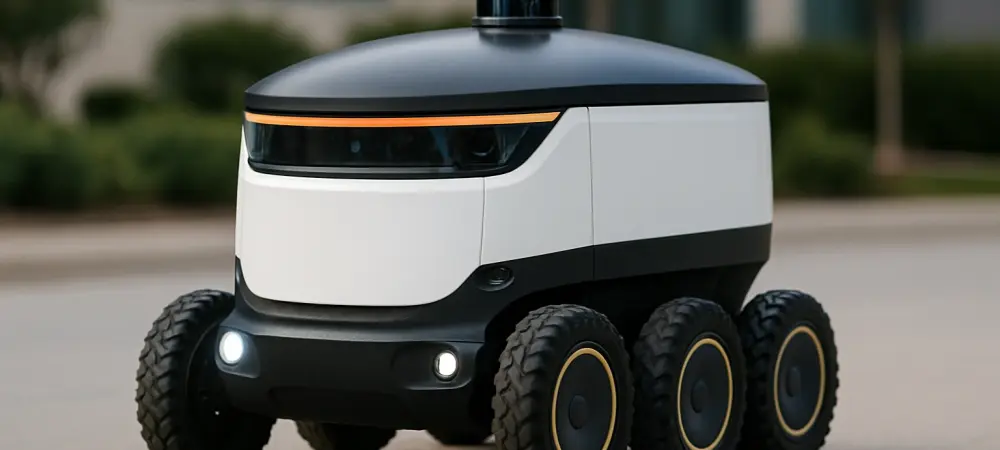
Imagine a bustling city street where delivery vehicles no longer clog traffic or pose risks to pedestrians, replaced instead by silent, efficient robots gliding through designated zones to transform urban logistics. This vision is becoming reality with Robomart’s RM5 Autonomous Delivery Robot, a pioneering solution designed to redefine how goods reach consumers in densely populated areas. Developed by the Los Angeles-based company, this mega-sized bot stands as a testament to innovation in autonomous delivery, promising a new era for the industry. This review delves into the technology behind the RM5, exploring its features, real-world potential, and the broader implications for the delivery sector.
Key Features of the RM5: Redefining Capacity and Safety
Unmatched Storage and Adaptability
The RM5 sets itself apart from typical delivery bots with an extraordinary capacity that caters to large-scale operations. Equipped with 10 individual storage lockers, each capable of holding up to 50 pounds, the robot boasts a total payload of 500 pounds—far exceeding the limits of smaller sidewalk bots. These lockers, designed with precise dimensions, can heat or chill contents as needed, ensuring that a wide range of goods, from groceries to prepared meals, remain in optimal condition during transit.
This versatility supports batch ordering and multi-order deliveries, making the RM5 a practical choice for retailers aiming to streamline operations. Customers access their items through a dedicated app, which enhances convenience and reduces interaction time. Such a design not only boosts efficiency but also positions the RM5 as a scalable solution for urban delivery demands.
Cutting-Edge Automation and Safety Measures
At the heart of the RM5 lies its advanced Level 4 automation, enabling near-complete independence in operation within predefined environments. Classified as a low-speed neighborhood electric vehicle, it operates at a maximum speed of 25 mph, confined to geofenced areas to avoid high-traffic zones like highways. This controlled operation minimizes risks to pedestrians and cyclists, a critical consideration in crowded city settings.
The robot’s lightweight build further enhances its safety profile compared to traditional delivery trucks, reducing the potential for severe accidents. Robomart has rigorously tested the self-driving system across diverse conditions, ensuring reliability whether navigating during daylight or adverse weather. This focus on safety and dependability underscores the RM5’s readiness for real-world deployment.
Performance in the Context of Industry Trends
The delivery sector is undergoing a seismic shift toward autonomous, scalable solutions that address urban logistical challenges. Rising costs, safety concerns, and the demand for rapid service have pushed companies to explore technology-driven alternatives. The RM5 fits squarely into this trend, offering a robust platform that reduces overhead by eliminating human drivers while increasing delivery capacity compared to smaller bots or drones.
Robomart’s emphasis on creating a tech-centric ecosystem aligns with the industry’s move toward tailored delivery models. By integrating retailer partnerships and customer-focused apps, the RM5 addresses pain points like last-mile inefficiencies. Its design reflects a broader consensus that automation can enhance both operational effectiveness and consumer satisfaction in densely populated areas.
Beyond mere functionality, the RM5 symbolizes a potential pivot point for urban logistics. As cities grapple with congestion and environmental concerns, solutions like this robot could reduce vehicle emissions and street clutter. This alignment with sustainability goals further cements its relevance in the evolving landscape of delivery services.
Real-World Deployment and Business Innovation
Robomart is gearing up to launch the RM5 in Austin, Texas, marking a significant step toward practical implementation. This rollout focuses on forging partnerships with retailers, who will prepare orders for dispatch via the RM5 through a dedicated platform. Such a model allows businesses to maintain storefronts on Robomart’s app, ensuring seamless integration into existing operations. A standout aspect of this approach is the pricing structure, with customers charged a flat $3 fee for on-demand delivery. This affordability contrasts sharply with the higher costs often associated with traditional delivery services, offering a competitive edge. Retailers, meanwhile, benefit from slashed operational expenses, as the need for human drivers is entirely removed from the equation.
The potential applications for the RM5 span a variety of sectors, from grocery chains to pharmacies and fast-food outlets. Its ability to handle diverse goods through temperature-controlled lockers makes it adaptable to numerous retail needs. This flexibility could pave the way for widespread adoption, provided initial deployments demonstrate reliability and efficiency in live settings.
Challenges Hindering Broader Adoption
Despite its promise, the RM5 faces notable hurdles that could impact its scalability. Regulatory constraints surrounding autonomous vehicles remain a significant barrier, as laws vary widely across regions and often lag behind technological advancements. Navigating these legal frameworks will be crucial for Robomart to expand beyond initial test markets.
Operational limitations also pose challenges, particularly the restriction to geofenced areas. While this ensures safety, it confines the RM5 to specific zones, potentially limiting its reach in sprawling urban or suburban environments. Overcoming this will require strategic planning and possibly technological upgrades to broaden operational boundaries.
Additionally, scaling retailer partnerships presents a logistical puzzle. Convincing businesses to adopt a new delivery system demands robust proof of cost savings and efficiency gains. Robomart is actively working to address these concerns through pilot programs and data-driven demonstrations, but widespread acceptance remains a work in progress.
Future Outlook for Autonomous Delivery Solutions
Looking ahead, the RM5 holds immense potential to evolve alongside advancements in autonomous technology. Enhancements in navigation systems or battery life could expand its operational range, allowing it to serve larger areas or handle more complex routes. Such upgrades would further solidify its role as a cornerstone of urban delivery.
Geographic expansion is another critical frontier, with plans to move beyond initial launch cities over the coming years. Success in diverse markets will depend on adapting to local regulations and infrastructure challenges, a task that Robomart appears committed to tackling. Each new deployment offers valuable data to refine the system further. The long-term impact of robots like the RM5 could reshape consumer expectations, normalizing rapid, low-cost delivery as a standard. This shift might pressure traditional logistics providers to innovate or risk obsolescence. As such, the trajectory of autonomous delivery promises not just operational change but a fundamental rethinking of how goods move through cities.
Final Thoughts on the RM5’s Journey
Reflecting on the evaluation, the RM5 Autonomous Delivery Robot emerges as a transformative force in urban logistics, blending impressive capacity with advanced safety features. Its performance during testing phases highlights a viable alternative to conventional methods, while the business model demonstrates affordability for both retailers and consumers. The challenges encountered, from regulatory hurdles to operational constraints, underscore the complexities of integrating such technology into everyday use. Moving forward, stakeholders should prioritize collaboration with policymakers to streamline regulations, ensuring smoother rollouts in diverse regions. Retailers considering adoption might focus on pilot programs to assess tangible benefits, while Robomart could invest in expanding geofenced capabilities to unlock broader markets. These actionable steps, built on the foundation of initial successes, offer a clear path to maximizing the RM5’s impact on the delivery landscape.