

Dominic Jainy is a seasoned IT visionary who has spent his career at the crossroads of high-performance computing and sustainable infrastructure. With specialized expertise in artificial intelligence and the energy-heavy demands of blockchain, he has become a leading voice in how we build the physical foundations of our digital world without depleting our natural resources. As the push for carbon neutrality intensifies, his insights into projects like the Conesby Data Centre Campus offer a blueprint for the future of green technology.
In this discussion, we explore the logistical complexities of developing high-tech facilities on greenfield land, the engineering required to integrate massive solar farms with sensitive data grids, and the shift toward water-saving cooling technologies. We also examine why regions like Lincolnshire are becoming the new frontier for digital infrastructure and how developers can maintain community trust through rapid construction cycles.
Building a 12,500-square-meter data center on greenfield land near agricultural sites presents unique logistical hurdles. What specific infrastructure requirements must be met for a 20-acre development, and how do you manage the environmental impact of building on previously undeveloped land?
Developing a 20-acre greenfield site near Normanby Road requires a surgical approach to utility layering and ecological respect to ensure the facility coexists with the land. First, we must establish heavy-duty fiber connectivity and high-voltage power lines capable of supporting the 12,500-square-meter facility while navigating the proximity to sensitive agricultural areas like the Bagmoor Poultry Farm. Managing the environmental impact involves a phased rollout where we first isolate construction noise and dust to protect local livestock, followed by the implementation of advanced drainage systems to handle runoff from the new structures. By moving from site clearing to foundation work within a tight 12-month window, we ensure that the transition from a quiet field to a high-tech hub feels like a carefully managed evolution rather than a disruptive invasion. It is about creating a symbiotic relationship where the industrial footprint is mitigated by thoughtful site orientation and the preservation of the surrounding soil health.
Integrating an 80-acre solar farm directly into a data center’s power grid involves complex engineering. What are the technical hurdles of relying on on-site renewable energy versus the traditional grid, and how does battery storage technology bridge the gap during periods of low sunlight?
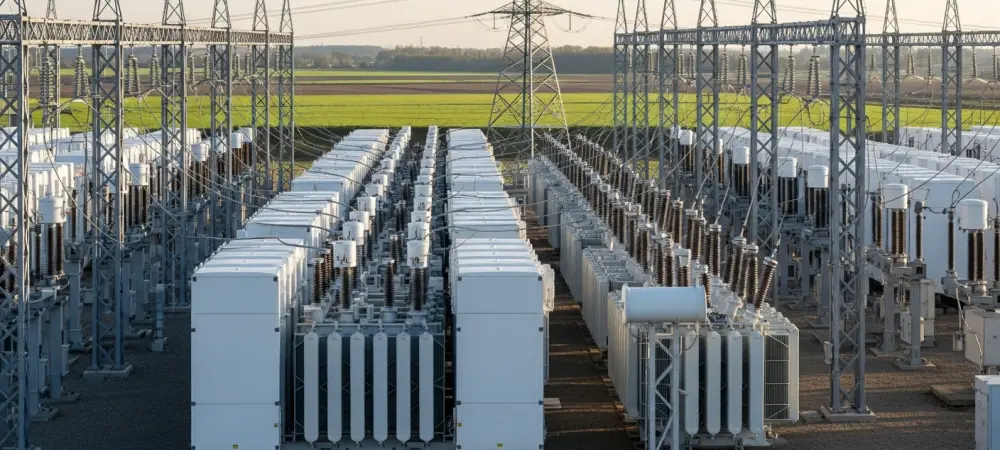
The technical hurdles of tethering a data center to an 80-acre solar farm revolve around the inherent volatility of sunlight compared to the steady, unyielding hum of the traditional grid. While the grid provides a 24/7 safety net, an on-site solar installation requires sophisticated power conditioning equipment to ensure the data center’s sensitive hardware doesn’t suffer from frequency fluctuations or voltage drops. Battery storage technology acts as the vital bridge, functioning like a giant digital lung that inhales excess energy during peak midday sun and exhales it as the sun dips below the Lincolnshire horizon. This orchestration is essential because a campus of this scale cannot afford even a millisecond of downtime, making the 80-acre footprint a critical asset for achieving energy independence. We are essentially building a microgrid that must be smarter and more resilient than the aging infrastructure it aims to supplement.
Modern facilities are increasingly adopting closed-loop cooling systems to minimize water consumption. How does this technology compare to traditional evaporative cooling in terms of operational costs, and what maintenance protocols are necessary to ensure the system remains efficient over its lifecycle?
Adopting a closed-loop cooling system is a transformative decision that shifts the operational burden from water consumption to long-term energy efficiency. Traditional evaporative cooling can be a thirsty beast, often requiring millions of gallons of water that is lost to the atmosphere, whereas our closed-loop approach recirculates the same fluid to drastically minimize environmental strain. From a cost perspective, while the initial mechanical investment is higher, the long-term savings on water utility bills and the reduction in chemical treatments for scaling make it a superior financial choice. To keep this system humming over its lifecycle, maintenance protocols must focus on heat exchanger integrity and pump reliability, ensuring the cooling fluid remains uncontaminated. It is a more sophisticated, “set-it-and-forget-it” style of engineering that honors the local environment by leaving the local water table untouched.
Lincolnshire is seeing a shift from a minimal data center presence to large-scale developments like the 1GW Humber Tech Park. What factors make this region attractive for high-capacity digital infrastructure, and how do these projects typically affect the local workforce and power grid stability?
Lincolnshire is rapidly transforming from a data center desert—previously home to only a few facilities like the bunker in Alford—into a powerhouse for high-capacity digital infrastructure. The region is uniquely attractive because of its vast available land, such as the former RAF air base near Elsham, which allows for massive developments like the planned 1GW Humber Tech Park. These projects bring a surge of high-skilled jobs to the local workforce, transitioning the economy from traditional sectors toward technical operations and renewable energy management. Furthermore, adding such significant capacity can actually bolster grid stability by integrating new, modernized substations and large-scale renewable inputs that serve the broader community. It’s a foundational shift that places a historically rural area at the very center of the global digital economy.
Rapid construction timelines of 12 months require intense coordination with local councils and residents. What strategies are most effective for incorporating community feedback into a final project design, and how do you balance commercial energy needs with the preservation of local green spaces?
A rapid 12-month construction timeline is an intense sprint that requires early and honest engagement with the local community to avoid friction and build lasting trust. During our consultations, such as the event held on May 12, we listen to the sensory concerns of residents—the hum of cooling fans or the visual impact of the 80-acre solar array—and incorporate that feedback directly into the final site plan. Balancing commercial energy needs with the preservation of green spaces means utilizing clever landscaping and buffer zones that hide the industrial aesthetic behind natural foliage and native plantings. Our goal is to present a formal planning application to the North Lincolnshire Council that reflects a project harmonized with its surroundings. We want the community to see these sites not as concrete blocks, but as quiet, green neighbors that power the modern world.
What is your forecast for the future of renewable-integrated data centers?
My forecast is that renewable-integrated data centers will soon become the only viable model for survival in a carbon-conscious global economy. We will see a shift where data centers no longer just consume power but act as active participants in the energy market, utilizing their massive battery arrays to stabilize local grids during peak demand. Within the next decade, the “islanded” data center—capable of running entirely on its own solar, wind, and storage—will move from a niche luxury to an industry standard. This evolution will turn these digital hubs into the green hearts of our communities, fueling both our technological ambitions and our environmental recovery simultaneously. Any facility that doesn’t adapt to this self-sustaining model will likely find itself obsolete as energy costs and environmental regulations tighten.