

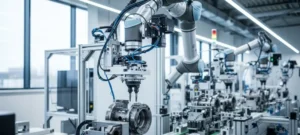
The landscape of heavy industry is currently undergoing a radical transformation as the boundaries between digital intelligence and physical execution continue to blur at an unprecedented pace. Mind Robotics, a high-profile spinoff from the electric vehicle manufacturer Rivian, has recently secured five hundred million dollars in Series A funding, bringing its market valuation to an impressive two billion dollars. Led by venture capital giants Accel and Andreessen Horowitz, this capital injection follows an earlier one hundred fifteen million dollar seed round. The startup, founded by Rivian’s RJ Scaringe, is dedicated to developing physical AI systems specifically designed to modernize industrial automation. By securing such significant financial backing, the firm has positioned itself to tackle the most demanding challenges in the manufacturing sector. This influx of capital allows for the rapid scaling of research initiatives and the acquisition of the specialized computing infrastructure necessary to train next-generation models that can interact with the physical world in ways previously considered impossible for machines.
The Evolution: Moving Beyond Repetitive Motion
The primary objective of Mind Robotics is to resolve a significant structural gap in current manufacturing technology where rigid programming often fails to meet the needs of dynamic environments. While traditional industrial robots are highly efficient at performing repetitive, dimensionally stable tasks, they lack the human-like dexterity and physical reasoning required for more complex factory work. Mind Robotics is building a comprehensive full stack platform—encompassing AI models, specialized hardware, and deployment infrastructure—to enable robots to perform variable, reasoning-intensive tasks that were previously the sole domain of human workers. This transition from simple automation to cognitive robotics represents a fundamental shift in how factories are designed and operated. Instead of isolating machines behind safety cages, the goal is to create systems that can perceive their surroundings and adjust their movements in real time to account for variations in part placement or environmental conditions. This flexibility is essential for the future of high-precision manufacturing.
A central theme of the company’s strategy is its unique data flywheel powered by its strategic partnership with the existing automotive manufacturing infrastructure at Rivian. By utilizing production-scale data from active automotive manufacturing lines, Mind Robotics can rapidly iterate its AI models using real-world scenarios rather than simulated environments. This access to high-quality data is expected to accelerate the development of general intelligence in robotics significantly. The company’s leadership emphasizes a vertically integrated approach, drawing on previous experience in scaling complex hardware and software systems. This philosophy ensures that the software is not merely an afterthought but is instead deeply optimized for the specific mechanical capabilities of the robotic units. By controlling both the brain and the body of the machine, the firm aims to minimize latency and maximize the mechanical efficiency of every movement. This synergy is what allows for the high level of precision required in modern vehicle assembly and other sophisticated industrial applications.
Strategic Implementation: The Competitive Landscape and Talent Integration
Mind Robotics also benefits from a deep talent pool, with a founding team comprised of veterans from industry leaders such as Waymo, Google, Zoox, and Physical Intelligence. This concentration of expertise positions the company to compete in an increasingly crowded field where major automakers like Tesla, BMW, and Hyundai are also testing humanoid or advanced robotic systems. Mind Robotics distinguishes itself by focusing on a generalized platform that can adapt across various core tasks and work alongside human colleagues. The company represents a growing consensus in the tech industry that the next frontier of AI lies in its physical application within heavy industry. By combining massive financial backing, a strategic data partnership, and an end-to-end developmental philosophy, Mind Robotics aims to transition industrial automation from simple programmed movements to adaptive, intelligent collaboration. Currently, the firm is aggressively hiring across research, machine learning, and hardware engineering roles to realize this vision.
The competitive advantage of this spinoff lies in its ability to treat the factory floor as a living laboratory where every robotic interaction contributes to a broader understanding of physical physics and spatial awareness. Unlike companies that focus solely on the digital realm, Mind Robotics prioritized the tactile feedback loops that are necessary for fine motor skills. This focus on physical AI allowed the team to bypass the limitations of purely visual processing, incorporating pressure sensors and haptic feedback into their fundamental training models. As other industry players struggled with the transition from simulation to reality, this organization leveraged its direct access to industrial environments to solve the edge cases that typically stall robotic deployment. The result was a platform that not only understood what a task was but also understood the physical constraints and consequences of its actions. This level of environmental grounding was the missing piece for truly autonomous industrial agents capable of working in non-deterministic settings.
Future Considerations: Actionable Steps for Industrial Transformation
The emergence of such robust physical AI platforms provided a clear roadmap for organizations looking to modernize their legacy production facilities through strategic technological integration. Decision-makers in the manufacturing sector identified the need to prioritize data interoperability between existing hardware and new intelligent software layers to ensure a seamless transition. By investing in sensor-rich environments, companies prepared their infrastructure for the arrival of adaptive systems that required high-fidelity environmental feedback to operate safely and efficiently. It became evident that the successful adoption of these technologies depended on creating a workforce capable of supervising and collaborating with intelligent machines rather than simply maintaining static equipment. Managers focused on upskilling their teams to handle the orchestration of complex robotic fleets, ensuring that the human element remained a vital part of the decision-making process. This proactive approach turned potential disruptions into significant opportunities for growth and increased operational resilience.
Furthermore, the industry recognized that the path to full automation required a modular approach where specific reasoning-intensive tasks were automated before attempting a total overhaul of the assembly line. Organizations that successfully integrated these AI systems did so by identifying high-value bottlenecks where human dexterity was previously the only option but where fatigue or safety risks were high. By deploying targeted robotic solutions in these areas, companies achieved immediate returns on investment while gathering the necessary data to justify broader implementation. These firms also prioritized ethical considerations and safety standards, ensuring that the introduction of autonomous agents did not compromise the well-being of the human workforce. Ultimately, the lessons learned from this phase of industrial evolution highlighted the importance of a unified strategy that combined financial commitment with a deep understanding of physical mechanics. The transition to intelligent manufacturing became a collaborative effort between engineers, data scientists, and floor operators.