

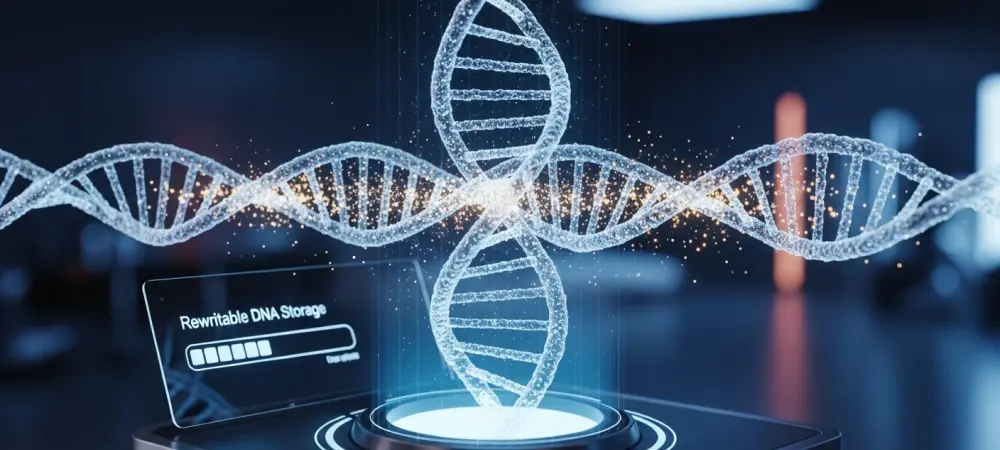
The digital universe is expanding at a rate that traditional silicon-based infrastructure can no longer sustain, forcing a radical shift toward molecular solutions that mimic the efficiency of nature itself. This transition represents more than a simple upgrade in hardware; it is a fundamental reimagining of how information occupies physical space. By utilizing the dense, three-dimensional architecture of the double helix, researchers are moving beyond the flat limitations of traditional semiconductors to create a storage medium that is both biological and programmable.
Foundations of Molecular Data Archiving
Traditional data centers rely on silicon chips that store information in two-dimensional layers, a method that is rapidly approaching its physical and thermal limits. In contrast, DNA provides a high-density, three-dimensional medium capable of packing exabytes of data into a space no larger than a sugar cube. This leap in density allows for a massive reduction in the physical footprint of global archives. The recent shift from purely synthetic DNA storage to programmable biological hard drives has been spearheaded by pioneers at the University of Missouri. These researchers successfully bridged the gap between molecular biology and electronic data processing. Their work demonstrated that biological molecules could function not just as static blueprints for life, but as dynamic, rewritable systems for digital information.
Core Mechanisms of DNA Information Processing
Frameshift Encoding and Biological Efficiency
The breakthrough centers on a technique called frameshift encoding, which takes inspiration from the way viruses use ribosomal processes to maximize information output. By overlapping genetic sequences, the system can pack multiple layers of data into the same biological strand. This method significantly outperforms traditional synthetic DNA writing, which often struggles with slow speeds and high manufacturing costs. Parallelized encoding allows for the simultaneous writing of data across vast molecular arrays. This scalability is essential for creating systems that can compete with modern enterprise storage. By mimicking viral efficiency, the technology achieves a level of data density that makes molecular storage a viable alternative to magnetic and flash-based media.
Molecular Detection and Electronic Signal Translation
Reading the stored data requires specialized molecular detectors that can identify minute electrical charge variations as synthetic DNA strands pass through them. These sensors act as a bridge between the biological and digital worlds. Unlike optical sequencing, which is often slow and cumbersome, this electronic approach offers a more direct and efficient path to data retrieval.
Sophisticated software algorithms play a critical role in this process by reconstructing raw biological signals into standard binary sequences. This ensures that the digital files retrieved are bit-perfect copies of the originals. The hardware used for this detection is remarkably compact, signaling a move toward integrated electronic-biological systems that can fit into existing computer architectures.
Emerging Trends in Molecular Data Writing
Current innovations are focused on making the encoding process both rapid and cost-effective, moving past the expensive chemical synthesis that hindered early adoption. The transition toward rewritable and dynamic biological mediums marks a significant evolution in the field. This capability allows users to modify stored information without needing to synthesize entirely new DNA strands from scratch.
The industry is also shifting toward ultra-compact molecular hardware that prioritizes sustainability. As global energy consumption by data centers continues to climb, the appeal of carbon-neutral storage becomes undeniable. These systems operate with minimal power requirements, making them a cornerstone of the next generation of green technology infrastructure.
Real-World Applications and Sector Impact
One of the most immediate uses for this technology is the long-term preservation of scientific archives and corporate records. Microscopic formats allow institutions to store centuries of history in a single vial, protected from the environmental degradation that affects magnetic tape. The stability of DNA ensures that information remains readable for hundreds of years without the need for constant migration.
In secure environments, DNA storage offers a unique defense against traditional cyber intrusions. Because the data is stored in a biological format, it is immune to the software-based hacking techniques that plague silicon systems. Furthermore, the potential for personal biological flash drives suggests a future where individuals carry their entire digital lives in a form factor that is virtually indestructible and incredibly stable.
Technical Obstacles and Market Challenges
Despite the promise, several engineering hurdles remain before mass-market adoption can occur. Scaling the biochemical processes to handle the petabytes of data generated daily by modern society is a significant challenge. Furthermore, the current speed of the read-write cycle still lags behind the instantaneous performance of solid-state drives, limiting DNA to archival roles for now.
Regulatory and standardization issues also complicate the path to commercialization. Using synthetic genetic material for commercial data purposes requires clear guidelines to ensure safety and ethical compliance. Establishing industry-wide protocols for data formatting and error correction is necessary to ensure that different DNA storage systems can interoperate seamlessly.
The Future of Biological Data Management
Miniaturization efforts are currently targeting a consumer-friendly USB form factor, which would democratize access to molecular storage. Breakthroughs in DNA stability are expected to extend the life of stored data to over a millennium, far exceeding any existing storage technology. This longevity could fundamentally change how human history is recorded and preserved.
The societal impact of moving toward energy-efficient, carbon-neutral storage is profound. As the world moves from power-hungry data centers to silent, microscopic molecular arrays, the environmental cost of the digital age will drop significantly. This shift supports a more sustainable relationship between technology and the planet, ensuring that the data explosion does not come at the expense of the environment.
Final Assessment of DNA Storage Technology
The evolution of biological hard drives represented a transformative moment in the history of data management. This technology moved from a theoretical concept to a viable path for addressing the global data crisis by offering unprecedented density and stability. It proved that the most efficient way to store information was already hidden within the fundamental building blocks of life.
While the system remained a proof-of-concept for several stages, its journey toward commercialization highlighted the necessity of molecular innovation. The integration of frameshift encoding and electronic detection provided a robust framework for future developments. Ultimately, the adoption of DNA-based storage became a critical solution for preserving the vast legacy of human knowledge in an increasingly digital world.