

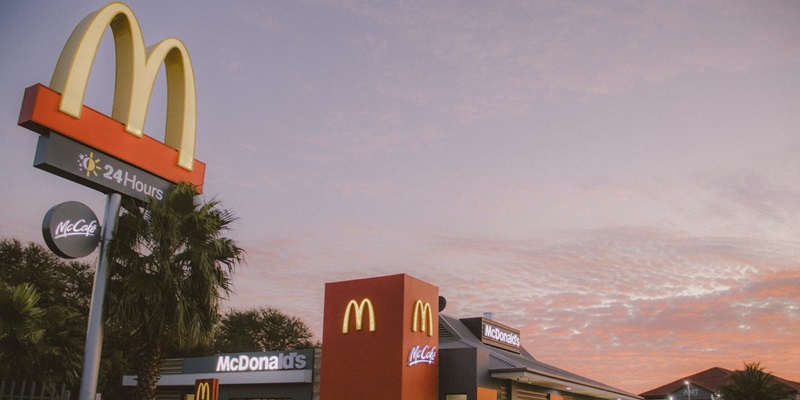
McDonald’s, the global fast-food chain, has announced a partnership with Google Cloud to revolutionize its restaurant technology platform. By leveraging the hardware, data, and AI technologies of Google Cloud, McDonald’s aims to enhance the customer experience, improve operations, and provide innovative solutions for its restaurant teams and employees.
Leveraging Google Cloud Technology
McDonald’s recognizes the potential of Google Cloud technology in propelling its restaurant technology platform to new heights. With access to Google Cloud’s wide range of cutting-edge tools and resources, McDonald’s can implement innovation at unmatched speeds. By harnessing the power of Google Cloud’s hardware, data analytics, and AI technologies, McDonald’s can drive efficiency and improve the overall dining experience for its customers.
Enhancing the Mobile App Experience
One of the key advancements McDonald’s plans to roll out is the enhancement of its popular mobile app. The app will serve as a gateway to personalized experiences and rewards, allowing customers to tailor their orders, receive exclusive offers, and earn loyalty rewards. By leveraging Google Cloud’s AI capabilities, the app will provide personalized recommendations and a seamless ordering process, optimizing convenience for customers.
Upgrading Self-Service Kiosks
To further enhance the customer experience and streamline the ordering process, McDonald’s plans to upgrade its self-service kiosks in thousands of restaurants worldwide. These upgraded kiosks will feature improved user interfaces, faster processing times, and enhanced customization options. The integration of Google Cloud technology will enable seamless integration between the kiosks and the mobile app, allowing customers to easily transition between different ordering channels.
Utilizing Edge Computing
McDonald’s recognizes the importance of speed and efficiency within individual restaurants. To achieve this, McDonald’s will leverage edge computing capabilities from Google Cloud. Edge computing allows for real-time data processing and analysis at the edge of the network, enabling faster and more efficient operations within each restaurant. This technology will optimize order processing times, inventory management, and customer service, ensuring a smooth and seamless experience for customers.
Real-Time Insights and Simplified Operations
The partnership with Google Cloud brings the advantage of Google Distributed Cloud for McDonald’s. This technology will provide real-time insights into equipment performance, enabling proactive maintenance and reducing business disruptions. Additionally, it will simplify operations for McDonald’s crew, allowing them to focus on providing excellent service to customers. With Google Distributed Cloud, McDonald’s can optimize equipment usage, streamline inventory management, and ensure a seamless operational workflow.
Driving Exciting Experiences
Through this innovative partnership, McDonald’s aims to drive exciting new experiences for both customers and crew members. The enhanced mobile app and self-service kiosks will provide customers with greater convenience, personalization, and value. Meanwhile, McDonald’s crew members will benefit from simplified operations, real-time insights, and the ability to deliver exceptional service. This collaboration will reshape the expectations and experiences of dining out at McDonald’s.
CEO’s Enthusiasm
Thomas Kurian, CEO of Google Cloud, expressed his enthusiasm for the partnership, highlighting its potential to redefine the restaurant industry. Kurian recognizes the power of merging cutting-edge technology with a renowned brand like McDonald’s and its ability to transform the industry. Together, McDonald’s and Google Cloud aim to set new industry standards and deliver unprecedented experiences for customers.
Implementation Timeline
Thousands of McDonald’s restaurants worldwide are set to receive their hardware and software upgrades next year. This rollout will be a significant milestone in McDonald’s journey towards a more advanced and efficient restaurant technology platform. The company’s commitment to leveraging Google Cloud technology demonstrates its dedication to continuously improving the customer experience and staying at the forefront of technological innovation.
The partnership between McDonald’s and Google Cloud exemplifies the power of merging cutting-edge technology with a renowned brand to transform the restaurant industry. By leveraging Google Cloud’s hardware, data analytics, and AI technologies, McDonald’s can enhance its mobile app, upgrade self-service kiosks, and optimize operations within individual restaurants. This collaboration will drive exciting new experiences for both customers and McDonald’s crew, enhancing convenience, value, and overall satisfaction. As technology continues to shape the dining landscape, McDonald’s and Google Cloud are paving the way for a future of innovation in the fast-food industry.