

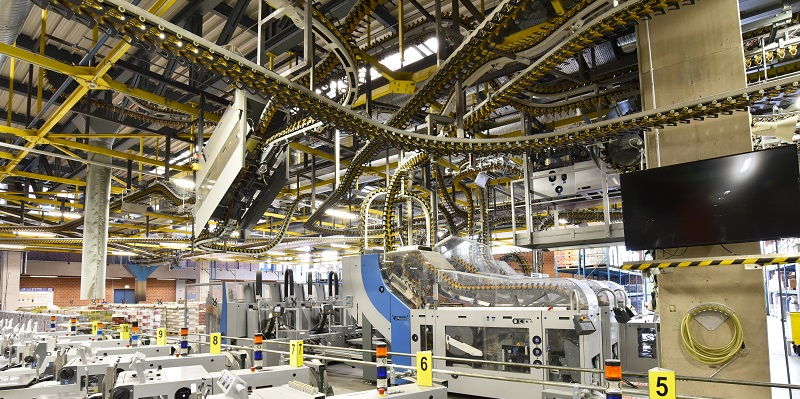
The manufacturing industry, along with various other sectors, is currently undergoing a profound transformation driven by technological advancements. In this article, we will explore the latest innovations and developments that are revolutionizing industries. From automation and digitization to post-processing techniques and the integration of advanced technologies, these advancements are enhancing efficiency, increasing productivity, and mitigating human errors in crucial processes.
GelSight Mobile 3.5: Automating Inspection Processes
With the release of GelSight Mobile 3.5, customers now have an additional level of automation to digitize previously manual inspection processes. This innovation vastly improves efficiency and helps mitigate human errors in crucial inspection tasks across industries. GelSight Mobile 3.5 streamlines inspection procedures, providing accurate and reliable results, ultimately enhancing overall product quality.
The Importance of Post-Processing in Additive Manufacturing
Additive manufacturing (AM) has revolutionized the production of complex geometries, but the journey from a 3D-printed part to a fully functional component requires meticulous post-processing techniques. Post-processing fills the gap by refining the surface finish, removing supports, and optimizing the part’s mechanical properties. It plays a pivotal role in producing high-quality, functional parts and bridging the divide between raw 3D-printed components and their final usable forms.
Creaform’s Local Service Centers for Global Customer Experience
Recognizing the importance of customer experience, Creaform has inaugurated several local service centers worldwide. These centers aim to provide localized support, quick response times, and enhanced customer satisfaction. By expanding their existing network of service centers and planning future expansions, Creaform is committed to meeting the needs of customers worldwide.
The Features and Specifications of MCS500 SCARA Robot
The MCS500 SCARA robot, with its impressive payload capacity and reach, is revolutionizing industrial automation. With a rated payload of 0.5kg and a maximum payload of 1kg, along with a horizontal reach of 225mm and a Z stroke of 102mm, the MCS500 offers versatility and precision in various manufacturing processes. Its advanced capabilities make it an ideal choice for industries requiring high-speed, repetitive tasks with exceptional precision and accuracy.
Enhancing Nanomechanical Testing with Hysitron TI 990 TriboIndenter
Bruker Corporation has recently introduced the Hysitron TI 990 TriboIndenter, a breakthrough in nanomechanical testing capabilities. This state-of-the-art instrument sets new standards in performance, automation, and productivity. It allows for detailed testing and characterization of materials at the nanoscale, providing valuable insights into mechanical properties and behavior. With superior automation and precision, the Hysitron TI 990 TriboIndenter enables researchers and engineers to push the boundaries of material science and development.
Technology-Driven Transformation in the Manufacturing Industry
The manufacturing industry is at the forefront of embracing technological advancements to improve operational efficiency and meet evolving consumer demands. With the integration of robotics, artificial intelligence, Internet of Things (IoT), and data analytics, manufacturers can optimize production processes, reduce costs, enhance quality control measures, and streamline supply chain management. This transformation is resulting in increased productivity, reduced waste, and greater flexibility, revolutionizing the manufacturing landscape.
Advantages of Smart Profile Sensors for Industrial Applications
Smart profile sensors have become indispensable tools across various industries due to their advanced features and easy operability via integrated web interfaces. These sensors enable real-time monitoring, measurement, and analysis of crucial parameters, streamlining quality control and efficiency in industrial processes. The simplicity and accuracy of smart profile sensors have significantly improved manufacturing operations, ensuring precise measurements and reducing downtime.
GI-100DT: Complete Inspection Solution for Aerospace Bushings
The GI-100DT inspection system is a comprehensive solution designed specifically for the aerospace industry. Equipped with six cameras, the GI-100DT provides complete dimensional inspection, internal and external visual defect detection, and top and bottom surface inspection. This advanced system aids in the streamlined manufacturing of aerospace bushings, ensuring the highest standards of quality and reliability.
Air Extend/Spring Retract Gage Heads for Quality Assurance in Conveyor Lines
In manufacturing conveyor lines, Air Extend/Spring Retract Gage Heads play a crucial role in conducting tolerance checks as part of quality assurance measures. These gage heads ensure that products meet specified dimensional requirements, maintaining consistency and accuracy in a production line. By eliminating human error and providing real-time measurements, Air Extend/Spring Retract Gage Heads contribute to improved product quality and customer satisfaction.
The Integration of Advanced Computer Vision and AI Solutions
The application of advanced computer vision techniques, integrated with artificial intelligence (AI) solutions, has transformed industries in diverse ways. By leveraging machine learning algorithms and pattern recognition, computer vision enables automation, quality control, and predictive maintenance across sectors such as manufacturing, healthcare, retail, and transportation. This rapidly advancing technology enhances accuracy, speeds up processes, and optimizes decision-making, leading to improved operational efficiency and business outcomes.
As industries adapt to the ever-changing business landscape, automation, digitization, and technological advancements continue to reshape traditional practices. From streamlining inspection processes using GelSight Mobile 3.5 to optimizing manufacturing operations with the MCS500 SCARA robot, these innovations have revolutionized industries. Additionally, advancements in post-processing techniques, enhanced customer experience, and the integration of advanced technologies showcase the transformative power of automation and digitization across sectors as we move towards a future defined by efficiency, precision, and productivity.