

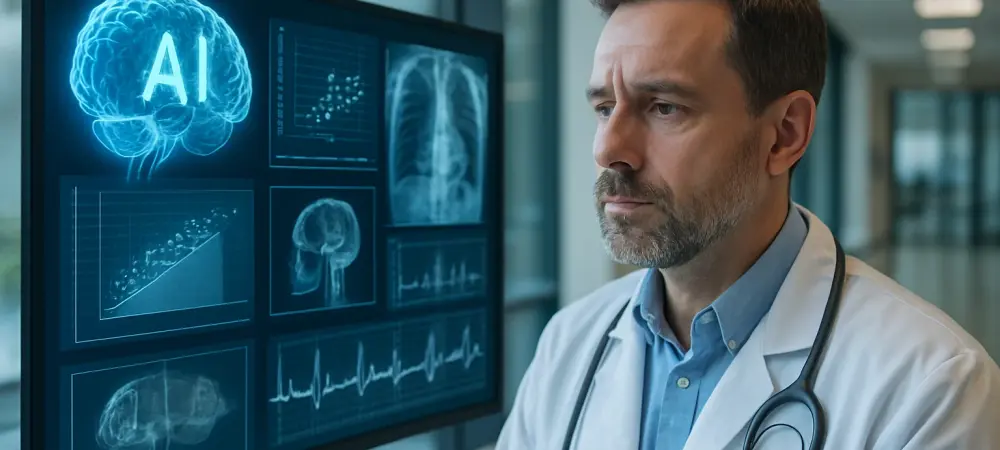
The healthcare industry is experiencing a monumental shift as artificial intelligence (AI) takes center stage, promising to enhance how care is delivered and healthcare outcomes are achieved. This transformation is not just a futuristic vision but a present-day reality, as AI continues to address pressing challenges like staff shortages, data management complexities, and the ever-growing demand for accurate diagnoses. Healthcare leaders and organizations are increasingly recognizing the significance of AI, with adoption rates skyrocketing and technological innovations continuously emerging as solutions to multifaceted problems faced by the sector.
Importance of AI in Modern Healthcare
Embracing AI in healthcare is not merely an option but a necessity for modern healthcare systems striving to maintain quality care. AI’s benefits are vast, offering improved diagnostics, the potential for personalized treatments, and enhanced operational efficiencies. Advanced algorithms can assist in discerning complex patterns within medical data that are often missed by human eyes alone, providing unprecedented levels of accuracy in diagnostics and treatment plans that are tailored to individual patients. Moreover, AI streamlines administrative workflows, freeing up time and resources that can be redirected toward patient-centered activities.
Best Practices for Implementing AI in Healthcare Settings
Incorporating AI into healthcare settings requires strategic planning and execution. Adopting a successful AI integration approach is pivotal for reaping its potential benefits.
Enhancing Clinical Documentation with AI
Streamlining clinical documentation has become achievable thanks to AI technologies, significantly alleviating the burden on clinicians. A notable approach is using natural language processing (NLP) tools to automate documentation in real time. This technological intervention reduces the manual input typically associated with Electronic Health Records (EHRs), thereby minimizing clinician burnout and boosting job satisfaction. The real-world application of these technologies showcases impressive results, including a case study focusing on AI-driven EHR automation that saw clinician morale drastically improve due to reduced manual workload.
Leveraging AI for Accurate Diagnoses
AI tools are invaluable for enhancing diagnostic accuracy, playing a crucial role in early disease detection and management. For instance, AI-powered imaging analysis in cardiovascular care represents a groundbreaking advancement, enabling clinicians to achieve higher precision in diagnosing complex cardiac conditions. This example underscores AI’s ability to serve as a pivotal ally in clinical diagnostics, ensuring timely interventions and improved patient outcomes.
Maintaining Regulatory Compliance and Data Security
Healthcare data management must balance the utility of AI with strict compliance and security standards. Implementing AI tools designed to enforce regulatory frameworks ensures compliance with global health mandates such as HIPAA while maintaining the security of sensitive patient information. A notable instance is the use of AI-assisted compliance at a leading hospital, showcasing how automation can effectively ensure adherence to healthcare laws, affording peace of mind for both healthcare providers and patients.
Conclusion and Future Prospects
The adoption of AI in healthcare has left a profound impact on the sector, improving patient care through diverse ways such as predictive analytics, automation of clinical workflows, and real-time data interpretation. Organizations that prioritized this integration experienced reduced clinician burnout, optimized delivery of healthcare resources, and the build-up of patient-centric healthcare ecosystems. Healthcare practitioners and institutions have undoubtedly seen AI shape the future of medicine, with ongoing advancements promising further improvements in both innovation and care quality. As the next steps involve considering specific healthcare needs and evaluating AI technologies, medical professionals must stay informed to best harness AI’s transformative potential.