

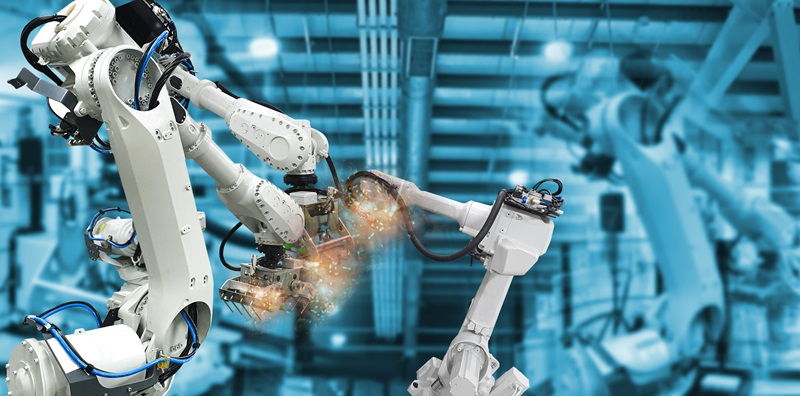
Thermaltronics USA Inc. is at the forefront of innovation in electronics manufacturing with its new TMT-R9000S Solder Robot. This revolutionary benchtop device combines a small footprint with unparalleled versatility, representing a leap forward in precision soldering technology. The R9000S goes beyond minor upgrades; it reimagines what’s possible in automated soldering processes.
This high-performance tool is designed to address the ever-increasing demands for accuracy and operational efficiency in the sector. Its introduction into the market sets a new bar for precision, with features and functionality that are poised to transform how the industry operates. With its advanced capabilities, the TMT-R9000S is not just an evolution in the space of precision soldering—it’s a comprehensive overhaul poised to take the electronics manufacturing world to new heights of proficiency and ingenuity.
TMT-R9000S: A Compact Powerhouse of Versatility
The world of electronics manufacturing is notorious for its constantly shifting paradigms, demanding ever-increasing precision to accommodate intricately designed circuit boards. Recognizing this, the TMT-R9000S has been designed with a sizable soldering area of 12 x 12 inches and an even more expansive PCB area of 17 x 17 inches. This unit deftly caters to a multiplicity of soldering tasks, adeptly maneuvering through the challenging requirements that currently shape the electronics assembly landscape. Enhanced capacity and adaptability stand at the core of this innovation, bearing witness to Thermaltronics’ grasp of industry trends and needs.
The significance of the TMT-R9000S’s capabilities cannot be understated. With the leap in soldering area compared to previous models, the R9000S sets a new standard in versatility. The increased space enables the solder robot to tackle larger and more complex assemblies; a tangible response to the industry’s call for tools that can keep pace with the expansion in both size and complexity of electronic components and boards.
SMEMA Communication Ports – Bridging Automation
Automation is the cornerstone of modern manufacturing, and the TMT-R9000S’s integration with SMEMA Communication Ports exemplifies this principle. These ports open the door to seamless collaboration with Robotic Arm Systems, enabling a synergistic workflow that boosts both precision and efficiency. In a production environment where every second counts, the capability to flawlessly coordinate complex tasks with other automated systems is invaluable. The R9000S is attuned to the nuances of contemporary manufacturing processes—a totem of interoperability and streamlined operations.
This integration extends beyond simplifying workflows; it augments the expertise of soldering technicians, empowering them to oversee more strategic, complex operations that capitalize on the robot’s precision. The TMT-R9000S stands as a paragon of modern craftsmanship, providing operators with not just a soldering tool but a comprehensive soldering solution that enhances the entire production cycle.
Advanced XYZ and 3D Soldering Capabilities
Precision is the hallmark of the TMT-R9000S, and this is emphatically demonstrated through its advanced XYZ and 3D soldering and dispensing features. With these capabilities, the solder robot engages with the most challenging soldering tasks with a level of accuracy that sets a new industry benchmark. The meticulous control enabled by the 3D systems ensures that the unit caters to complex soldering needs with consistent outcomes, fortifying Thermaltronics’ reputation for cutting-edge solutions that precision tasks demand.
The strategic implementation of XYZ and 3D soldering and dispensing ensures that every application of solder is precisely placed, every joint meticulously formed. This three-dimensional control revolutionizes how soldering tasks are approached, imbuing the production process with an assured consistency that is the bedrock of high-quality electronics manufacturing.
Dual Input Line Voltage for International Adaptability
In the global manufacturing landscape, adaptability is a necessity, and the TMT-R9000S steps up with dual input line voltage options—TMT-R9000PS-1 for 100-110 VAC and TMT-R9000PS-2 for 220-240 VAC. This versatility allows for seamless integration into different regions’ electrical infrastructures, ensuring that the robot’s exceptional capabilities are not restricted by geographical boundaries. By incorporating this dual voltage feature, Thermaltronics demonstrates an understanding of the diverse needs of an international marketplace, reinforcing the R9000S’s role as a versatile tool for global use.
Addressing the variations in power supply standards worldwide, the TMT-R9000S ensures that manufacturing facilities, regardless of location, can harness its innovative soldering power. This foresight positions the R9000S as a truly adaptable machine, capable of transcending the typical limitations imposed by regional power grid variations.
6-Axis Servo Motor Axis – The Heart of Precise Control
Precision in soldering hinges on the ability to control movement with the utmost accuracy, and the TMT-R9000S’s 6-axis servo motor axis is critical to achieving this level of control. By incorporating a system that offers flexibility and precision in movement, the solder robot can execute the most delicate tasks with unparalleled accuracy. It’s this precision that elevates the R9000S beyond competition, earmarking it as the tool of choice for high-quality outcomes in modern soldering applications.
The six axes of servo-controlled motion translate to a go-anywhere, solder-anything ability, embracing the complex geometries of today’s electronic components. As the drive for miniaturization continues, the precision afforded by the TMT-R9000S ensures that no task is too small, no detail too fine, for it to manage with complete poise and reliability.
Expanding Soldering Horizons – 600 mm Circular Soldering
With a legacy of innovation behind it, the TMT-R9000S dramatically expands the soldering area to accommodate up to 600 mm circular soldering. This advancement represents Thermaltronics’ commitment to pushing the boundaries of what is possible, guiding the industry towards heightened efficiency and precision. This capability not only sets a new precedent for diverse soldering footprints but also aligns with the industry’s broader trajectory, which continuously calls for a greater breadth of applications.
This enlarged soldering arena is a nod to the future, a recognition that the scopes of electronics manufacturing are widening, and the tools of the trade must evolve in tandem. The TMT-R9000S’s leap in capability empowers manufacturers to not just meet the demands for larger and more intricate circuit board requirements but to exceed them, maintaining a competitive edge in an accelerating market.