

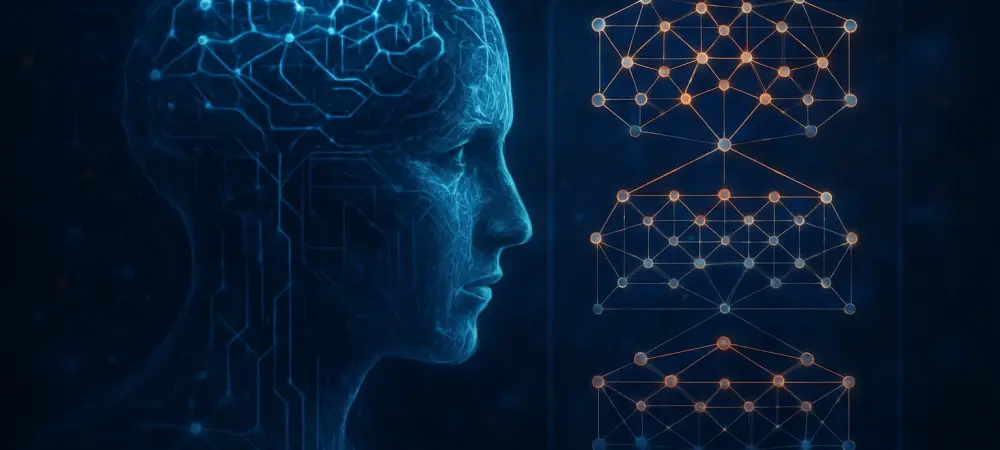
Picture a scenario where artificial intelligence doesn’t just parrot pre-learned information but evolves with every interaction, much like a human mind deepening its understanding over time. This tantalizing vision isn’t a distant dream but a burgeoning reality in the field of AI, thanks to pioneering concepts like Nested Learning (NL). As technology races forward in 2025, the limitations of current generative AI systems, such as their static nature after training, are becoming glaringly apparent. The urgency to create smarter, more adaptable systems has never been more critical, especially with the ultimate goal of achieving Artificial General Intelligence (AGI) on the horizon. This article aims to explore the cutting-edge realm of Nested Learning, addressing key questions about its potential to transform AI architecture. Readers can expect a deep dive into how this innovation could bridge the gap between static models and dynamic, self-improving intelligence, along with insights into its implications for the future.
The significance of this topic lies in its potential to redefine how machines learn and adapt. With generative AI and Large Language Models (LLMs) like ChatGPT and Gemini already reshaping industries, the next leap forward hinges on overcoming their inherent rigidity. Nested Learning emerges as a promising solution, offering a framework for continuous, layered learning. Through a series of frequently asked questions, this discussion will unravel the concept, its challenges, and its prospects, providing clarity on why this innovation matters. By the end, a comprehensive understanding of how AI could mimic human-like learning will be within grasp, paving the way for informed perspectives on this transformative journey.
Key Questions About Nested Learning in AI
The exploration of Nested Learning and its role in advancing AI brings forth several pivotal questions. Each query tackles a unique facet of this innovation, from its foundational principles to its broader implications. Below, these questions are addressed with detailed insights, ensuring a thorough grasp of the subject.
What Is Nested Learning and Why Does It Matter?
Nested Learning, often abbreviated as NL, represents a groundbreaking approach to AI architecture. It focuses on creating multi-level, interconnected layers of optimization that allow systems to learn continuously and adapt in real-time. Unlike traditional models that remain largely unchanged after their initial training, this framework seeks to emulate the dynamic nature of human cognition, where understanding deepens through experience. Its importance cannot be overstated, as it addresses a fundamental flaw in current AI: the inability to self-improve without external updates. As industries increasingly rely on AI for complex tasks, the demand for systems that evolve with new data becomes paramount.
This concept matters because it could potentially unlock a new era of intelligence in machines. Imagine an AI that doesn’t just respond based on past data but refines its knowledge with every user interaction, much like a teacher learning better ways to explain a concept through student feedback. Researchers from leading tech hubs have proposed this as a stepping stone toward AGI, where machines could match or even surpass human capabilities across diverse domains. The shift from static to adaptive systems through NL offers a tantalizing glimpse into a future where technology grows alongside humanity, making it a critical area of study and development.
Moreover, the relevance of NL extends beyond technical circles to practical applications. Businesses, educators, and policymakers stand to benefit from AI that can adjust to changing environments without constant reprogramming. For instance, a customer service AI built on this principle could refine its responses based on real-time feedback, enhancing user satisfaction. Thus, the push for such innovation isn’t merely academic; it’s a response to tangible needs across sectors, underlining why this approach has captured significant attention in the AI community.
How Does Nested Learning Differ from Current AI Models?
Current generative AI models, including popular LLMs, operate on a foundation of extensive pre-training with vast datasets. Once deployed, their core knowledge remains fixed, with updates only occurring through developer intervention or temporary mechanisms like retrieval-augmented generation. This static nature limits their ability to incorporate new insights or adapt to evolving contexts, often resulting in outdated or incomplete responses. The contrast with Nested Learning is stark, as NL introduces a system where learning happens across nested layers, each optimizing independently yet collaboratively.
In essence, NL creates a dynamic architecture where AI systems can refine their understanding continuously. Think of it as a series of interconnected learning loops, each building on the other, allowing the AI to adjust its internal models based on new interactions. Unlike the rigid structure of existing models, this approach enables real-time adaptation, a feature inspired by how humans layer their knowledge over time. A proof-of-concept model named “Hope” has demonstrated early success in testing this framework, showing improved expressiveness in handling complex queries compared to traditional deep learning methods.
This difference carries profound implications for AI’s future. While current models excel at tasks within their training scope, they falter when faced with novel challenges outside their data. NL, by contrast, aims to break this barrier by fostering ongoing learning, potentially reducing the need for frequent manual updates. Evidence from experimental results suggests that such architectures could handle multi-dimensional problems more effectively, positioning NL as a transformative shift in how intelligence is engineered into machines.
What Challenges Do Current AI Systems Face That Nested Learning Aims to Solve?
One of the most pressing challenges in today’s AI landscape is the inherent static nature of generative models. After their initial training on massive internet datasets, these systems lack the mechanism to integrate new knowledge autonomously. This rigidity means they can miss critical updates or fail to correct errors unless manually adjusted by developers, a process that is both time-consuming and resource-intensive. As a result, their utility in rapidly changing environments is often compromised, posing a significant hurdle in achieving deeper intelligence.
Nested Learning steps into this gap with a promise to enable self-improvement through layered optimization. It tackles the challenge by designing AI to mimic human learning patterns, where understanding evolves through continuous feedback and adjustment. For example, just as a person learning a sport like baseball progresses from grasping basic rules to mastering complex strategies over time, NL seeks to embed a similar progression in machines. Early studies on this approach indicate that such a system could reduce dependency on external updates, offering a more sustainable path for AI development.
However, the road to implementing NL isn’t without obstacles. A major concern is the risk of the system absorbing incorrect information during autonomous learning, which could propagate errors at scale. Balancing adaptability with accuracy remains a critical puzzle to solve. Despite this, the potential to address the core issue of static knowledge in AI through NL is seen as a game-changer by many in the field, with ongoing research focused on refining safeguards to mitigate such risks while preserving the benefits of continuous learning.
Can Nested Learning Bring Us Closer to Artificial General Intelligence?
The pursuit of Artificial General Intelligence, where machines can perform any intellectual task a human can, remains a defining goal in AI research. Current systems, despite their prowess in specific domains, fall short due to their inability to generalize learning across diverse contexts. This limitation stems from their fixed knowledge base, which restricts adaptability and depth of understanding. Nested Learning offers a potential pathway by fostering self-learning capabilities that mirror the multi-layered progression of human cognition.
By enabling AI to optimize across interconnected layers, NL could bridge the gap between narrow intelligence and general competence. This approach allows for continual refinement, much like how humans build expertise through experience, progressing from novice to expert in various fields. If successful, it might equip machines to tackle unforeseen challenges without predefined training, a hallmark of AGI. Preliminary experiments, such as those with the “Hope” model, have shown promise in enhancing in-context learning, suggesting that NL could indeed be a crucial stepping stone.
Nevertheless, caution is warranted as the journey to AGI involves not just technical feats but ethical considerations. The possibility of unchecked learning leading to misinformation or bias in AI systems is a valid concern, necessitating robust oversight. Still, the consensus among many researchers is that frameworks like NL, which prioritize adaptability and depth, are essential for nearing AGI. The ongoing exploration of this paradigm, supported by innovative architectures, keeps the hope alive that machines could one day rival human versatility in thought and action.
What Are the Risks and Limitations of Implementing Nested Learning?
While Nested Learning holds immense promise, it is not without its share of risks and limitations. One significant concern is the potential for AI to learn and perpetuate incorrect or harmful information during its autonomous adaptation phase. Unlike current models where errors can be traced to training data and corrected through updates, an NL-based system might amplify mistakes in real-time, affecting countless users before issues are detected. This challenge underscores the need for stringent validation mechanisms to ensure reliability.
Additionally, the complexity of nested architectures poses practical hurdles. Designing and maintaining a system with multiple optimization layers demands substantial computational resources and expertise, potentially limiting its accessibility to smaller organizations. There’s also the question of scalability—while early models show success in controlled settings, applying NL to larger, real-world scenarios remains untested. Some experts argue that without addressing these logistical barriers, widespread adoption could be delayed, even if the theoretical benefits are clear.
Despite these challenges, the dialogue around NL remains optimistic, with research ongoing to mitigate risks. Solutions like hybrid models, combining autonomous learning with periodic human oversight, are being explored to balance innovation with safety. The limitations, though real, are viewed as solvable problems rather than deal-breakers. As the field progresses, refining this approach could turn potential pitfalls into stepping stones, ensuring that the benefits of adaptive AI outweigh the drawbacks.
Summary of Nested Learning Insights
Nested Learning stands as a beacon of innovation in the ever-evolving landscape of artificial intelligence. This discussion has unpacked its core principles, highlighting how it diverges from the static nature of current generative AI models through dynamic, multi-layered optimization. The key takeaway is that NL offers a vision of machines that learn and adapt in real-time, addressing a critical gap in today’s technology by mimicking human learning patterns. From its potential to bring AI closer to AGI to the challenges of ensuring accuracy amidst autonomy, the nuances of this paradigm have been explored in depth.
Another vital insight is the urgency of architectural innovation in AI. Scaling up hardware alone is unlikely to achieve the breakthroughs needed for truly intelligent systems; instead, novel frameworks like NL are essential for pushing boundaries. The risks, such as error propagation and implementation complexity, are acknowledged as significant but not insurmountable. This summary underscores the consensus that while Nested Learning is still in its experimental phase, its promise to transform how machines evolve keeps it at the forefront of AI research.
For those eager to delve deeper, exploring resources from leading tech research hubs or academic papers on advanced AI architectures can provide further clarity. Engaging with communities focused on machine learning innovations also offers a platform to stay updated on developments like the “Hope” model and beyond. The journey of Nested Learning is just beginning, and staying informed about its progress could reveal how AI shapes the world in the coming years from 2025 onward.
Final Thoughts on AI’s Future with Nested Learning
Reflecting on the exploration of Nested Learning, it became evident that the field of AI stood at a transformative crossroads in the past few years. The limitations of static models had long hindered progress, but the emergence of dynamic, adaptive frameworks sparked renewed hope. The discussions around multi-layered optimization illuminated a path forward, even as challenges like error risks and scalability loomed large. What was clear then was that innovation in architecture, rather than mere computational power, held the key to unlocking AI’s full potential.
Looking back, the actionable next step was to foster collaboration between researchers, developers, and ethicists to refine Nested Learning. Prioritizing robust safeguards against misinformation while scaling up experimental models like “Hope” was seen as essential. The focus needed to shift toward creating accessible tools, ensuring that smaller entities could also harness this technology without being sidelined by resource constraints. These efforts, initiated in the past, laid the groundwork for a future where AI could truly evolve alongside human needs.
As a final consideration, the past taught that individual engagement with AI advancements mattered. Exploring how adaptive systems could integrate into personal or professional spheres—whether in education, business, or daily life—offered a chance to shape their impact. The dialogue around Nested Learning wasn’t just for experts; it invited everyone to envision a world where technology learned as humans did. This reflection from history encourages a proactive stance, urging all to stay curious and involved as AI continues its remarkable evolution.