

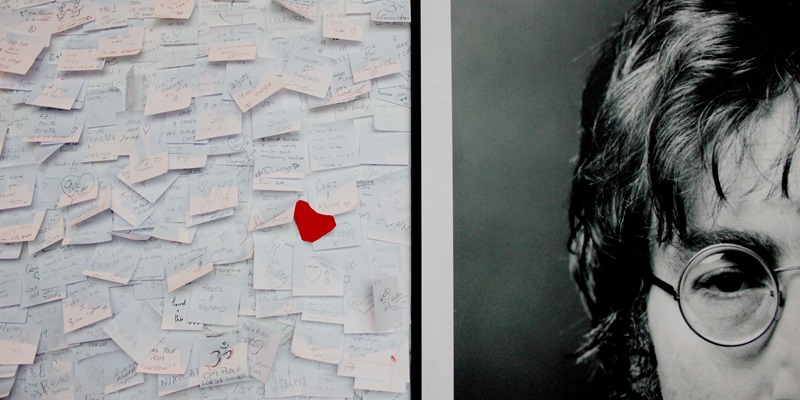
To hear people talk about it, you’d think this was an unabashed money grab using the latest voice synthesis technology to imitate one of the most famous songwriters of all time. But the real story is simpler and more poignant than that, and the technology is far less fantastical. The project in question involves the recreation of John Lennon’s voice through the use of machine learning audio technology. While controversy surrounds the idea of recreating the voice of a legendary artist, the process has provided closure for the group and a chance to cherish Lennon’s voice once again.
The Real Story Behind the Technology
Many misconceptions surround the technology used to recreate John Lennon’s voice. It is not an extravagant creation of science fiction, but rather a product of machine learning audio (MLA) technology. Developed by a team led by Peter Jackson, MLA is a version of audio isolation technologies that has made significant advancements in recent years. By employing machine learning models and analyzing the waveform or spectral signature of specific sounds, MLA can isolate and extract individual components from a mixed track.
The challenging process of restoring Lennon’s demo
During the restoration process of Lennon’s demo for the song “Now And Then,” the team faced considerable difficulty. Ringo Starr mentioned that John’s presence was somewhat hidden in the demo, making it challenging to discern and restore his voice effectively. However, the team’s determination to revive Lennon’s voice through technological advancements prompted the development of MAL.
Understanding Machine Learning (ML) in Audio
Machine learning audio technology has revolutionized the way audio tracks can be manipulated and separated into different components. By training machine learning models on various tracks, such as guitar recordings, MAL (Machine Learning Audio) can learn and identify the distinct acoustic characteristics of specific instruments. This allows it to extract these instruments from mixed tracks with varying degrees of success. In the case of John Lennon’s demo, MAL worked like a charm, successfully extracting his voice from the recording.
Ethical concerns and John Lennon’s perspective
The ethics of recreating a deceased artist’s voice are undoubtedly a valid concern. However, those involved in the project firmly believe that John Lennon himself would have supported the endeavor. Lennon had a deep affinity for technology, often tinkering with it in his creative process. Furthermore, he wrote and performed the original song with the intention of recording it, emphasizing his openness to exploring new possibilities for his music and voice.
Closure for the group
More than just a recreation of a famous voice, this project has provided closure for the group. Hearing Lennon’s voice again evokes powerful emotions and fond memories for his former bandmates. George Harrison once expressed that John’s voice is something to be cherished, emphasizing the importance of preserving and appreciating his musical legacy. To hear John’s voice once more has brought solace to the group, signifying a sense of closure. The technology, although controversial, has allowed them to reconnect with their late bandmate in a way that feels authentic and meaningful.
The journey to recreate John Lennon’s voice using machine learning audio technology has been met with both skepticism and reverence. However, it is crucial to recognize that the intention behind this project goes beyond mere profit. It is a way to cherish and preserve the legacy of one of the greatest songwriters of all time. By understanding the true story behind the technology, acknowledging the emotional significance for the group, and considering John Lennon’s perspective, we can appreciate the nuances of this project. It opens up a discussion about the ethics of voice synthesis and the impact it can have on our relationship with art and artists who have left us.
Ultimately, the recreation of John Lennon’s voice has become a means of honoring his memory and providing closure for those who loved him and his music. In a world that constantly evolves technologically, it is essential to navigate these advancements with respect, integrity, and the utmost appreciation for the artistic talents that have shaped our cultural landscape.