

The pursuit of squeezing desktop-class performance out of a compact living-room console remains a polarizing endeavor for tech enthusiasts who refuse to accept factory limitations. While the Steam Machine is often praised for its streamlined software, the reality of its 8GB RDNA 3 graphics chip often leaves power users wanting more when targeting 4K resolutions. This review examines the practicality of invasive hardware modifications, assessing whether the substantial effort to bypass native performance caps is a justifiable path for the average enthusiast.
These DIY solutions aim to transform a restricted ecosystem into a versatile powerhouse. However, the price of entry and the complexity of these internal adjustments suggest a steep learning curve. The primary goal of these modifications is to bridge the gap between portable-class internals and the high-end demands of modern gaming titles, providing a roadmap for those who prioritize performance over factory warranties.
Assessing the Practicality and Value of Steam Machine Hardware Mods
The fundamental challenge of the current hardware lies in its non-upgradeable nature, which forces users toward creative engineering to extend the system’s lifespan. While the software layer provides an excellent user experience, the hardware often hits a thermal and processing ceiling during intense sessions. Evaluating the value of these mods requires a look at whether the performance boost justifies the inherent risk of bricking a thousand-dollar device.
Many of these modifications are born from necessity, as the base unit lacks the expandability found in traditional desktop PCs. By focusing on invasive hardware “surgery,” community members have found ways to unlock potential that was never intended by the original designers. This section highlights that while the investment is high, the resulting machines often outperform even the most optimistic factory expectations.
Technical Foundation: Steam Machine Hardware and Modification Strategies
The system’s core relies on a modern RDNA 3 architecture, but the lack of high-speed external ports like OCuLink or USB4 significantly hampers external expansion. To circumvent this, advanced modders have successfully repurposed the internal M.2 slot, which usually houses the boot drive. This reconfiguration requires moving the operating system to an external, actively cooled SSD enclosure to free up the internal PCIe lanes for graphics data.
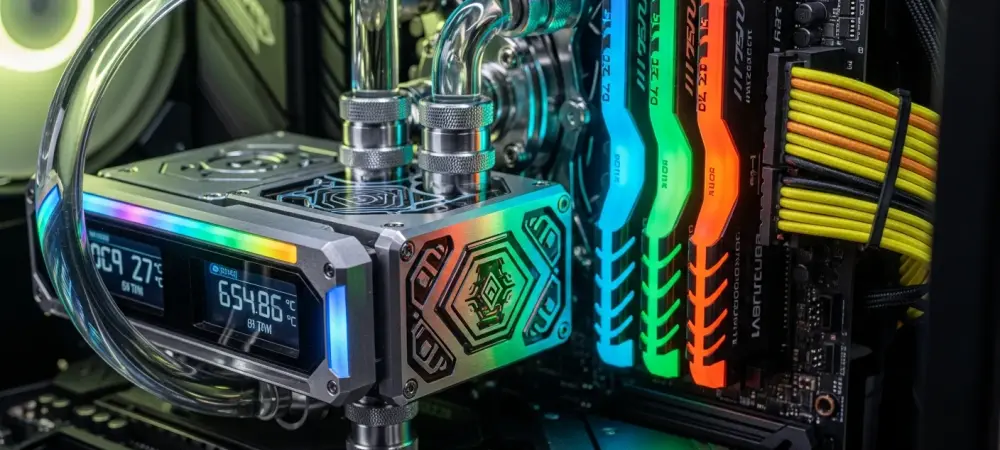
Beyond connectivity, the stock cooling solution often struggles to keep up with high-end workloads, leading to thermal throttling. Sophisticated workarounds now include custom-built water blocks, some of which utilize 3D-printed housings to fit the compact chassis. These strategies demonstrate a transition from simple software tweaks to full-scale mechanical engineering, aiming to provide the bandwidth and thermal stability necessary for enthusiast-grade gaming.
Performance Evaluation: Impact of eGPU Integration and Advanced Cooling
The integration of a Radeon RX 9070 XT via an OCuLink bridge results in a dramatic shift in real-world performance metrics. In demanding titles like Crimson Desert, the modification allows for stable frame rates at 4K, a feat that is impossible with the stock RDNA 3 chip. This massive leap in graphical fidelity transforms the device from a mid-range console into a top-tier gaming hub capable of handling any modern library. Furthermore, the addition of custom liquid cooling provides a significant reduction in operating temperatures, often dropping them by as much as 30 degrees Celsius. However, the benefits of this thermal headroom are currently limited by the system’s stock BIOS, which prevents aggressive overclocking. Despite these constraints, the improved stability ensures that frame times remain consistent even during long gaming sessions, eliminating the stuttering typical of the factory-sealed unit.
Pros and Cons: Balancing Performance Breakthroughs Against Technical Risks
The most significant advantage of this modding approach is the ability to run flagship titles at maximum settings without the noise and heat of the original fan. Users gain access to a level of performance that rivals high-end desktops while maintaining the compact form factor of a living-room console. The software flexibility of the platform continues to be a major strength, allowing these hardware changes to be recognized with relatively little friction.
On the other hand, the drawbacks are numerous and should not be overlooked by the faint of heart. Bandwidth bottlenecks through the M.2 interface can occasionally cause audio glitches or minor data lag, and the cost of the external components can nearly double the initial $1,049 investment. Additionally, the physical “surgery” required to install these mods voids all warranties and exposes the delicate internal components to potential environmental damage.
Summary Assessment: Determining the Viability of Modded Hardware
The current state of Steam Machine modding presents a fascinating look at the intersection of console convenience and PC power. While the modifications successfully address the hardware’s inherent weaknesses, the high barrier to entry makes this a niche pursuit. The performance increase is undeniable, yet the complexity of maintaining such a setup requires a level of dedication that most casual gamers likely lack. Ultimately, the viability of these mods depends on the user’s willingness to trade stability and simplicity for raw power. The platform’s software remains its greatest asset, but the physical chassis is clearly too restrictive for the demands of the modern market. For those who enjoy the process of building and refining their gear, these mods offer a unique way to push the boundaries of what a compact machine can achieve.
Final Verdict: Strategic Advice for Gaming Enthusiasts and Power Users
The hardware modification journey demonstrated that while the factory unit served as a solid foundation, it was the community’s ingenuity that truly unlocked its potential. Users who prioritized high-resolution gaming found that the eGPU and cooling upgrades provided the only path toward a compromise-free experience. The project proved that the software ecosystem was robust enough to handle unconventional configurations, though it also highlighted the desperate need for native high-speed ports in future revisions.
Prospective buyers were advised to wait for official hardware updates or to prepare for a significant technical undertaking. The most successful implementations relied on high-quality OCuLink adapters and external SSD enclosures to mitigate bandwidth issues. Moving forward, the focus for the modding community should shift toward developing custom BIOS solutions to finally exploit the thermal headroom provided by liquid cooling. Any individual attempting these upgrades should have treated the process as an experimental hobby rather than a simple consumer upgrade.