

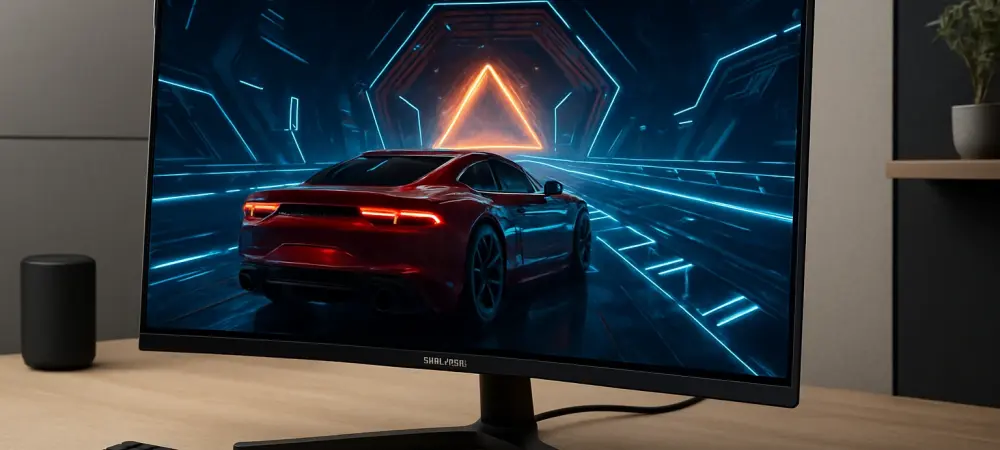
The long-held dream of stepping into virtual worlds without the cumbersome barrier of specialized eyewear has finally materialized with Samsung’s latest ambitious display. For years, 3D gaming has been a niche pursuit, often requiring awkward glasses and delivering inconsistent results. With the arrival of the Odyssey 3D monitor, Samsung is not just refining an old idea; it is attempting to redefine immersion itself by promising a seamless, glasses-free three-dimensional experience. This review examines whether this groundbreaking technology lives up to its immense hype.
Is Glasses-Free 3D the Future of Gaming
The central question surrounding the Odyssey 3D is whether its core feature is a revolutionary leap forward or merely an impressive but impractical gimmick. This review aims to determine if Samsung’s implementation of glasses-free 3D offers a tangible benefit to gameplay that justifies its premium position in the market. Ultimately, the goal is to provide a clear verdict for gaming enthusiasts and early adopters weighing whether to invest in what could be the next major evolution in display technology.
Unboxing a New Dimension Features and Technology
At the heart of the Odyssey 3D (G90XH) is a formidable set of specifications designed for the highest echelon of PC gaming. The monitor boasts a 32-inch panel with a stunning 6K resolution, delivering an incredible level of detail and screen real estate. This visual foundation is paired with a fluid 165Hz refresh rate, ensuring that motion remains smooth and responsive even in the most fast-paced competitive titles.
However, the monitor’s unique selling proposition is its sophisticated glasses-free 3D system. This technology relies on a real-time eye-tracking camera that constantly monitors the viewer’s position. It then adjusts the image on the fly to create a convincing and stable stereoscopic effect from the user’s perspective. This dynamic approach is what separates the Odyssey 3D from past attempts, promising a truly personal and immersive dimensional experience without any additional hardware.
Performance Deep Dive Immersion and Gameplay
In practice, the monitor’s 3D effect is remarkably effective, creating a genuine sense of depth that pulls the player deeper into the game world. The eye-tracking system is impressively responsive, maintaining the 3D illusion even with moderate head movement and preventing the disorientation that plagued earlier technologies. When it comes to visual fidelity, the 6K resolution is nothing short of spectacular, rendering game environments with breathtaking sharpness and clarity in both 2D and 3D modes.
Furthermore, the 165Hz refresh rate provides the smooth, tear-free performance that competitive gamers demand, ensuring the monitor does not sacrifice speed for its novel features. Game compatibility, however, remains a developing area. While many modern titles adapt well to the 3D rendering, the quality of the effect can vary, suggesting that optimal performance will depend on ongoing developer support and driver updates.
The Pros and Cons of a New Perspective
The most significant advantage of the Odyssey 3D is its revolutionary approach to immersion. The glasses-free experience feels futuristic and fundamentally changes how virtual worlds are perceived. This is complemented by its exceptional 6K visual clarity and a high refresh rate, making it a top-tier performer even without the 3D feature enabled.
In contrast, the monitor is not without its potential drawbacks. The cutting-edge technology will almost certainly come with a substantial price tag, placing it out of reach for many. Moreover, as with any new display technology, early game support may be limited, and the subjective nature of 3D means some users may experience eye strain during extended sessions.
The Final Verdict A Game-Changer or a Gimmick
After extensive evaluation, it is clear the Samsung Odyssey 3D is more than just a novelty. It successfully delivers on its promise of a compelling glasses-free 3D experience, merging it with the core specifications of a high-end gaming monitor. The technology works, the immersion is real, and the performance is solid.
The Odyssey 3D represents a genuine step forward for display technology, establishing a new benchmark for what immersive gaming can be. While it faces the typical challenges of a first-generation product, its successful execution proves the concept is viable and positions it firmly as a game-changer rather than a fleeting gimmick.
Who Should Buy the Odyssey 3D Monitor
This monitor is unequivocally designed for technology enthusiasts and dedicated gamers with a significant budget who crave the absolute latest in innovation. These early adopters will appreciate being on the bleeding edge and are more likely to tolerate the initial learning curve and potential compatibility hurdles.
For the average gamer, the high cost and nascent state of game support make it a more complicated proposition. Prospective buyers should consider their tolerance for premium pricing and their interest in being part of a new technological frontier. Those who value innovation above all else will find the Odyssey 3D to be a truly next-generation investment.