

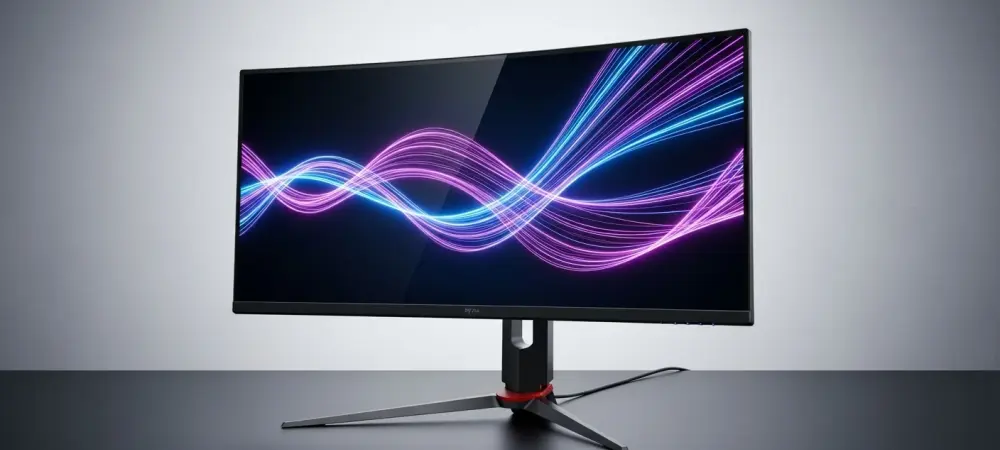
The barrier to entry for high-performance, ultra-wide gaming has often been a steep price tag, but MSI’s latest display aims to completely shatter that expectation by combining a blistering refresh rate with an immersive curve. The new MAG 345CQRF E20 arrives with a feature set that reads like a premium wish list, yet it carries a price that targets the entry-level market. This review examines whether MSI has successfully blended performance and affordability or if the necessary compromises detract from its ambitious goal.
Is This the Ultimate Budget Ultra-Wide?
The central question surrounding the MSI MAG 345CQRF E20 is whether it can deliver a truly high-end gaming experience on a shoestring budget. By packing a 200Hz refresh rate and a 34-inch ultra-wide panel into a monitor with a potential sub-$250 price point, MSI is making a bold statement. The monitor promises fluid motion and deep immersion—two hallmarks of expensive displays—for a fraction of the cost.
This evaluation determines if the on-paper specifications translate into a worthwhile real-world advantage for gamers. The monitor’s value hinges on its ability to provide a seamless and responsive experience without significant drawbacks in visual quality or build. If it succeeds, it could redefine expectations for what an entry-level gaming monitor can achieve, making it a powerful contender for budget-conscious builders and upgraders.
Unpacking the Specs: Features and Design
At its core, the MAG 345CQRF E20 is built around a 34-inch VA panel with a 3440×1440 UWQHD resolution, a combination that offers a significant step up in screen real estate and pixel density compared to standard 1080p monitors. Adding to its appeal is an aggressive 1000R curvature, designed to wrap the display around the user’s field of view for heightened immersion, matching the natural curve of the human eye.
Gaming-centric features are where the monitor truly shines. A 200Hz refresh rate ensures exceptionally smooth motion, while the advertised 0.5ms Gray-to-Gray (GTG) response time aims to minimize ghosting and motion blur in fast-paced scenes. Support for Adaptive-Sync technology further enhances gameplay by preventing screen tearing. Its display capabilities include 110% sRGB color coverage, which is adequate for vibrant gaming visuals, though its 300-nit peak brightness and basic HDR functionality are modest. Connectivity is standard, with HDMI 2.0b and DisplayPort 1.4a ports, and the stand offers excellent ergonomic flexibility with adjustments for height, swivel, and pivot.
Putting It to the Test: Real-World Performance
In practice, the 200Hz refresh rate is the monitor’s standout feature, delivering the fluidity and responsiveness needed for competitive gaming. The UWQHD resolution provides sharp, detailed visuals that make games and media feel expansive. The 1000R curve is highly effective, pulling the user into the experience and making it feel more encompassing than flatter ultra-wide displays.
However, the VA panel presents a mixed bag. While it offers deep blacks and strong contrast ratios, VA technology can struggle with motion clarity. Despite the claimed 0.5ms response time, some users may still notice minor ghosting or smearing in dark scenes. Furthermore, the HDR performance is limited by the 300-nit peak brightness, failing to deliver the impactful highlights expected from a true HDR experience. For productivity and media consumption, the monitor excels, providing ample screen space for multitasking and an immersive canvas for movies.
The Good and The Bad: A Balanced Look
The monitor’s primary advantage is its exceptional value. The combination of a 200Hz refresh rate, UWQHD resolution, and an immersive 1000R curve at such an aggressive price point is nearly unheard of. This trio of features creates a compelling package for gamers who prioritize speed and immersion above all else.
On the other hand, certain compromises were necessary to reach this price. The modest 300-nit peak brightness means the HDR experience is nominal at best, lacking the punch of more expensive displays. As with many VA panels, there is a risk of motion blur that could detract from the experience for highly sensitive competitive players. Finally, the lack of modern connectivity like USB-C limits its versatility as a single-cable productivity hub.
Final Verdict: The Bottom Line
The MSI MAG 345CQRF E20 successfully achieves its goal of bringing premium gaming features to the entry-level market. Its performance in gaming is impressive for its price, with the high refresh rate and ultra-wide aspect ratio creating a genuinely immersive and fluid experience. While it makes clear concessions in peak brightness and panel technology, these trade-offs are reasonable given the target audience. This monitor represents a significant step forward in making high-performance gaming more accessible, proving that a satisfying ultra-wide experience does not require a massive investment. Weighing its impressive on-paper specs against its real-world performance, the monitor stands as a testament to thoughtful compromise, delivering where it counts most for budget-focused gamers.
Who Should Buy It? Our Recommendation
Based on its initial pricing in Asian Pacific markets, the MAG 345CQRF E20 has the potential to be a market disruptor if it lands in the West at a similarly aggressive price. It offers a feature set that punches well above its weight class, making it an incredibly compelling option. This monitor is an ideal choice for budget-conscious gamers looking to make their first foray into the world of ultra-wide displays, as it is perfectly suited for those who prioritize a high refresh rate and an immersive field of view over color accuracy and HDR performance. Potential buyers should, however, wait for its official US release and pricing confirmation before making a final decision, as that will ultimately determine its true value proposition.