

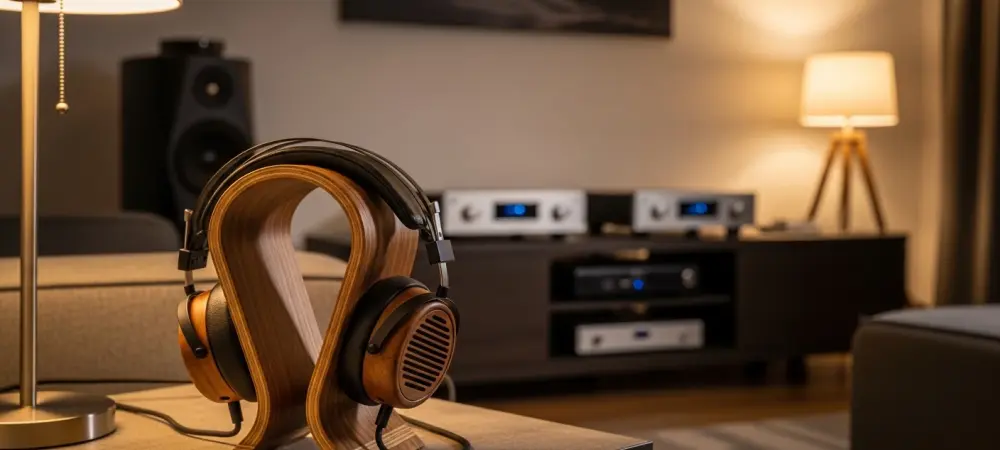
In a market saturated with disposable plastic gadgets and fleeting technological trends, the idea of an audio product built with heirloom quality and a commitment to longevity feels both nostalgic and refreshingly defiant. The Meze 99 Classics 2nd Gen headphones enter this landscape not as just another device for consuming audio, but as a statement piece—an artifact of craftsmanship designed to endure. This review examines whether this second-generation model, a successor to a decade-old classic, successfully merges its artisanal philosophy with the performance demands of the contemporary listener. It seeks to determine if its combination of exquisite design, thoughtful modern upgrades, and a distinct sonic personality justifies its position as a significant investment for those ascending from entry-level audio gear, ultimately questioning if its substance truly matches its undeniable style.
An Artisanal Headphone for the Modern Listener
The Meze 99 Classics 2nd Gen are positioned as more than a simple tool for listening; they represent a holistic sensory experience. This evaluation critically assesses whether the headphones deliver on their promise to be a worthy upgrade, justifying a price point that places them firmly in the premium mid-tier category. The central question is whether the headphones’ blend of classic, almost sculptural design elements and carefully considered modern refinements culminates in a product that satisfies both the eye and the ear. For the discerning individual who values the tactile pleasure of real wood and metal as much as audio clarity, these headphones present a compelling proposition that will be scrutinized for its performance across a variety of real-world scenarios.
This review delves into the intricate balance Meze Audio attempts to strike. The headphones are not merely judged on their technical specifications or pure acoustic neutrality but on their overall value as a durable, versatile, and aesthetically pleasing companion for daily listening. The investigation explores if the celebrated build quality and comfort create a foundation strong enough to support a sound signature that, while enjoyable, possesses specific character traits that may not appeal to every listener. The final verdict hinges on whether the complete package—from the unboxing experience to long-term serviceability—constitutes a worthwhile investment for those who believe their audio equipment should be as thoughtfully crafted as the music they enjoy.
Design Philosophy and Key Upgrades
At the heart of the Meze 99 Classics 2nd Gen lies a steadfast design philosophy centered on authenticity and longevity. The headphones’ core identity is immediately communicated through their signature real walnut wood earcups, where the unique grain of each piece ensures that no two pairs are exactly alike. This organic element is beautifully contrasted by the cool, sturdy feel of cast zinc hardware, finished with an elegant electroplated coating. More importantly, this entire structure is assembled with meticulous precision using only screws and nuts. This complete absence of glue is a testament to Meze’s commitment to sustainability and user empowerment; it means every single component, from the headband to the drivers, is fully serviceable and replaceable, promising a product that can be maintained and cherished for years, rather than discarded.
Building upon this venerable foundation, the 2nd Gen model introduces several key upgrades aimed at refining the listening experience. The earcups are now larger, a deliberate engineering choice designed to improve the internal acoustics and create a more open sound. A newly integrated bass port has been added to each cup, providing a more controlled and articulate low-end response that avoids the muddiness sometimes associated with closed-back designs. Perhaps the most significant technical evolution is the reduction of the driver impedance to an exceptionally low 16 ohms. This change dramatically enhances the headphones’ versatility, ensuring they can be driven to satisfying volume levels by virtually any source, from a smartphone’s modest output to a laptop’s headphone jack, without the need for a dedicated amplifier.
The premium experience extends to the thoughtfully curated collection of included accessories, which underscore the headphones’ readiness for modern use cases. Each pair ships within a robust, water-resistant hard-shell carrying case, providing excellent protection for travel. Inside, a smaller soft pouch contains the necessary connections, including a substantial, braided dual-core cable that feels both durable and tangle-resistant. For integration with home audio systems, a high-quality 3.5mm-to-6.35mm adapter is provided. Acknowledging the evolving landscape of personal electronics, Meze has also included a new USB-C DAC/AMP dongle. This crucial addition allows for a direct, high-quality digital connection to modern smartphones and laptops that have omitted the traditional headphone jack, ensuring out-of-the-box compatibility and reinforcing the product’s versatile appeal.
Real-World Performance and Audio Fidelity
The overall sound profile of the Meze 99 Classics 2nd Gen is characterized by impressive strengths at both ends of the frequency spectrum. The bass response is nothing short of phenomenal, delivering a rich, profound, and seriously controlled low-end punch that is a clear highlight of the listening experience. Within the constraints of a closed-back architecture, Meze has engineered a sound that is both powerful and articulate, with the new bass ports helping to produce a full-bodied foundation that rarely bleeds into the other frequencies. At the opposite end, the high frequencies are rendered with a butter-smooth quality, presenting treble details with a crisp, clean transient response that avoids any sense of harshness or sibilance, making for an inviting and non-fatiguing listen over extended periods.
Despite these laudable qualities, the audio fidelity is not without a significant compromise, primarily centered in the headphone’s midrange reproduction. Critical listening reveals a “scooped” character in the core frequencies, a perceived hollowness that can diminish the impact and presence of certain musical arrangements. This sonic weakness is most apparent in guitar-driven genres, where the propulsive energy and raw texture of rock and metal tracks can feel somewhat restrained and lacking their essential forward drive. This midrange recession creates a distinct V-shaped sound signature that, while pleasing for some electronic and pop music, may leave fans of other genres feeling that a crucial part of the sonic picture is missing.
This sonic signature introduces a frustrating “balancing act” required to find the optimal listening volume. At lower levels, the combination of the recessed midrange and a somewhat narrow soundstage can make the presentation feel thin and hollow. The natural inclination is to increase the volume to compensate, which does help to fill out the sound and create a more engaging experience. However, this approach introduces a new problem: the extremely low 16-ohm impedance drivers are highly sensitive and can be easily overdriven, leading to audible distortion and a sense of oversaturation when pushed too hard. This forces the listener to constantly hunt for a delicate sweet spot, a compromise that can detract from a truly immersive and effortless listening session.
In terms of real-world usability, the headphones are a study in contrasts. The all-day comfort is incredible, standing as one of the product’s most successful features. The self-adjusting headband and capacious ear cushions create a secure yet gentle fit that allows for hours of uninterrupted use without pressure points or fatigue. However, this comfort is undermined by a significant design flaw in the resonant metal headband structure. The dual-band frame exhibits tuning-fork-like tendencies, readily transmitting mechanical noise from bumps, taps, or even the cable brushing against clothing directly to the listener’s ear as an audible “plunk.” While often masked by music, this resonance is a persistent annoyance. In stark contrast, the passive noise isolation is outstanding. The snug fit of the earcups creates an excellent seal that effectively separates the listener from their environment, allowing for deep musical immersion without the need for electronic noise cancellation.
Advantages and Disadvantages
The strengths of the Meze 99 Classics 2nd Gen are immediately apparent, beginning with a stunning, timeless design that leverages premium materials for a truly luxurious feel and appearance. This aesthetic excellence is matched by exceptional long-session comfort, thanks to a well-engineered self-adjusting headband and plush earcups. A core advantage lies in the fully user-serviceable construction, a rare commitment to longevity that allows owners to replace any part, ensuring the headphones can last a lifetime. Sonically, the bass response is both powerful and well-controlled, providing a rich and satisfying foundation for many music genres. Furthermore, their high versatility, stemming from the low-impedance drivers, makes them incredibly easy to drive from any source, from a smartphone to a high-end audio player. This is complemented by excellent passive sound isolation, which effectively blocks out environmental noise for a more immersive experience.
However, the headphones are not without their compromises. The most notable sonic limitation is a recessed midrange, which can leave certain music genres, particularly those reliant on guitars and vocals, sounding somewhat hollow and lacking in energy. This is compounded by the fact that the very low-impedance drivers, while offering great versatility, are susceptible to audible distortion when pushed to high volumes, forcing a careful approach to volume control. On a physical level, the otherwise elegant headband is mechanically resonant and proves to be noisy when touched or bumped, a design flaw that can be distracting during active use. Finally, the soundstage is somewhat narrow, at times creating a more intimate, corridor-like presentation where a more expansive and open sound would be preferable.
The Final Assessment
The Meze 99 Classics 2nd Gen stands as a triumph of industrial design, user comfort, and meticulous build quality. It delivers a premium user experience from the moment of unboxing, with a tactile and visual appeal that feels both luxurious and exceptionally durable. The use of real wood, metal hardware, and a fully repairable, glue-free construction places it in a class of its own, offering a powerful statement against the culture of disposable electronics. The comfort is truly exceptional, allowing for hours of fatigue-free enjoyment, making it a reliable companion for work, travel, or dedicated listening sessions at home.
While the audio performance is generally excellent and will please many listeners, its specific sonic signature is not without its imperfections. The sound is characterized by a noticeable midrange dip that can subtract energy from certain recordings, and its sensitivity to volume levels creates a performance window that may not satisfy purist audiophiles in search of absolute neutrality or those who prefer to listen at very high volumes. These are not fatal flaws but rather distinct character traits that define its sound, making it more of a curated listening experience than a transparent studio monitor.
Ultimately, the final recommendation is decidedly positive. The headphones’ exceptional craftsmanship, remarkable versatility across a wide range of sources, and Meze’s admirable commitment to product longevity collectively create a package of immense value. These formidable strengths effectively outweigh the specific sonic shortcomings for the intended user. Consequently, the Meze 99 Classics 2nd Gen presents a highly compelling option for anyone seeking a beautiful, comfortable, and enduring pair of wired headphones that deliver an enjoyable and engaging musical experience.
Recommendations and Buying Advice
This headphone is highly recommended for individuals who place a premium on aesthetic design, premium build quality, and long-wearing comfort. It is an ideal choice for the listener who appreciates the warmth and unique character of natural materials and desires a product that feels as good as it looks. Its incredible versatility also makes it a perfect do-it-all wired headphone for use with multiple sources, seamlessly transitioning from a smartphone on the go, to a laptop at a desk, to a home audio system, all without requiring specialized amplification. Those looking for a single, reliable, and stylish wired solution will find immense satisfaction here. Potential buyers should avoid this model if they identify as dedicated home audiophiles equipped with high-power amplifiers seeking absolute sonic neutrality and maximum detail retrieval. For this use case, a high-impedance, open-back model would be a far more suitable investment, as the low impedance of the 99 Classics is not optimized for such powerful rigs. Similarly, those who exclusively require the convenience of wireless functionality should look elsewhere, as these are fundamentally traditional wired headphones. Finally, individuals who are particularly sensitive to mechanical noise or plan to use their headphones while in constant motion may find the resonant headband to be a significant distraction and should consider alternatives with more dampened constructions.