

Is Huawei’s New Foldable a Game-Changer
In the fiercely competitive landscape of foldable smartphones, where hardware innovation often battles with software accessibility, the Huawei Mate X7 arrives as a testament to engineering ambition. This review seeks to determine if its premium components and proprietary operating system can justify a formidable price tag for a global audience. The central question is whether its powerful performance and cutting-edge features are compelling enough to overcome the considerable software hurdles for users outside of China, ultimately evaluating its place in the high-stakes foldable market.
This analysis will delve into the device’s real-world usability, weighing its impressive specifications against the practical limitations imposed by its software ecosystem. By examining everything from its display quality to its camera versatility, the goal is to provide a clear verdict on whether the Mate X7 is a revolutionary step forward or a niche product for a select few. The outcome hinges on a classic tech dilemmthe allure of superior hardware versus the necessity of a familiar and functional software experience.
Unfolding the Mate X7: Design and Core Specifications
Following its debut in China, the Huawei Mate X7 has made its global entrance with a price of EUR 2,099 for the sole 16GB RAM and 512GB storage configuration, available in Black, Brocade White, and Nebula Red. At its heart lies the new Kirin 9030 Pro chipset, which, combined with the generous 16GB of RAM, powers the HarmonyOS 6.0 experience. This proprietary operating system is a key differentiator, as it operates independently of Android and Google’s framework.
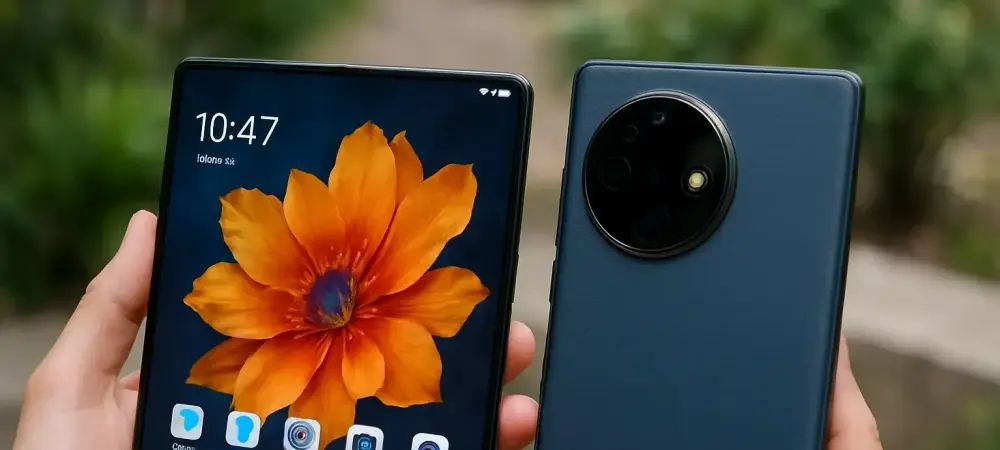
The device’s main attraction is its sophisticated dual-display system. Unfurled, it presents a massive 8-inch flexible LTPO OLED inner screen that boasts a peak brightness of 2,500 nits, creating an immersive, tablet-like canvas. When closed, a durable 6.49-inch 3D quad-curved LTPO OLED cover display takes over, protected by second-generation Kunlun glass and reaching an even more impressive 3,000 nits peak brightness. Both screens feature a 1-120Hz adaptive refresh rate and 1440Hz PWM dimming, ensuring fluid visuals and enhanced eye comfort across all conditions.
Performance in Practice: A Real-World Assessment
In day-to-day use, the Kirin 9030 Pro chipset provides a snappy and responsive experience within the HarmonyOS 6.0 ecosystem, handling demanding applications and multitasking with ease. The visual quality of the dual displays is nothing short of exceptional; the high peak brightness ensures outstanding clarity even in direct sunlight, while the adaptive refresh rate makes scrolling and media consumption feel incredibly smooth. The transition between the cover and inner screens is seamless, showcasing a high level of software and hardware integration.
The triple rear camera system proves to be both versatile and highly capable. The 50MP primary sensor, with its innovative f/1.4-f/4.0 variable aperture and Optical Image Stabilization (OIS), captures stunningly detailed photos in various lighting scenarios. It is complemented by a 40MP ultra-wide lens and a 50MP telephoto camera with OIS, providing a comprehensive toolkit for creative photography. Meanwhile, the large 5,300mAh battery delivers reliable all-day endurance, and when a top-up is needed, the 66W wired and 50W wireless fast charging options are impressively swift. Moreover, the device’s robust build quality, underscored by a high IP58+IP59 rating, provides significant peace of mind against dust and water exposure in everyday life.
The Foldable Conundrum: Strengths and Weaknesses
The Mate X7’s strengths are immediately apparent in its hardware. It features state-of-the-art dual LTPO OLED displays that lead the market in brightness and responsiveness. This visual excellence is matched by a formidable triple-camera setup, which offers advanced optics like a variable aperture for professional-grade photography. Furthermore, the device is powered by a substantial 5,300mAh battery with exceptionally fast wired and wireless charging capabilities, and its premium construction is certified with a high IP58+IP59 rating for dust and water resistance.
However, these impressive strengths are countered by significant weaknesses for the international user. Its prohibitive EUR 2,099 price tag firmly places it in an ultra-premium category that is inaccessible to most consumers. More importantly, the HarmonyOS 6.0 platform lacks Google Mobile Services, severely restricting access to the vast library of apps and services many users rely on daily. While the Kirin 9030 Pro chipset is competent, it also faces intense competition from established flagship processors that power its Android-based rivals in the global arena.
The Final Verdict: An Engineering Marvel with a Major Catch
The Huawei Mate X7 is an undeniable triumph of hardware engineering, showcasing a top-tier display, a powerful camera system, and excellent battery life. Its design and build quality push the boundaries of what a foldable phone can achieve, setting a high standard for its competitors. Every physical aspect of the device feels polished, premium, and thoughtfully designed to deliver a superior user experience from a hardware perspective. Despite its technical prowess, the device’s practicality for the average global consumer is profoundly compromised by its software. The immense cost, combined with the lack of native Google services, makes the Mate X7 a difficult device to recommend for anyone deeply integrated into the Android ecosystem. It represents a paradox: a technologically advanced gadget that is simultaneously limited by its digital environment.
Who Should Buy the Huawei Mate X7
This device was best suited for a very specific type of user: the tech enthusiast who prioritized cutting-edge hardware above all else and was willing to navigate software workarounds, or the consumer already deeply committed to Huawei’s ecosystem of products. For these niche groups, the phone offered an unparalleled physical experience that may have outweighed its software-related inconveniences.
Ultimately, any potential buyer had to seriously weigh the implications of forgoing Google’s suite of apps and services. The Huawei Mate X7 was a phenomenal piece of technology for a select audience, but for the mainstream market, the software compromise was simply too great to justify such a premium investment.