

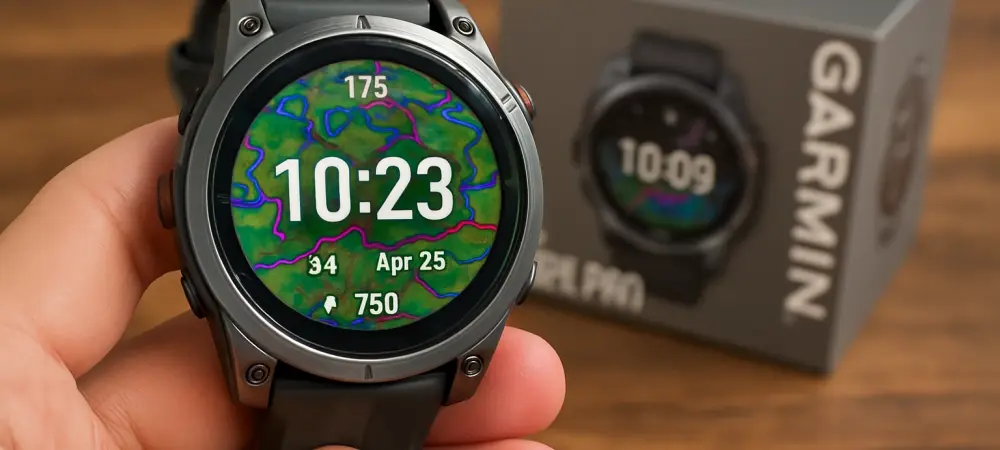
In a market saturated with the latest smartwatches demanding premium prices, a remarkable post-Cyber Monday deal on a slightly older but immensely powerful model presents a compelling question for discerning buyers. This review assesses whether the Garmin Epix Pro (Gen 2), despite no longer being the newest offering, represents the best value for a premium GPS watch on the market today. Following a significant discount, it’s crucial to determine if its powerful feature set still justifies the investment for serious athletes and tech enthusiasts.
Is This Unbeatable Deal on an Older Garmin Worth It
The central question revolves around a stunningly low price for a device that was, until recently, a top-tier flagship. Currently available at Walmart, the 47mm Garmin Epix Pro (Gen 2) Sapphire Edition is listed at a record-low $549.99, a massive $450 reduction from its original $999.99 price tag. This offer, available for both the Carbon Gray and Whitestone models in the United States, positions a premium product within reach of a much broader audience.
However, such a steep discount on older technology often comes with caveats. This review delves into whether the trade-offs—namely, its status as a previous-generation model—are significant enough to deter a purchase. For many, the opportunity to acquire a high-performance tool at nearly half its original cost is an undeniable lure, but its long-term value must be carefully considered, especially with stock levels reportedly running low.
Core Features a Premium Blend of Smartwatch and Super Tool
The Epix Pro Gen 2, particularly the Sapphire Edition, is built to impress and endure. Its most striking feature is the brilliant AMOLED screen, which brings maps and data to life with vibrant colors and crisp detail, a significant step up from the memory-in-pixel displays of other Garmin models. This premium display is protected by a scratch-resistant sapphire crystal lens and housed within a rugged, high-quality chassis, ensuring it can handle the rigors of outdoor adventures.
Beyond its looks, the watch is a true hybrid, blending the robust functionality of a high-end training device with the aesthetics and connectivity of a modern smartwatch. It excels with advanced, full-color mapping capabilities that provide rich topographical detail directly on the wrist. This combination of durability and sophisticated technology makes it an ideal companion for both wilderness expeditions and daily wear.
Marathon Tested Real World Performance on the Pavement
Theoretical specifications mean little without real-world validation. This model was put through its paces during an intensive training block for the London Marathon, providing a definitive test of its capabilities. The multi-band GPS proved exceptionally accurate, reliably tracking distance and pace through dense urban environments and under tree cover, where lesser watches often falter.
The watch’s navigational prowess was a standout feature during long training runs. Loading a route and receiving turn-by-turn directions directly on the high-contrast AMOLED display transformed the experience, eliminating the need to consult a phone. The screen’s readability in bright sunlight and the reliability of its training metrics—from heart rate to performance conditioning—confirmed its status as a dependable and powerful tool for any serious athlete.
Weighing the Pros and Cons Premium Power vs Future Proofing
Every purchase involves a balance of benefits and drawbacks. The most significant advantage of the Epix Pro Gen 2 right now is its exceptional value. Securing a Sapphire-grade device with this level of functionality for $450 off its list price is an opportunity that rarely presents itself. The premium feature set, including the bright display and robust navigational tools, remains competitive with many newer models on the market.
On the other hand, the primary con is its age. As an older generation model, it will not receive Garmin’s latest software updates, which will be reserved for upcoming devices like the Fenix 8 series. This means missing out on new features and software refinements down the line. Furthermore, the current deal is plagued by low stock levels, meaning potential buyers may find it difficult to secure one before the offer disappears entirely.
The Verdict An Unqualified Recommendation at This Price
Considering all factors, the Garmin Epix Pro Gen 2 offers an unparalleled combination of high-end features and proven performance for its current sale price. While it may not be the newest watch in Garmin’s lineup, its existing capabilities are more than sufficient for the vast majority of users, from dedicated marathon runners to weekend adventurers. The core experience it delivers remains decidedly premium. The conclusion is clear: this is the best-value Garmin available right now. The lack of future software updates is a valid concern for those who must have the absolute latest technology, but for everyone else, the current feature set provides a powerful, reliable, and complete platform for training and navigation that will serve them well for years to come.
Final Thoughts Who Should Buy the Epix Pro Gen 2 Today
The evaluation presented in this review led to a definitive profile of the ideal buyer for this device. This deal is perfectly suited for serious athletes, runners, and outdoor enthusiasts who prioritize powerful, reliable training tools over having the very latest software features. If robust GPS, best-in-class mapping, and a premium build are top priorities, this watch delivers in spades without the flagship price.
Ultimately, the decision to purchase should be made swiftly. With an unknown expiration date and dwindling inventory, this exceptional offer is time-sensitive. For those who fit the profile, acting quickly to acquire the Garmin Epix Pro Gen 2 at this price was a wise investment in a top-tier piece of fitness technology.