

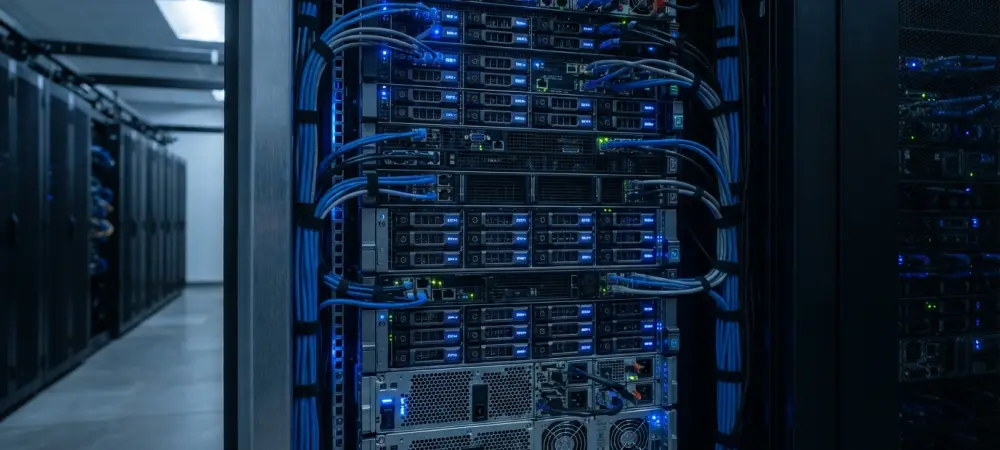
Advanced memory management techniques like NVIDIA Dynamo with SGLang have been utilized to ensure Beam handles the heavy demands of multi-turn agent sessions. This 2026 release represents a significant advancement in the accessibility of high-context, open-weight models for the global developer ecosystem. By collaborating with Google Cloud, Reflection has demonstrated that software-level optimizations in memory management and request routing are just as vital as raw parameter counts in making AI agents viable for production environments. The model stands as a robust alternative for organizations seeking to integrate advanced coding logic into their private workflows while maintaining high efficiency and low latency. As the industry moves toward more specialized AI applications, the need for models that can handle long-horizon tasks has become paramount. This partnership addresses these challenges by providing a scalable, high-performance solution that integrates seamlessly with existing cloud infrastructure and development toolchains.
Architectural Precision: Model Efficiency
Scaling Through Mixture-of-Experts Design
The foundational structure of Beam rests on a mixture-of-experts configuration, a design choice that balances immense capacity with operational agility. While the total parameter count reaches a staggering 501 billion, the model only activates approximately 23 billion parameters for any given token during inference. This selective activation ensures that the computational overhead remains manageable without sacrificing the depth of knowledge typically associated with much larger models. By optimizing the activation pathways, the model can deliver sophisticated reasoning while maintaining a smaller memory footprint per request than traditional dense architectures. By utilizing the Apache 2.0 license, Reflection has ensured that this technology is not locked behind restrictive enterprise paywalls, allowing developers to self-host and customize the weights for specific projects. This approach is particularly advantageous for security-conscious industries that cannot risk sending proprietary code to external APIs. The mixture-of-experts framework also facilitates faster training and fine-tuning cycles, which is essential as organizations strive to keep pace with the rapid evolution of modern software frameworks. This accessibility ensures that the latest advancements in AI-driven engineering are available to both independent researchers and large enterprises.
Contextual Intelligence: Reasoning Logic
One of the most defining characteristics of the Beam model is its expansive context window, which spans up to one million tokens in length. This massive capacity allows the model to process entire repositories or lengthy documentation sets in a single session, effectively eliminating the need for complex retrieval-augmented generation systems in many developer use cases. Beyond simple volume, the model demonstrates a remarkable efficiency in reasoning, requiring three to four times fewer tokens than comparable open-weight models to arrive at a solution. This allows for more concise interactions and reduces the noise often found in long-context AI conversations.
This reduction in reasoning overhead directly translates to faster response times for developers who rely on agents to debug complex systems or refactor sprawling applications. By maintaining a deep awareness of long-horizon dependencies, Beam can identify potential regressions that models with smaller windows would likely miss. This capability represents a significant milestone in the shift toward autonomous coding agents that can operate with minimal oversight in diverse programming environments. The model effectively serves as a persistent collaborator that remembers every file change and design decision made throughout the duration of a software project.
Infrastructure Optimization: Performance Benchmarks
Serving the Stack: Agentic Workflows
The partnership with Google Cloud has provided Beam with a specialized environment designed to maximize its agentic potential through the AI Hypercomputer platform. Deploying such a high-parameter model necessitates a tightly integrated stack of specialized hardware and software components. By leveraging NVIDIA GB300 systems, the collaborative team implemented advanced serving techniques like speculative decoding to streamline the flow of data. These optimizations are critical because agentic workloads are inherently cumulative, adding file reads and execution logs to a growing prompt. This creates a unique challenge for standard inference engines that expect static input lengths.
Standard inference engines often struggle with the memory pressure created by these multi-turn sessions, but the integration with Google’s infrastructure allows for tiered cache storage. This system intelligently moves data between GPU memory and local SSDs to ensure that the key-value caches remain responsive even as the session history approaches its limit. These infrastructure enhancements address the prefill bottleneck, ensuring that the system does not waste resources recomputing history. Consequently, the model can maintain peak performance during intensive engineering sessions that involve deep dives into thousands of lines of interconnected code.
Deployment Strategy: Industrial Readiness
By providing prebuilt deployment recipes in the Gemini Model Garden, Google Cloud has made it possible for firms to bypass the complex engineering required to set up such a high-performance stack. This allows engineering teams to focus on application logic and agent orchestration rather than the nuances of hardware optimization. Achieving high-performance inference at an industrial scale was a primary goal for this launch, providing developers with the tools needed for real-world deployments. This streamlined approach significantly lowers the barrier to entry for companies that want to leverage state-of-the-art coding agents within their existing cloud environments.
The successful implementation of Beam established a new benchmark for how organizations managed their private coding workflows in secure environments. Engineering leaders prioritized the migration of proprietary codebases into these high-context systems to capitalize on the reduced latency and higher throughput. This transition allowed firms to leverage massive context windows for real-time analysis while maintaining strict data privacy protocols. The model’s release encouraged the widespread adoption of automated agents for maintaining complex legacy systems and managing long-term development projects. These steps ensured that the model evolved from a research breakthrough into a foundational tool for global software development.