

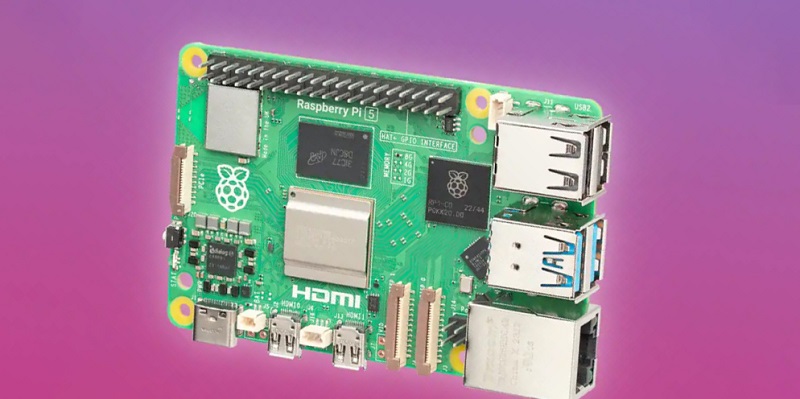
The eagerly awaited Raspberry Pi 5 is set to hit the market this month, and tech enthusiasts are buzzing with excitement. This latest iteration of the groundbreaking single-board computer promises a significant performance boost at an impressively affordable price, setting the stage for a range of innovative applications across various industries.
Improved Performance
Eben Upton, the visionary founder of Raspberry Pi, has raised expectations with the assurance of a 2-3x speed improvement. In addition to this exciting advancement, GPU performance in the Raspberry Pi 5 is set to be doubled, opening up a world of possibilities for users seeking enhanced graphical capabilities.
Enhanced Display Capabilities
One of the standout features of the Raspberry Pi 5 is its ability to drive two 4K displays at 60Hz over HDMI. This impressive capability is made possible by a new in-house I/O chip, allowing users to enjoy dynamic visuals and superior screen resolution for a multitude of applications, from gaming to multimedia presentations.
Upgraded Processor
At the heart of the Raspberry Pi 5 lies the powerful Broadcom BCM2712. This advanced ARM processor represents a substantial leap forward in processing capabilities compared to its predecessor. With a more robust architecture, the Raspberry Pi 5 is poised to handle complex computational tasks with remarkable efficiency, attracting professionals and DIY enthusiasts alike.
Increased Memory Options
To accommodate the evolving needs of its users, the Raspberry Pi 5 offers a choice between two RAM configurations: 4GB and 8GB. This expanded capacity empowers users to undertake ambitious projects such as running resource-intensive applications, managing extensive databases, or exploring cutting-edge AI and machine learning tasks.
Enhanced Connectivity
Recognizing the importance of seamless connectivity, the Raspberry Pi 5 boasts twice as much USB 3.0 bandwidth. This upgrade allows for faster data transfer, enabling users to work more efficiently with external peripherals. Moreover, for the first time in Raspberry Pi’s history, the Raspberry Pi 5 features a single-lane PCIe interface. This exciting inclusion means that users can now connect high-speed PCIe and NVMe devices, unlocking the potential for lightning-fast data access and storage.
Supply Chain Challenges
Raspberry Pi, like many others in the technology industry, experienced significant supply chain constraints during the pandemic. The global disruptions affected the availability of components, hindering the timely production and distribution of Raspberry Pi devices. However, the foundation diligently worked to navigate these challenges, and Eben Upton recently reassured the community that the company was inching closer to resuming “unconstrained” shipments.
Overcoming Supply Constraints
After months of perseverance, Raspberry Pi has made substantial progress in overcoming supply chain obstacles. The team’s efforts have resulted in increased production capacity and a more dependable supply of components. While challenges may persist, Raspberry Pi enthusiasts can be confident that the foundation is continually working towards ensuring a smoother and more consistent availability of their beloved devices.
Pricing and Availability
The Raspberry Pi 5 will be offered in two configurations, with the 4GB model priced at a reasonable $60 and the 8GB model available for $80. Interested buyers should keep an eye out for the release announcement and be ready to place their orders promptly to secure their desired models. As demand is expected to be high, securing the Raspberry Pi 5 at this remarkable price point will undoubtedly be a wise investment.
As the Raspberry Pi Foundation prepares to launch its fifth-generation single-board computer, enthusiasts can anticipate a remarkable leap forward in performance and capabilities. With promises of increased speed, improved graphics, enhanced display capabilities, and expanded memory options, the Raspberry Pi 5 demonstrates the ongoing commitment of the foundation to push the boundaries of what is possible in the world of single-board computing. Despite the supply chain challenges faced during the pandemic, the Raspberry Pi team’s dedication and resilience have prevailed, bringing forth an innovative device accessible to a wide range of tech enthusiasts, hobbyists, and professionals. Prepare yourself for the Raspberry Pi 5 and be prepared to embark on exciting new projects with this powerhouse performer.