

I’m thrilled to sit down with Dominic Jainy, a seasoned IT professional whose deep expertise in artificial intelligence, machine learning, and blockchain has made him a thought leader in the tech world. With a passion for exploring how these cutting-edge technologies can transform industries, Dominic offers a unique perspective on the latest developments shaking up the global tech landscape. In this conversation, we dive into groundbreaking advancements like Qualcomm’s bold entry into the AI chip market, India’s ambitious research and innovation initiatives, and the profound impact of AI on the workforce. Let’s explore how these trends are shaping the future.
How does Qualcomm’s introduction of the AI200 and AI250 chips position them in the competitive AI market, especially against a giant like Nvidia?
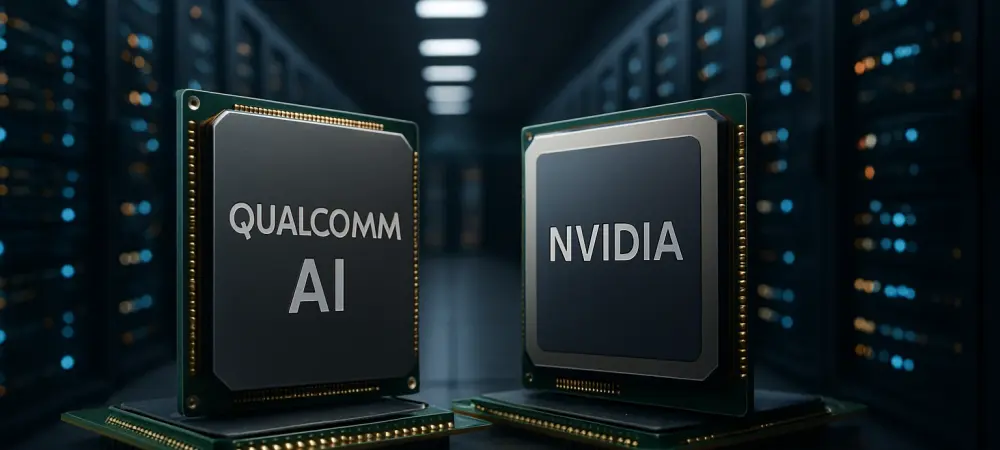
Qualcomm’s launch of the AI200 and AI250 chips is a strategic move to carve out a space in the data-center AI market, where Nvidia holds over 90% of the share. These chips are designed with a focus on inference—processing data to make predictions or decisions—rather than training models from scratch. This approach targets a specific niche, potentially offering more efficient and cost-effective solutions for businesses that rely on real-time AI applications. It’s a bold challenge to Nvidia, and Qualcomm seems to be banking on specialized performance and features like the massive 768 GB memory to stand out.
What’s behind Qualcomm’s decision to focus on inference over training with these new chips, and how does that shape their potential use?
Inference is often the more immediate need for many industries—think real-time decision-making in autonomous vehicles or personalized recommendations on streaming platforms. By focusing on inference, Qualcomm is likely aiming to optimize power efficiency and speed for these kinds of applications, where quick processing is critical. Training, on the other hand, requires immense computational resources and is often done offline. I think Qualcomm sees a growing demand for inference-focused hardware and wants to capture that market before others pivot in the same direction.
Given Nvidia’s dominance, what do you think gives Qualcomm confidence to compete, and how might features like the 768 GB memory play a role?
Nvidia’s dominance is undeniable, but Qualcomm’s confidence likely stems from their belief in addressing underserved needs in the AI chip space. The 768 GB memory is a standout feature—it’s a huge capacity that could handle massive datasets and complex inference tasks without bottlenecks. This could appeal to data centers looking for high-performance solutions that don’t require constant upgrades. Qualcomm might also be leveraging their expertise in mobile chip efficiency to bring something unique to the table, blending power with practicality.
Qualcomm’s CEO has cautioned against ‘bubble-like hype’ surrounding AI. What do you think he’s getting at, and how might this perspective influence their strategy?
I believe he’s pointing to the risk of overinflated expectations around AI, where the technology is sometimes seen as a magic bullet for every problem. We’ve seen similar hype cycles in tech before, where investment and enthusiasm outpace practical outcomes, leading to disappointment. Qualcomm seems to be tempering expectations by focusing on realistic, targeted applications for their chips. This cautious approach could help them build trust with customers and avoid the pitfalls of promising more than they can deliver in the short term.
Shifting gears to India’s recent announcement of a ₹1-lakh-crore Research, Development, and Innovation Fund, can you explain what this initiative hopes to accomplish?
This fund, under the Anusandhan National Research Foundation, is a massive push to supercharge India’s R&D ecosystem. The goal is to drive scientific progress and innovation by funneling significant financial resources into research, with a strong emphasis on encouraging private sector involvement. It ties directly into the broader vision of ‘Viksit Bharat 2047,’ which imagines India as a developed nation by 2047, powered by cutting-edge technology and homegrown solutions. It’s about laying the groundwork for long-term self-reliance in innovation.
How is this fund structured to motivate private companies to invest in research and development?
The fund operates through a two-tier structure, using special purpose vehicles and fund managers like alternative investment funds, development financial institutions, and non-banking financial companies. This setup is designed to streamline the flow of capital and reduce bureaucratic hurdles, making it easier for private players to access resources. By sharing the financial risk and providing incentives, the government is essentially creating a partnership model where companies feel supported to take on ambitious, high-impact projects.
What kind of transformation do you foresee this fund bringing to India’s innovation landscape?
The scale of this funding—₹1 lakh crore—is staggering, and it could be a game-changer for India’s innovation ecosystem. It has the potential to accelerate advancements in critical areas like AI, renewable energy, and healthcare technology. Startups and established firms alike could benefit, fostering a culture of experimentation and collaboration. I think sectors like tech and biotech might see the most immediate impact, as they’re already poised for growth but often lack the capital to scale their research efforts.
Turning to AI’s influence on jobs, how is this technology beginning to reshape India’s workforce, particularly in white-collar roles?
AI, especially generative AI, is no longer just a tool for niche, technical roles—it’s starting to disrupt mid-level positions across industries like finance, marketing, HR, and tech. In India, we’re seeing tasks like data analysis, content creation, and even customer support being automated, which puts roles like accountants, digital marketers, and IT support staff at risk. The recent global layoffs at major companies are a wake-up call, signaling that India’s workforce needs to adapt quickly to stay relevant in an AI-driven economy.
With India’s large youth population and rising urban unemployment, how pressing is the challenge of AI’s impact on employment?
It’s incredibly urgent. India has a huge young population eager to enter the job market, but urban unemployment is already a growing concern. AI’s ability to automate routine and even semi-complex tasks could exacerbate this issue if not addressed. The government and private sector need to prioritize upskilling programs and invest in education that prepares workers for roles that complement AI—think data science, AI ethics, or creative problem-solving. Without proactive steps, the gap between job creation and job displacement could widen dangerously.
Looking ahead, what is your forecast for the intersection of AI and workforce dynamics in India over the next decade?
I believe the next decade will be a defining period for India. On one hand, AI could drive incredible economic growth by boosting productivity and creating new industries. On the other, it risks leaving a significant portion of the workforce behind if reskilling doesn’t keep pace. I expect a dual trend—high-demand roles in AI development and oversight will emerge, while traditional mid-level jobs may shrink. The key will be building a robust framework for continuous learning and adaptability, ensuring that India’s youth can turn this technological shift into an opportunity rather than a threat.