

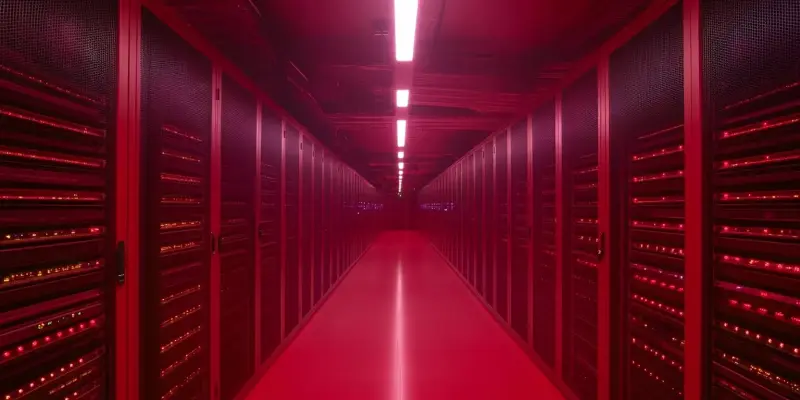
In an era where data centers consume vast amounts of energy and require ever-increasing storage density and performance, innovative solutions are essential to meet modern demands. Pure Storage and Micron Technology have teamed up to tackle these challenges by offering scalable, energy-efficient storage solutions specifically designed for hyperscale data centers.
Integrating Advanced Technologies
The collaboration centers on the integration of Micron’s G9 QLC NAND technology into Pure Storage’s DirectFlash Module products. This partnership builds on a decade-long relationship, during which Micron’s NAND technology has been integrated across seven generations, including the G8 QLC NAND used in Pure Storage’s 150TB DirectFlash Module. The combined expertise aims to provide high-capacity, high-performance, and low-latency data storage solutions while enhancing simplicity and energy efficiency.
Micron’s advanced NAND technology brings enhanced capabilities to Pure Storage’s offerings. By incorporating high areal density NAND, they can deliver storage solutions that not only maximize space utilization but also optimize power consumption, thereby addressing critical concerns for data center operators. The result is a system that balances performance, cost, and sustainability.
Addressing Key Data Center Concerns
The modern data center faces several key challenges: significant power consumption, the need for higher storage density, and the demand for improved storage performance. These issues are particularly relevant for hyperscale operators who manage extensive, data-intensive workloads. Pure Storage and Micron’s collaborations target these pain points directly, offering solutions that are not only effective but also sustainable.
The integration of G9 QLC NAND technology into DirectFlash Modules offers promising advancements. This technology allows for higher capacities without compromising on performance or complexity. Additionally, the solutions are designed to be more energy-efficient than traditional storage methods, reducing both operational costs and environmental impact.
Benefits of the Collaboration
The partnership between Pure Storage and Micron brings several tangible benefits to data center operators:
-
Improved Performance and Lower Latency: The combination of technologies delivers ultra-fast, low-latency solutions that are reliable and suitable for massive data-heavy applications. This ensures that data centers can manage and process large datasets with increased efficiency.
-
Sustainability: By significantly reducing energy consumption compared to traditional storage methods, the joint solutions support environmental sustainability and lower operational costs. This is crucial as data centers look to minimize their carbon footprint.
-
Rack-Dense, Scalable Solutions: Leveraging Micron’s NAND technology with high areal density enables Pure Storage to offer systems that are scalable, reducing the total cost of acquisition and ownership. This makes it easier for data centers to expand their capacity without incurring disproportionately high costs.
Executive Insights
Key insights from industry executives Bill Cerreta of Pure Storage and Jeremy Werner of Micron highlight the strategic importance of this collaboration. They emphasize how integrating Micron’s NAND technology with Pure Storage’s solutions addresses the unique performance, efficiency, and scalability needs of today’s hyperscale data centers. This partnership is set to transform how data centers operate, making them more capable of handling future demands.
Conclusion
In today’s world, data centers are increasingly crucial, yet their energy consumption and needs for advanced storage densities and performance continue to soar. This growing demand calls for forward-thinking solutions to enhance efficiency and capacity. Recognizing this need, Pure Storage and Micron Technology have partnered to deliver innovative, scalable, and energy-efficient storage solutions tailored for hyperscale data centers.
Pure Storage is known for producing high-performance flash storage products, while Micron Technology specializes in semiconductor solutions and memory innovations. By combining their expertise, they aim to develop storage systems that significantly reduce power usage while maintaining exceptional performance and scalability. These storage solutions not only promise to cut down on operational costs but also to lower the carbon footprint of data centers, directly addressing environmental concerns tied to massive energy consumption. Their collaboration reflects a commitment to pushing technological boundaries, ultimately contributing to more sustainable and efficient operations within large-scale data center environments.