

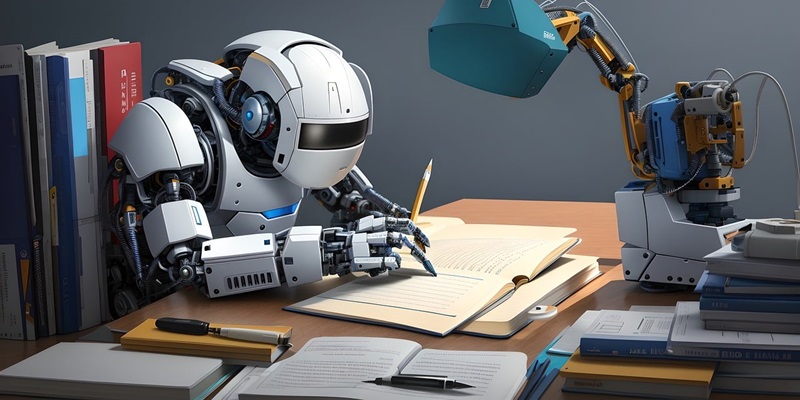
In this digital age, the boundaries between human intelligence and technological advancements continue to blur. AI writing, as a cutting-edge technology, enables computers to produce text that sounds remarkably human. This transformative breakthrough in artificial intelligence is primarily achieved through machine learning algorithms that predict and create text.
Natural Language Processing in AI Writing
For computers to comprehend and analyze human language effectively, Natural Language Processing (NLP) plays a vital role. NLP equips AI tools with the ability to understand context, semantics, and even emotions behind words, improving the overall quality of generated content.
Extensive Language Models for Persuasive Writing
One of the most remarkable advancements in AI writing is the development of extensive language models. OpenAI’s GPT-3 stands as a testament to the power of these models, as it can produce highly persuasive writing through its incredibly vast knowledge base. The ability to mimic human writing style and coherence has made GPT-3 a game-changer in the field of AI writing.
Efficiency and Quickness in AI-Powered Essay Writing Services
AI-powered essay writing services have revolutionized the way we approach written assignments. These services offer unprecedented efficiency and quickness in producing high-quality text. By leveraging AI advancements, students can now meet deadlines without compromising on the quality of their work. Additionally, the customization options provided by AI tools allow for content generation that adheres to the exact requirements of an assignment.
AI tools have paved the way for error-free and grammatically correct writing. Advanced algorithms and powerful language models scrutinize and verify the information they produce, ensuring that the final text is free from errors. This feature significantly reduces the need for manual proofreading and editing, saving time and effort for both writers and editors.
Potential Drawback: Plagiarism and Copyright Infringement
While the benefits of AI-powered writing services are undeniable, there is a potential drawback to consider: plagiarism and copyright infringement. These issues pose ethical and legal challenges in the digital age. As AI tools generate content based on vast amounts of data, there is a risk of unintentional plagiarism or infringing copyrighted material. Ensuring strict adherence to copyright laws and implementing effective plagiarism detection systems becomes crucial in maintaining the integrity of AI-powered writing services.
Limitations of AI in Replicating Human Writing
Although AI has made impressive strides in generating human-like text, it still falls short when it comes to replicating the intricacy and nuance of human writers, particularly when dealing with personal topics (9). AI lacks the emotional intelligence and personal experience that shape human writing, making it difficult to capture the depth and authenticity of human-authored content.
The Role of Human Writers in the Industry
Despite the remarkable advancements in AI writing technology, the industry will always rely on human writers for creative ideas, unique perspectives, and captivating campaigns. The creative process, which encompasses imagination and intuition, remains a domain where human writers excel. Thus, while AI tools provide faster and more abundant services, the value of human writers as innovators and storytellers remains indispensable.
AI writing has emerged as a powerful technology, enabling computers to produce text that closely resembles human writing. With machine learning and NLP at its core, AI-powered writing services offer unmatched efficiency, accuracy, and customization options. However, concerns regarding plagiarism and the limitations of AI in replicating human creativity highlight the importance of coexistence between AI and human writers. By embracing the strengths of both AI and human expertise, we can unlock new dimensions of written communication in the digital era.