

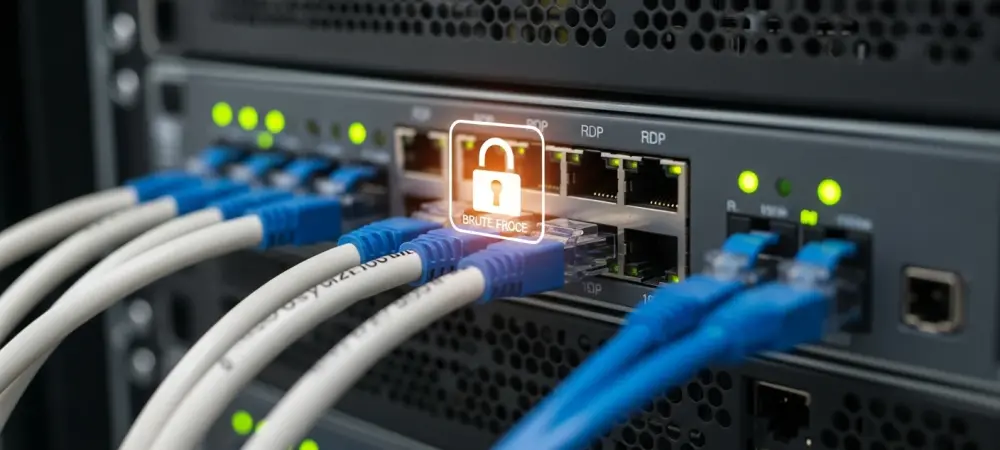
The silent compromise of a single server can rapidly escalate into a full-scale network breach, orchestrated by an unseen adversary siphoning resources and sensitive data without ever raising an alarm. This guide provides a detailed walkthrough of the Prometei botnet, a persistent and highly adaptive threat targeting corporate networks, to help security professionals understand its methodology and fortify their defenses against its multi-stage attacks. By dissecting its lifecycle from initial intrusion to command-and-control communication, administrators can better recognize its indicators of compromise and implement effective mitigation strategies. The purpose of this guide is to demystify the complex operations of this malware, offering a clear roadmap of its techniques and providing actionable intelligence to protect critical infrastructure.
Understanding the Threat a Multi Faceted Botnet Targeting Corporate Networks
The Prometei botnet represents a sophisticated and persistent threat actor primarily focused on infiltrating Windows Server environments within corporate networks. Unlike single-purpose malware, Prometei is engineered as a multi-faceted tool designed to achieve several objectives simultaneously. Its core function is the unauthorized mining of cryptocurrency, which leverages the substantial processing power of enterprise servers to generate revenue for its operators. However, its capabilities extend far beyond simple cryptojacking, making it a significantly more dangerous adversary for security teams to handle.
Beyond its resource-hijacking activities, Prometei is a formidable tool for espionage and long-term network control. It actively engages in credential theft, harvesting sensitive login information from compromised systems to facilitate deeper infiltration and lateral movement across a network. This allows the botnet to establish a durable foothold, granting its operators remote access that can be used for future attacks, data exfiltration, or deploying additional malicious payloads. The attack lifecycle is methodical, beginning with an initial breach, followed by payload execution, establishing persistence, evading defenses, and finally, maintaining communication with its command-and-control infrastructure for ongoing instructions.
The Evolution of a Jealous Threat Actor
First observed in 2016 and with suspected links to Russian-speaking threat actors, the Prometei botnet has demonstrated remarkable longevity and continuous evolution over the past decade. Its resilience stems from a highly modular and multi-functional design, which allows its operators to adapt its capabilities dynamically. This architecture enables the botnet to deploy a wide array of malicious tools, each serving a specific purpose, from credential harvesting to network propagation. This flexibility ensures that Prometei can adjust its tactics based on the security environment of a compromised network, making it a more challenging threat to detect and eradicate completely. A particularly distinctive characteristic of Prometei is its “jealous tenant” behavior, a tactic that underscores its operators’ intent to maintain exclusive control over infected systems. Once established on a server, one of its modules, netdefender.exe, actively scans for and terminates the processes of other known malware or competing cryptominers. By eliminating rival threats, Prometei ensures that it can monopolize the system’s resources for its own mining and operational purposes. This territorial behavior not only maximizes its profitability but also complicates threat analysis, as it can inadvertently clean up signs of other, less sophisticated infections while hiding its own presence.
Anatomy of a Prometei Attack a Step by Step Breakdown
Stage 1 Gaining a Foothold Through Weak RDP Credentials
The initial entry point for a Prometei infection almost invariably involves the exploitation of weak security configurations, specifically targeting the Remote Desktop Protocol (RDP). Attackers systematically scan the internet for exposed Windows Servers with open RDP ports and then launch brute-force or dictionary attacks to guess login credentials. This method remains highly effective because many organizations fail to enforce strong password policies or leave default credentials unchanged on their server instances.
Windows Servers are prime targets for this entry vector due to their powerful hardware and their common use in corporate environments, making them valuable assets for both resource-intensive crypto mining and as a gateway to the broader network. Once a valid username and password combination is discovered, the attacker gains interactive access to the server’s desktop, providing the perfect platform from which to initiate the next stage of the attack and deploy the core malware components.
Stage 2 Deploying the Payload via Command Line and PowerShell
After successfully authenticating via RDP, the attacker initiates a two-stage deployment process using native Windows tools to minimize suspicion. The first command, executed through the Command Prompt, is responsible for creating a crucial decryption key. It writes a file named mshlpda32.dll to the C:Windows directory. This DLL file does not contain executable code but instead serves as an XOR key, a vital component needed to unscramble the main malware payload in the subsequent step.
With the key in place, the attacker executes the second stage using PowerShell. This command fetches the encrypted primary payload from a remote server controlled by the attacker. The PowerShell script then reads the mshlpda32.dll file, uses its contents as the key to decrypt the downloaded payload in memory, and executes it directly. This two-step process is a deliberate evasion tactic designed to bypass security solutions that might flag the direct download and execution of a known malicious file but are less likely to detect the separate creation of a seemingly benign DLL and a subsequent encrypted download.
Stage 3 Establishing Persistence for Long Term Control
Installing a Deceptive Windows Service
To ensure its survival after a system reboot, Prometei establishes persistence by registering itself as a Windows service. The malware creates a service with the deceptive display name “UPlugPlay,” a moniker designed to mimic the legitimate “Plug and Play” service, which is a standard component of the Windows operating system. By doing so, it attempts to hide its presence from system administrators who might be casually inspecting the list of running services.
This service is configured to start automatically whenever the server boots up, guaranteeing that the malware is re-executed without any manual intervention from the attacker. This mechanism provides Prometei with long-term control over the compromised machine, allowing it to maintain its connection to the command-and-control network and continue its malicious activities, such as crypto mining and credential harvesting, indefinitely.
Hiding in Plain Sight
In addition to creating a deceptive service, Prometei employs file-based obfuscation to further conceal its presence on the infected system. The malware copies its primary executable file to the C:Windows directory and renames it to sqhost.exe. This filename is strategically chosen to resemble legitimate Windows system files, such as svchost.exe, a common and critical system process.
By placing its executable in a core system folder and giving it a name that appears legitimate at a glance, the malware significantly reduces the likelihood of being discovered during a manual file system audit. This technique, combined with the deceptive service name, creates a layered defense that allows the botnet to operate covertly while blending in with the normal background noise of a busy Windows Server environment.
Stage 4 Evading Security and Maintaining Access
Disabling System Defenses
A critical step in Prometei’s post-infection routine is the systematic neutralization of the host’s native security defenses. The malware executes commands to create specific exceptions within both the Windows Firewall and Microsoft Defender, the built-in antivirus solution. For the firewall, it adds a rule that explicitly allows inbound and outbound traffic for its executable, C:Windowssqhost.exe, ensuring its communications will not be blocked by default network policies.
Simultaneously, it adds an exclusion to Microsoft Defender for the same file path. This action instructs the antivirus engine to ignore the sqhost.exe file during real-time and scheduled scans, effectively rendering it invisible to the primary security tool on the system. These carefully crafted exceptions are fundamental to the botnet’s ability to operate undetected for extended periods.
Securing C2 Communication Channels
By creating these firewall and antivirus exceptions, Prometei guarantees that its communication channels with the command-and-control (C2) servers remain open and uninterrupted. The firewall rule ensures that the botnet can consistently send and receive instructions, download new modules, and exfiltrate stolen data without being flagged as suspicious network activity.
This unhindered communication is the lifeline of the botnet, allowing its operators to maintain full control over the compromised asset. Without it, the infected machine would become an isolated and useless node. The defense evasion techniques are therefore not just about hiding but are essential for maintaining the operational integrity and responsiveness of the entire botnet infrastructure.
Stage 5 Leveraging Sophisticated Command and Control Techniques
The Use of Multi Layered Encryption
Prometei’s C2 communications are protected by a sophisticated, multi-layered encryption stack designed to thwart network traffic analysis and reverse engineering efforts. The data exchanged between the bot and its C2 servers is first encrypted using RC4, then compressed with LZNT1, and finally encrypted again with RSA-1024. This complex process makes it extremely difficult for network security appliances or analysts to inspect the content of the traffic.
Furthermore, the malware uses a rolling XOR cipher to decrypt its own code modules in memory, adding another layer of obfuscation that complicates dynamic analysis. This advanced use of cryptography demonstrates a high level of technical proficiency on the part of the malware authors and is a key factor in the botnet’s ability to evade detection by signature-based security tools.
Staying Anonymous with TOR
To further enhance its anonymity and resilience, Prometei is capable of communicating with its C2 infrastructure over both the clear web and the TOR network. The use of TOR adds a significant layer of obfuscation, as it routes traffic through a series of volunteer-operated relays, making it nearly impossible to trace the connection back to its origin or destination. This makes it exceptionally difficult for law enforcement or security researchers to identify and dismantle the C2 servers.
By building in dual-channel communication capabilities, Prometei ensures it can maintain contact even if one method is blocked. For instance, if an organization’s firewall blocks known TOR exit nodes, the botnet can fall back to communicating over standard HTTP/HTTPS channels. This redundancy makes the C2 infrastructure more robust and complicates efforts to disrupt the botnet’s operations.
Stage 6 Post Exploitation Expanding Influence and Harvesting Data
Credential Theft with Mimikatz Variants
Once firmly established on a system, Prometei deploys specialized modules to harvest credentials and expand its access. It uses variants of the well-known hacking tool Mimikatz, specifically miWalk32.exe and miWalk64.exe, to extract plaintext passwords, hashes, and other authentication tokens directly from the memory of the compromised server. This includes credentials for local administrator accounts, domain accounts, and service accounts.
The stolen credentials are then exfiltrated back to the C2 server, providing the attackers with the keys to other systems within the network. This information is invaluable for lateral movement, allowing the threat actors to escalate their privileges and gain access to more critical assets, such as domain controllers or databases containing sensitive corporate data.
Spreading Laterally Across the Network
Armed with harvested credentials, Prometei actively seeks to propagate itself to other machines on the same network. It uses dedicated modules to facilitate this lateral movement. The rdpcIip.exe module attempts to connect to other systems using RDP with the stolen passwords, repeating the initial infection vector. Another module, windrlver.exe, uses the credentials to authenticate via SSH, a protocol commonly used for remote administration on both Windows and Linux systems.
This self-spreading capability transforms a single compromised server into a beachhead for a widespread network infection. The botnet systematically moves from one machine to another, growing its footprint and bringing more computational resources under its control for crypto mining while simultaneously harvesting more credentials to continue its expansion.
Summary of Prometeis Attack Chain
- Initial Access: Exploits weak RDP credentials on Windows Servers.
- Execution: Uses a two-stage command to write an XOR key and decrypt the primary payload.
- Persistence: Installs a Windows service (“UPlugPlay”) and copies its executable to the Windows directory.
- Defense Evasion: Creates firewall and antivirus exceptions to avoid detection.
- Command & Control: Communicates using multi-layered encryption over the clear web and TOR.
- Impact: Deploys modules for crypto mining, credential harvesting, and lateral movement.
The Bigger Picture Prometei as a Blueprint for Modern Cyber Threats
The operational model of Prometei serves as a clear blueprint for the direction of modern cyber threats. Its modular, multi-purpose nature reflects a significant trend in malware development, which has shifted away from single-function attacks toward creating versatile platforms capable of a wide range of malicious activities. Instead of being just a cryptominer or a credential stealer, Prometei is an all-in-one toolkit for network compromise, combining these functions with persistence, evasion, and lateral movement capabilities. This makes detection and remediation far more complex, as defenders must contend with a threat that can change its behavior and objectives on the fly.
This level of sophistication presents a formidable challenge for traditional, signature-based security solutions. Antivirus programs may fail to detect the malware due to its multi-layered encryption and its use of legitimate system tools to carry out its tasks. Likewise, firewalls may not block its C2 traffic if it is cloaked in standard web protocols or routed through TOR. The self-defending nature of the botnet, which actively removes competing malware, further complicates the security landscape. This evolution underscores the pressing need for security strategies that move beyond simple prevention.
Looking ahead, the success of botnets like Prometei indicates that attackers will continue to develop highly adaptive and resilient malware. The future of cyber defense will increasingly rely on integrated, behavior-based threat detection systems. Security solutions must be able to analyze complex process chains, identify anomalous network traffic patterns, and detect credential abuse in real time. Organizations will need to adopt a more holistic and proactive security posture, focusing not just on blocking initial entry but on rapidly detecting and responding to threats that have already bypassed perimeter defenses.
Fortifying Your Defenses a Proactive Approach to Mitigation
The Prometei botnet represented a multi-faceted threat that combined stealth, persistence, and a wide array of malicious capabilities to compromise corporate networks effectively. Its success was largely built on exploiting common security weaknesses, from weak remote access credentials to inadequate internal network monitoring. However, by understanding its attack chain, organizations could implement a series of proactive and layered security controls to defend against this and similar advanced threats. A robust defense required a focus not only on prevention at the network edge but also on detection and response capabilities within the environment. To effectively mitigate the risk posed by Prometei, organizations were advised to prioritize securing all remote access points. This began with enforcing strong, unique password policies for all accounts, especially those with administrative privileges, and mandating the use of multi-factor authentication (MFA) for RDP and other remote services. Furthermore, implementing account lockout policies helped thwart brute-force password guessing attempts by temporarily disabling accounts after a set number of failed login attempts. On the detection front, deploying an Endpoint Detection and Response (EDR) solution was critical for identifying the complex process chains and fileless execution techniques used by the malware. Continuous network monitoring for unusual outbound connections, particularly to known malicious IP addresses or TOR nodes, provided another vital layer for spotting an active C2 communication channel and initiating an incident response.