

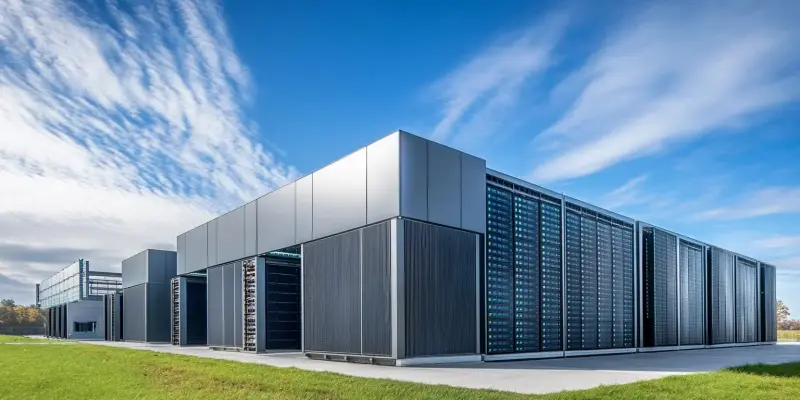
The Greek state-controlled utility Public Power Corp. (PPC), also known as Admie, has announced an ambitious €5 billion plan to venture into the rapidly growing data center and artificial intelligence (AI) markets by 2026. As the company reported a remarkable 41% rise in EBITDA to €1.8 billion with renewable energy capacity expanding to 6.2 GW, the move signifies a strategic shift aimed at capitalizing on new technological opportunities while maintaining a robust focus on sustainability.
Strategic Investments and Infrastructure Development
The cornerstone of PPC’s grand vision includes the development of data centers on its former lignite mines in Western Macedonia. The initial project is slated to have a capacity of 300 MW, with a potential upgrade to 1 GW if market conditions support such expansion. This ambitious project is part of PPC’s broader commitment to discontinue coal use and transition its last lignite plant, Ptolemaida 5, into a 350 MW natural gas facility that can also burn hydrogen, marking a significant milestone towards a greener energy portfolio.
In conjunction with these projects, PPC is also heavily investing in renewable energy. The utility company plans to develop 1.3 GW of photovoltaic systems, 300 MW of battery energy storage systems, and two pumped-storage hydropower projects totaling 560 MW in the mines of Amyndaio and Ptolemaida. These initiatives aim to ensure a reliable and sustainable energy supply for the new data centers and reflect PPC’s strategic shift towards leveraging both ends of the value chain for maximum profit.
Partnering and Cost Efficiency
PPC is currently in discussions with several potential partners to pioneer its first data center project. The estimated cost per megawatt for this endeavor ranges between €7 million and €8 million, which is notably lower in comparison to other European regions. This cost efficiency is anticipated to bolster PPC’s competitiveness in the market and attract a diverse array of clients looking for reliable and affordable data storage solutions.
Beyond establishing first-mover advantage in the region, PPC’s comprehensive strategy marks a significant pivot towards renewable energy and the burgeoning technologies of data centers and AI. The decision to repurpose its former lignite mines not only aligns with global trends towards sustainability but also addresses the increasing demand for data processing capabilities driven by AI advancements. By focusing on these emerging sectors, PPC aims to position itself as a leading power tech group in Europe.
Future Directions and Market Impact
Public Power Corp. (PPC), the Greek state-controlled utility also known as Admie, has disclosed an ambitious plan worth €5 billion to enter the burgeoning data center and artificial intelligence (AI) markets by 2026. This strategic move comes as PPC reported an impressive 41% increase in EBITDA, reaching €1.8 billion, alongside an expansion in its renewable energy capacity to 6.2 GW. The initiative aims to harness the potential of emerging technological advancements while preserving a strong commitment to sustainability. This venture represents a significant shift for PPC as it seeks to diversify its portfolio and leverage growth opportunities in the technology sector. PPC’s focus on sustainability in this new venture reflects its mission to integrate cutting-edge solutions while promoting environmental stewardship. By branching into AI and data centers, PPC is positioning itself at the forefront of innovation, ensuring long-term stability and growth in a rapidly evolving market.