

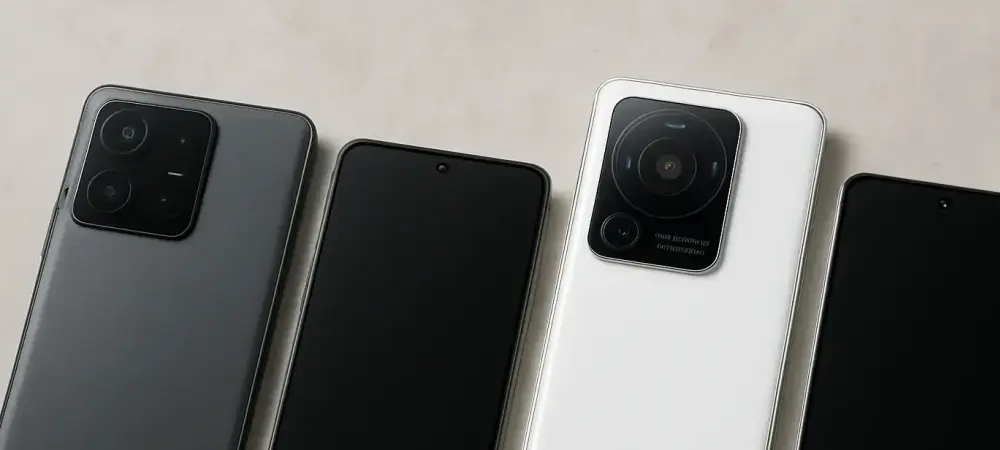
In the fiercely competitive smartphone arena, the distinction between a “great” phone and the “ultimate” phone often comes down to a handful of premium features and a considerable price difference. This is the very dilemma presented by Poco’s latest flagship duo. The Poco F8 Pro and F8 Ultra are two devices born from the same high-performance DNA, yet they are engineered to appeal to distinctly different buyers. One stands as a testament to maximum value, while the other pushes the boundaries of what a Poco device can be. This analysis dissects every critical difference, from the materials you feel in your hand to the pixels captured by the camera, to provide a definitive answer to the central question: do the Ultra’s enhancements justify the leap in cost?
Setting the Stage: The Pro vs. Ultra Proposition
Poco has carved out a formidable reputation by delivering devices that punch well above their weight, prioritizing raw performance and essential features over superfluous frills. The F8 series continues this legacy, entering the market as a serious contender against more established and expensive flagship lines. It represents the brand’s mature vision, offering consumers a clear choice within its own top tier. The F8 Pro is strategically positioned as the high-value flagship. It is designed for the discerning user who wants cutting-edge speed and a premium experience without paying the premium price that often accompanies the absolute latest innovations. In contrast, the F8 Ultra is the no-compromise offering. It is the culmination of Poco’s engineering efforts, packing in every conceivable feature to create a device that competes on an even footing with the best phones on the market.
This comparison aims to move beyond a simple recitation of specifications. The core objective is to meticulously evaluate the tangible benefits of the Ultra’s upgrades—its more powerful chipset, its advanced camera system, and its unique audio hardware—against the significant price increase it commands. The goal is to determine for whom that extra investment makes sense and who would be better served by the remarkable value of the F8 Pro.
A Deep Dive into Hardware and Features
Design, Materials, and Ergonomics
The initial impression of a phone is dictated by its physical form, and here the F8 Pro and F8 Ultra take divergent paths. The F8 Pro adheres to a more traditional flagship blueprint, featuring a classic combination of a smooth glass back and a sturdy aluminum frame, with its screen protected by Gorilla Glass 7i. This construction gives it a familiar, conventionally premium feel that many users appreciate.
Conversely, the F8 Ultra experiments with different materials to achieve a unique identity. While it shares the aluminum frame, its back is fashioned from either a durable fiber-reinforced plastic or, in its standout Denim Blue colorway, a unique silicone polymer. This latter option possesses a surprisingly soft, almost rubbery texture, offering a distinct tactile experience and enhanced grip. The choice between the Pro’s classic elegance and the Ultra’s modern, functional aesthetic comes down to personal preference.
A more objective difference lies in their dimensions. Housing a smaller display, the Poco F8 Pro is inherently the more compact and lighter of the two. This makes it significantly more manageable for one-handed use and more comfortable to carry in a pocket. For users who find modern flagships to be unwieldy, the F8 Pro’s more ergonomic size presents a compelling practical advantage that transcends its spec sheet.
Display and Visual Fidelity
While their physical footprints differ, the visual experience offered by the two displays is remarkably consistent. The Poco F8 Pro features a more compact screen, while the F8 Ultra provides a larger canvas for media consumption and gaming. However, the underlying technology powering these panels is virtually identical, resulting in a near-tie in this category.
Both models boast impressive peak brightness levels, capable of hitting over 1,000 nits in everyday use and an incredible 3,500 nits for brilliant HDR highlights in small portions of the screen. This ensures excellent legibility even in direct sunlight. Furthermore, both devices share the same high-end certifications, with support for HDR10+ and Dolby Vision, guaranteeing a vibrant and dynamic viewing experience for compatible content. With identical refresh rates ensuring smooth scrolling and animation, the only meaningful choice for a potential buyer is one of size, not quality.
Performance, Software, and Longevity
The performance differential follows a predictable yet important pattern for flagship tiers. The Poco F8 Pro is equipped with the formidable Snapdragon 8 Elite, a chipset that was at the apex of mobile processing in the previous generation and remains incredibly capable. The Poco F8 Ultra, however, gets the latest and greatest: the Snapdragon 8 Elite Gen 5, which brings notable improvements in efficiency and raw power.
Benchmark data quantifies this advantage clearly. The newer chipset in the F8 Ultra provides a significant 26% performance increase in CPU-intensive tasks and a solid 13% boost in graphically demanding workloads. While the composite AnTuTu benchmark shows a more modest 10% gain, the message is clear: the Ultra is the more powerful device. For current applications and games, both phones are more than sufficient, but the F8 Ultra’s superior processing headroom serves as a form of future-proofing, suggesting it will handle the demands of future software with greater ease.
Both phones start with a generous 12GB/256GB configuration of fast UFS 4.1 storage. For power users, however, the F8 Ultra offers a top-tier variant with 16GB of RAM, an option not available for the Pro. On the software front, parity is restored. Both devices run HyperOS 3, based on Android 16, and benefit from Xiaomi’s excellent update commitment, which promises four major OS upgrades and six years of security patches, ensuring a secure and up-to-date experience for years to come.
Battery Endurance and Charging Capabilities
In the crucial arena of battery life, the F8 Ultra holds a slight but measurable edge. It is fitted with a marginally larger battery cell, which translates directly into moderately better endurance in certain scenarios. Standardized testing reveals its advantage is most pronounced in web browsing and continuous video playback.
However, this lead is not a runaway victory. In other key metrics, such as call time and gaming sessions, the difference between the two models becomes negligible. The final “Active Use Score” is so close that most users are unlikely to notice a practical difference in day-to-day longevity; both phones are confident all-day performers. When it comes to refueling, both support the blazing-fast 100W HyperCharge standard. The only key distinction is the Ultra’s exclusive support for 50W fast wireless charging, a major convenience and a defining feature of its premium status.
Audio and Speaker Showdown
Audio performance marks one of the most dramatic distinctions between the F8 Pro and F8 Ultra. Though both feature stereo speakers tuned by Bose, their hardware and resulting sound profiles could not be more different. The Poco F8 Ultra incorporates a driver so large it is described as a “subwoofer,” a component typically found in tablets, not smartphones. This unique hardware addition transforms the listening experience.
The result is an audio output that is exceptionally full, warm, and rich with deep, impactful bass. The F8 Ultra’s speakers are easily among the best in the smartphone market, making it an outstanding device for watching movies or listening to music without headphones. In stark contrast, the Poco F8 Pro’s speakers are engineered for sheer volume. They produce a significantly louder sound with a flatter signature that heavily emphasizes vocals and mid-range frequencies, making the Pro a better choice for podcasts and vlogs where voice clarity is the top priority.
The Comprehensive Camera Comparison
The camera system is where the F8 Ultra makes its strongest case for its premium price, boasting a comprehensively upgraded hardware suite. It features a larger main sensor for better light gathering, a telephoto camera with a powerful 5x optical zoom that dwarfs the Pro’s 2.5x lens, and a superior, higher-resolution ultrawide sensor. Even its front-facing camera has a higher resolution on paper.
In daylight, the F8 Ultra’s main camera captures stills that are sharper and more detailed, an advantage that becomes even more apparent in challenging indoor lighting. In a surprising upset, the Ultra’s 2x digital crop from its excellent main sensor consistently produces better results than the F8 Pro’s dedicated 2.5x optical telephoto lens. At 5x, the Ultra’s native zoom is predictably superior. In low light, the Ultra’s main camera continues its lead, but its ultrawide camera is surprisingly bested by the F8 Pro’s lower-spec sensor, which produces slightly sharper and more color-accurate night shots.
Despite the on-paper differences, the selfie cameras on both phones produce nearly identical and somewhat underwhelming results. Video recording is a mixed bag with no clear winner. The F8 Pro’s 1080p ultrawide video is sharper than the Ultra’s, while the Ultra’s 4K footage from the main camera is better at night. For zoom video, the Pro’s 2.5x footage holds up better in the dark, but the Ultra’s 5x video is superior in all conditions.
Real-World Implications and User Experience
Distilling these technical differences into real-world impact reveals a clear set of trade-offs. The Poco F8 Pro champions affordability and ergonomics. Its lower price makes flagship-level performance accessible to a wider audience, while its smaller, lighter build is a significant quality-of-life benefit for anyone who prioritizes comfort and one-handed usability over having the largest possible screen. The Poco F8 Ultra, on the other hand, is for the user who wants the complete package and is willing to pay for it. Its superior performance ceiling, while perhaps not essential today, provides peace of mind for the future. Its multimedia prowess, driven by a class-leading speaker system and larger display, makes it an entertainment powerhouse. For mobile photographers, its versatile camera system, especially the long-range 5x telephoto zoom, unlocks creative possibilities that the F8 Pro simply cannot match.
In terms of long-term value, the decision is nuanced. Both phones share the same outstanding software support policy, ensuring they will remain secure and modern for years. The F8 Pro offers better immediate financial value, but the F8 Ultra’s more powerful chipset may allow it to feel “fast” for a longer period, potentially extending its usable lifespan for the most demanding users.
Final Verdict and Purchase Recommendation
The comprehensive analysis concluded that the Poco F8 Ultra was, by almost every objective measure, the superior smartphone. Its advantages in speaker quality, camera versatility with its 5x zoom, the convenience of wireless charging, and its future-proofed raw performance were clear and undeniable. These features combined to create a more complete and luxurious flagship experience. However, the Poco F8 Pro firmly established itself as the champion of value. It delivered a user experience that, for the majority of day-to-day tasks, was remarkably close to its more expensive sibling. For consumers working with a tighter budget, for those who strongly prefer a more compact and manageable device, or for anyone who views features like wireless charging and extreme telephoto zoom as luxuries rather than necessities, the F8 Pro presented the smarter purchase.
Ultimately, the choice was not about which phone was better, but which phone was better for the specific user. The Poco F8 Ultra was the easy recommendation for the tech enthusiast willing to invest in a top-tier, feature-complete device without compromise. The Poco F8 Pro, meanwhile, was the logical choice for the pragmatic buyer, offering an exceptional and well-rounded flagship experience that represented one of the best performance-per-dollar propositions on the market.