

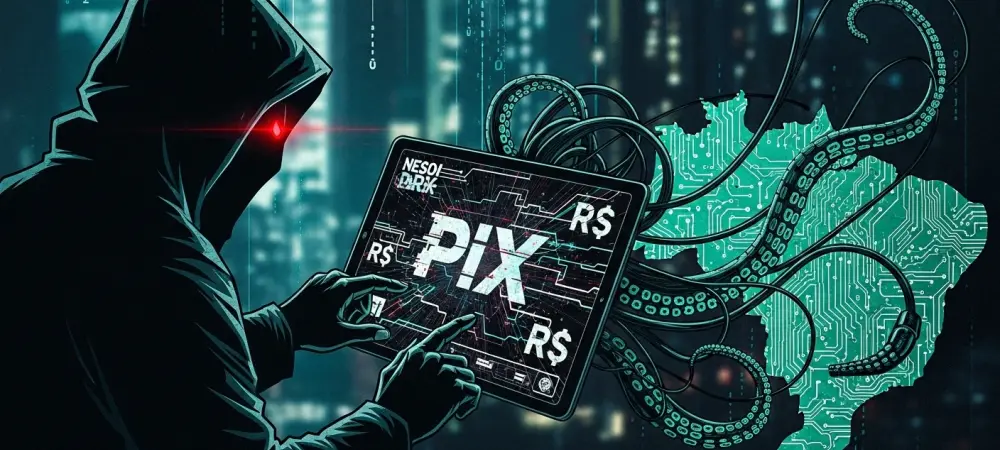
Digital thieves have shifted their focus from brute-force bank robberies to a more subtle and devastating method involving real-time manipulation of smartphone screens during financial transfers. In the current landscape of 2026, the Pix system remains the backbone of the Brazilian economy, facilitating nearly instantaneous transactions for over three-quarters of the population. However, this convenience has invited a new breed of predator known as PixRevolution. This specialized Android Trojan does not merely steal data; it hijacks the very intent of the user, turning a simple bill payment or a transfer to a friend into a direct pipeline for criminal profit.
The primary objective of this exploration is to dissect how PixRevolution operates and why it poses such a significant threat to mobile security. By examining the technical layers of this malware, readers can understand the shift from automated scripts to live, human-intervened fraud. This analysis covers the infection vectors, the exploitation of accessibility services, and the sophisticated command-and-control mechanisms that allow attackers to watch their victims in real-time. Understanding these elements is essential for anyone navigating the modern digital financial ecosystem, as the tactics seen here are likely to influence global cybercrime trends.
Key Questions Regarding the PixRevolution Threat
How Does the PixRevolution Trojan Initially Infect a Mobile Device?
Cybercriminals rely on the psychological vulnerability of users rather than technical exploits in the initial phase of an attack. They create highly convincing replicas of the Google Play Store or legitimate service websites, such as those belonging to major travel agencies or postal services. These fraudulent domains host malicious Android Package Kit files that masquerade as helpful utilities or official apps. Because these sites look identical to the trusted sources people use every day, many individuals bypass their standard security instincts and proceed with the installation of the unverified software.
Once the file is downloaded and opened, the malware begins a deceptive dialogue with the user to gain elevated permissions. It specifically requests the activation of an accessibility feature under the guise of “Enable Revolution,” claiming that the setting is necessary for the app to function correctly. To lower the victim’s guard, the interface explicitly states that the feature is not used for data collection or privacy invasion. In reality, granting this permission provides the Trojan with total visibility into every action performed on the device, including the ability to read on-screen text and intercept physical inputs.
What Makes the Operational Model of This Malware Truly Unique?
Traditional banking Trojans typically function through pre-programmed automation, where the software performs specific actions once a banking app is opened. PixRevolution breaks this mold by introducing a human-in-the-loop or AI-driven interaction model that utilizes a low-latency connection to a command-and-control server. By communicating through a specific network port, the malware streams a live capture of the victim’s screen directly to the attacker. This transition from static automation to dynamic, real-time observation allows the threat actor to respond to the specific nuances of a transaction as it happens.
The software is programmed to monitor a specific watchlist of more than eighty Portuguese keywords related to financial institutions and payment processing. When the victim navigates to a sensitive area of a banking application, the Trojan alerts the operator, who can then intervene manually. This level of precision ensures that the malware remains effective even if a bank updates its application layout or introduces new security prompts. By focusing on the visual output of the device rather than the underlying code of the banking app, the attackers have created a versatile tool that targets the entire Brazilian financial sector simultaneously.
How Does the Interception of a Pix Transaction Actually Occur?
The moment of theft is characterized by a seamless and deceptive user experience that leaves the victim unaware of any wrongdoing. When a user initiates a legitimate Pix transfer, the attacker monitors the process through the live feed provided by the Trojan. Just as the victim prepares to finalize the payment, the malware triggers a full-screen HTML overlay that displays a “Please wait” message in Portuguese. This temporary visual block serves as a distraction, preventing the user from seeing what is happening in the background while keeping the session active. While the victim waits for the fake loading screen to disappear, the attacker or an automated script quickly modifies the recipient’s details and the transaction amount. Because the malware has accessibility permissions, it can “click” buttons and enter text on behalf of the user with lightning speed. The funds are redirected to a mule account controlled by the criminal organization before the victim even realizes the transaction has been altered. By the time the overlay vanishes and the device returns to normal, the money has already left the original account, often leaving no immediate trace of how the diversion occurred.
Summary of the Current Threat Landscape
The emergence of PixRevolution illustrates a strategic pivot in how financial fraud is conducted on mobile platforms. Threat actors are moving away from complex code that tries to break encryption and are instead focusing on the user interface and accessibility settings. This approach is highly effective because it exploits the inherent trust that users have in their own devices. As long as the malware can see the screen and simulate touches, it can bypass many of the traditional security measures that banks have implemented over the last few years. The reliance on real-time intervention signifies that cybercrime has become a sophisticated service industry where attackers are willing to monitor targets individually for high-value payouts.
Mitigating these risks requires a shift in perspective from both financial institutions and individual users. Banks can no longer rely solely on server-side fraud detection; they must gain better visibility into the health of the device requesting the transaction. If a device has suspicious accessibility configurations or is communicating with known malicious servers, the transaction should be flagged or blocked immediately. For the general public, the primary defense remains a strict adherence to official app stores and a deep skepticism toward any application that asks for broad control over the operating system.
Final Reflections on Digital Financial Security
The rapid evolution of the PixRevolution Trojan served as a stark reminder that convenience and security often exist in a delicate balance. As the Brazilian financial ecosystem pioneered instantaneous payments, it inadvertently created a high-velocity environment that criminals were eager to exploit. The transition from simple automated theft to real-time, human-assisted hijacking represented a significant escalation in the complexity of mobile threats. This situation forced a reevaluation of how “secure” a mobile session truly was when the very interface used by the customer could be turned against them.
Ultimately, the response to these threats required a more integrated approach to mobile defense that moved beyond simple antivirus definitions. Security professionals emphasized the need for zero-trust principles on mobile endpoints, treating every device as potentially compromised until its integrity was verified. The legacy of the PixRevolution era was the realization that as financial tools became more integrated into daily life, the defenses protecting them had to become equally invisible yet omnipresent. Users were encouraged to take ownership of their digital hygiene, while institutions worked to build more resilient frameworks that could withstand the constant pressure of innovative cybercrime.