

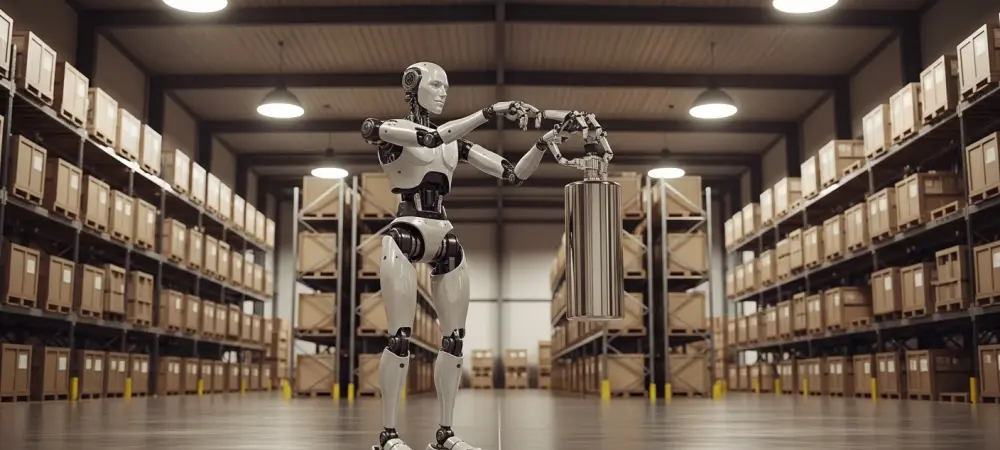
The long-standing barrier to creating truly autonomous robots has never been the lack of sophisticated metal limbs or sleek sensors, but rather the absence of a “digital childhood” where these machines can safely learn the chaotic physics of the real world. For decades, developers relied on simulations that, while fast, failed to capture the friction, lighting shifts, and unpredictable resistance of actual physical space. This “sim-to-real” gap meant that a robot capable of performing tasks in a virtual lab would often freeze or fail when placed in a busy factory. The emergence of dedicated physical training infrastructure represents a fundamental shift, moving beyond code toward a model where intelligence is literally built through tactile experience.
The Emergence of Physical AI Training Facilities
The transition from purely digital training to real-world environments marks a pivotal moment in the robotics sector. By establishing dedicated centers like the TUM RoboGym, the industry is creating the necessary context for robots to learn through physical interaction and massive-scale data collection. This evolution is central to the broader technological landscape, as it moves robotics from rigid, programmed movements toward adaptive, intelligent behavior.
Such facilities serve as the bridge between laboratory theory and commercial reality. Instead of relying on hand-coded instructions, these centers allow machines to refine their motor skills and spatial awareness in a controlled yet authentic setting. This approach ensures that the resulting AI models are grounded in the laws of physics, making them significantly more reliable for deployment in unpredictable human environments.
Key Components of Next-Generation Training Ecosystems
The TUM RoboGym: Scaling High-Volume Data Acquisition
The TUM RoboGym, a 26,000-square-foot facility at Munich Airport, serves as the primary physical hub for scaling intelligent automation. This site is designed to house an entire fleet of humanoid robots, specifically targeting the scarcity of high-quality, realistic training data. By providing a massive, controlled environment for robots to operate, it allows for the collection of the precision data required to refine the “brain” of autonomous systems.
Unlike traditional testing labs, this space operates as a continuous data factory. Every movement, collision, and successful manipulation is recorded and used to improve the underlying neural networks. This high-volume approach is essential because physical intelligence requires millions of iterations to achieve human-like fluency, a feat that cannot be replicated by smaller-scale operations or singular robot tests.
Neuraverse: Hardware-Independent Intelligence Platforms
A critical component of this infrastructure is the Neuraverse, a platform designed to decouple software intelligence from specific robotic hardware. This system acts as a centralized repository for the data generated within physical training centers, aiming to establish global standards for Physical AI. Its significance lies in its ability to facilitate cross-platform learning, ensuring that intelligence gained by one robot can be applied to diverse hardware configurations.
By creating a hardware-agnostic layer, the Neuraverse prevents the fragmentation that often plagues the tech industry. If a humanoid robot at the RoboGym learns a more efficient way to grip a delicate object, that “skill” can be exported to different models operating in other parts of the world. This universality accelerates the overall pace of innovation, as improvements are no longer trapped within a single proprietary machine.
Advanced Semiconductor Integration: Neural Processing Power
The performance of modern Physical AI relies heavily on advanced processors, such as Qualcomm’s Dragonwing Robotics IQ10. These chips function as the brain and nervous system for humanoid robots, providing the computational power necessary for real-time decision-making. Integrating high-end semiconductor technology into the training infrastructure ensures that robots can process complex environmental data with low latency.
Low latency is not just a performance metric; it is a safety requirement. When a robot operates near humans, its ability to perceive a sudden movement and react in milliseconds is what prevents accidents. These advanced neural processing units allow the robot to run complex vision and tactile algorithms locally, reducing the dependence on cloud computing and making the machine more autonomous and responsive.
Current Trends: European Robotics and Strategic Autonomy
The latest developments in Physical AI are increasingly influenced by the pursuit of technological sovereignty. European firms are now prioritizing internal infrastructure to remain competitive against global tech giants. There is a clear shift toward large-scale collaborative ventures between academic institutions, such as the Munich Institute of Robotics and Machine Intelligence, and private industry.
This trend is driving a more unified ecosystem where financial investment and research are concentrated on creating general-purpose robots rather than niche, single-task machines. By building these capabilities within the region, stakeholders aim to ensure that the standards and ethical frameworks governing AI are developed locally. This focus on autonomy is as much about economic security as it is about technical leadership.
Real-World Applications of Intelligent Automation
Physical AI training infrastructure is currently being deployed to accelerate the use of humanoid robots in several key sectors. In industrial settings, these robots are being trained to handle complex assembly tasks that require human-like dexterity and adaptability. Beyond the factory floor, there is a growing focus on domestic assistance, where robots learn to navigate and interact with home environments safely.
These implementations demonstrate the technology’s move toward creating versatile, general-purpose machines capable of operating in diverse, unscripted human spaces. The goal is no longer to have a robot that can only do one thing well, but to have a machine that can learn to fold laundry, assist a technician, or organize a warehouse with minimal reconfiguration.
Technical Hurdles and Market Obstacles
Despite rapid progress, the technology faces significant challenges, particularly regarding the cost and complexity of physical scaling. Building and maintaining massive facilities like the RoboGym requires substantial capital investment, which may limit the speed of widespread adoption. Additionally, while hardware has advanced, the technical hurdle of achieving human-level precision in varied environments remains a formidable task.
Regulatory issues regarding safety standards for humanoid robots in public or domestic spaces also present a hurdle. Policymakers must keep pace with the technology to create frameworks that allow for innovation while protecting users. The transition from a controlled training facility to a messy, real-world living room involves a level of risk that necessitates rigorous verification and validation processes.
The Future of Global Robotic Ecosystems
The outlook for Physical AI training infrastructure points toward a future where autonomous systems are ubiquitous and highly capable. Future developments are expected to focus on further refining the nervous systems of robots, potentially leading to breakthroughs in tactile sensing and social intelligence. This will likely involve the integration of more sophisticated bio-inspired sensors that mimic human skin and muscle response.
Over the coming years, this technology is poised to redefine the global workforce. As general-purpose robots take on more roles in logistics, healthcare, and maintenance, they will significantly boost global productivity. The focus will shift from whether a robot can perform a task to how seamlessly it can integrate into existing human workflows, making the interaction between humans and machines a standard part of daily life.
Summary of the Physical AI Landscape
The emergence of large-scale training facilities and hardware-independent platforms established a robust foundation for the next generation of automation. This review found that the integration of high-end semiconductors with physical learning environments successfully addressed the data scarcity that previously hindered the industry. While high capital requirements and regulatory complexities acted as temporary brakes, the strategic shift toward general-purpose robotics proved to be a decisive move. Ultimately, the development of these centers secured a path for robots to transition from experimental prototypes to essential tools in both industrial and domestic spheres.