

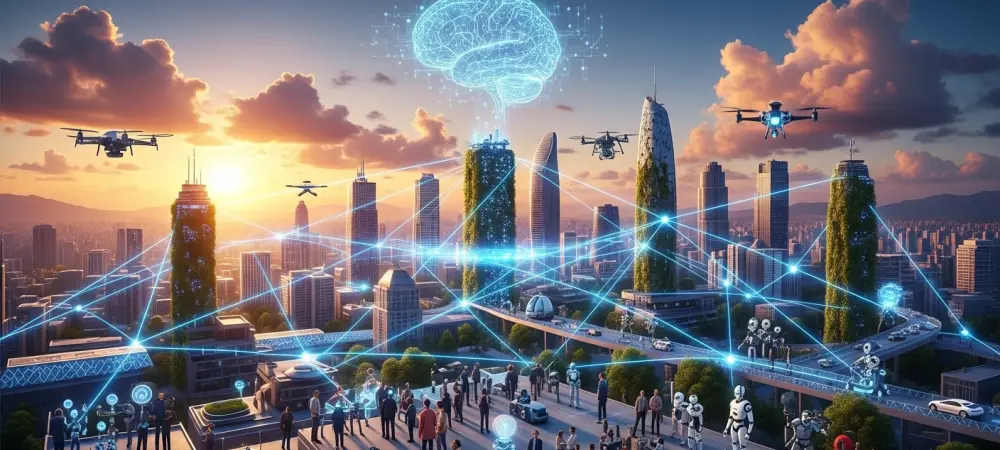
Artificial intelligence is undergoing a profound transformation, evolving from a digital, data-centric tool into a physically embodied agent capable of interacting with the real world, a shift poised to redefine our relationship with technology itself. This emerging field, known as Physical AI, is rapidly approaching a critical tipping point, with widespread societal integration already beginning. The migration of intelligent machines from the controlled confines of factories into the dynamic, unstructured environments of our daily lives is no longer a distant projection but an unfolding reality. It signals the dawn of a new era where autonomous, tangible entities will operate alongside us, moving beyond screen-based interfaces to become a direct and physical part of our shared world. This transition challenges us to reconsider the very fabric of our public and private spaces as we prepare for a future of direct coexistence with intelligent machines.
The Dawn of Embodied Intelligence
Physical AI distinguishes itself from its purely digital counterparts by being an intelligence embedded within a machine that possesses a fundamental awareness of space, motion, and interaction. These systems are not designed merely to process data but to “affect the physical world” in ways that create tangible value. Their core purpose lies in their ability to perceive their surroundings, reason through complex and often unpredictable situations, and execute physical actions, whether that involves moving goods in a dynamic retail environment, transporting people through city streets, or managing complex physical infrastructure. Unlike Large Language Models, which operate on information, Physical AI operates on matter. As articulated by industry leaders like Symbotic’s James Kuffner, this capability to physically influence an environment is the defining characteristic that separates these systems from the vast landscape of software-based artificial intelligence, marking a new frontier in automation.
This revolution is propelled by significant breakthroughs in foundational technologies, most notably in computer vision and raw computational power, which have finally reached a critical threshold of maturity. These advancements have pushed the reliability and robustness of robotic systems past a “positive tipping point,” enabling them to solve complex problems in real-world settings with unprecedented consistency. A crucial aspect of this new capability is their capacity to handle uncertainty and the long tail of low-probability “black swan” events that are inevitable in unstructured environments. Unlike traditional, rigid automation, such as a fixed factory conveyor, an intelligent robot can reason through unexpected obstacles, like encountering damaged packaging or a sudden spill. This demonstrated flexibility to navigate and resolve unforeseen issues without human intervention is the key that unlocks their potential to operate safely and effectively outside of a meticulously controlled factory setting.
From Controlled Spaces to Everyday Life
The most significant societal change brought by Physical AI will be the mass migration of intelligent robots from the highly structured and predictable environments of factory floors and warehouses into the dynamic and often chaotic “unstructured environments” of public life. This transition represents a fundamental alteration in our relationship with technology, moving us beyond the familiar realm of screen-based interfaces toward a future of direct physical coexistence with autonomous machines. These systems will soon become a common presence in our shared spaces, operating in retail stores, navigating hospital corridors, and traversing city streets alongside us. The appearance of public-facing robots in cities like Beijing illustrates that this future is not a distant fantasy but a present reality in some parts of the world. This ongoing deployment serves as a precursor to a broader, global adoption that will steadily integrate these autonomous agents into the fabric of our communities.
This imminent shift is set to unleash what can be described as a “flood of autonomous beings” into our society, making drones, autonomous vehicles, and a diverse array of other intelligent robots commonplace fixtures in our environment. This technological wave will do more than just improve efficiency; it will fundamentally reshape entire sectors, from logistics and transportation to agriculture and healthcare. The narrative is moving beyond the industrial context to envision a world where encountering a robot performing a complex task in a public space, such as restocking shelves in a grocery store or assisting with patient care in a hospital, becomes an unremarkable part of daily life. The scale and immediacy of this change demand proactive consideration as we prepare for a world where our physical interactions with technology become as frequent and as natural as our digital ones, prompting a reevaluation of our infrastructure, social norms, and public policies.
Navigating the Human Element in an Automated Future
As society prepares for this new reality, the crucial question of humanity’s role in a world increasingly populated by Physical AI comes to the forefront. The answer demands a response that extends far beyond the standard concept of upskilling; it calls for a more nuanced and human-centric approach to leadership and adaptation. To cultivate the deep innovation required to navigate this technological shift successfully, leaders must focus on creating a “healthy environment where there’s psychological safety.” This management philosophy is vital for empowering engineering teams and a broader workforce to explore radical ideas and push boundaries without the fear of failure. By fostering a culture where experimentation is encouraged and outcomes are viewed not through the binary lens of success or failure but as opportunities for “success or learning,” organizations can build the resilient, creative, and adaptive workforce needed to thrive in this new era of intelligent automation.
The path forward was paved with a commitment to a proactive and optimistic mindset, centered on “relentless positive action” and a focus on creating “positive tipping points.” This approach championed a culture where no idea was considered too radical and where teams were empowered to tackle what many considered the biggest challenge of our time. By shifting the perspective from risk mitigation to opportunity creation, a framework was established to build a “flywheel of good” for society at large. This optimistic and supportive mindset proved to be an essential tool, ensuring that the development and integration of Physical AI were guided by human-centric principles. It was this focus on creating a safe space for innovation and a relentless drive toward positive outcomes that ultimately ensured the advent of embodied intelligence benefited society as a whole, fostering a symbiotic relationship between humanity and its intelligent creations.